RedKalion
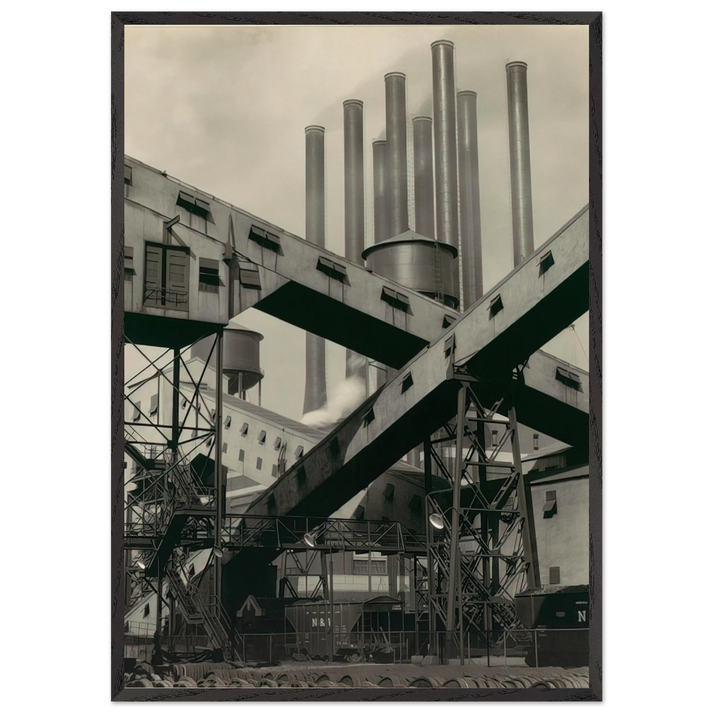
Criss-Crossed Conveyors River Rouge Plant Ford Motor Company - 1927 - Charles Sheeler 70x100 cm / 28x40 inches Framed Art Print – Black Wooden Frame
Criss-Crossed Conveyors River Rouge Plant Ford Motor Company - 1927 - Charles Sheeler 70x100 cm / 28x40 inches Framed Art Print – Black Wooden Frame
Couldn't load pickup availability
Charles Sheeler's "Criss-Crossed Conveyors, River Rouge Plant, Ford Motor Company" - A Modernist Masterpiece
Immerse yourself in the powerful vision of Charles Sheeler with this museum-quality fine art print of "Criss-Crossed Conveyors, River Rouge Plant, Ford Company." Created in 1927, this iconic work captures the monumental scale and rhythmic geometry of American industrialism, a subject Sheeler famously explored with a painterly precision that blurred the lines between art and industry.
This archival reproduction, meticulously crafted by RedKalion, transforms Sheeler's powerful composition into a tangible piece of art history for your collection. The print showcases the artist's keen eye for form and light, presenting the complex interplay of the River Rouge plant's machinery as a dynamic abstract landscape. Elevate your space with this significant piece of American Modernism, a testament to the era's technological advancements and artistic innovation.
RedKalion is proud to offer this framed art print using only the finest materials. The artwork is presented on a substantial 250 gsm (110 lb) matte, uncoated, natural white archival paper, ensuring vibrant color reproduction and exceptional longevity. Protected by shatterproof plexiglass, this piece is designed to endure. The frame itself is constructed from responsibly sourced oak and ash wood, measuring a robust 20mm (0.79") thick and wide, offering a more substantial presence than standard frames. Each print comes ready-to-hang with an included hanging kit, making installation effortless.
Product Features:
- Artwork: "Criss-Crossed Conveyors, River Rouge Plant, Ford Motor Company" by Charles Sheeler (1927)
- Print Quality: Museum-quality, archival, fine art reproduction
- Paper: 250 gsm (110 lb) weight, 0.29 mm (11.4 mils) thickness, matte, uncoated, natural white, sustainable (FSC-certified or equivalent)
- Protection: Shatterproof plexiglass
- Frame: Responsibly sourced oak and ash wood, 20mm (0.79") thick and wide
- Dimensions: 70x100 cm / 28x40 inches (print size)
- Ready-to-Hang: Includes hanging kit

Discover Unlimited Art Possibilities
At RedKalion, you can find virtually any artwork from any artist, available in a wide range of sizes to perfectly match your space.
If you didn’t find what you’re looking for, contact us at support@redkalion.com . We will source any artwork and produce it in any size and format you need, including art prints, posters, canvas, framed pieces, framed canvas, and more.
For dedicated art enthusiasts, we also offer handcrafted replicas of any artwork, carefully painted by highly skilled artists using traditional techniques.
For custom requests, contact us at support@redkalion.com .
What is the artwork depicted in this framed print?
This framed art print features Charles Sheeler's iconic 1927 photograph, "Criss-Crossed Conveyors, River Rouge Plant, Ford Motor Company," showcasing the industrial might of the era.
What type of paper is used for this fine art print?
The print utilizes a 250 gsm (110 lb), matte, uncoated, natural white archival paper with a thickness of 0.29 mm (11.4 mils), ensuring museum-quality reproduction.
What are the dimensions of the framed art print?
The print itself measures 70x100 cm or 28x40 inches. The frame adds to the overall dimensions of the piece.
What material is the frame made of and what are its dimensions?
The frame is crafted from responsibly sourced oak and ash wood, featuring a substantial 20mm (0.79") thickness and width for a premium look and feel.
How is the print protected and is it ready to hang?
The print is protected by shatterproof plexiglass and comes with an integrated hanging kit, making it ready to hang directly out of the box.
Can you tell me more about Charles Sheeler's connection to industrial photography?
Charles Sheeler was a pioneer in industrial photography and American Modernism, often commissioned to capture the grandeur of American factories like the Ford River Rouge Plant.
What is the significance of the River Rouge Plant in Sheeler's work?
The River Rouge Plant represented the zenith of industrial production for its time. Sheeler's depiction captured its scale and complexity, transforming industrial architecture into abstract art.