RedKalion
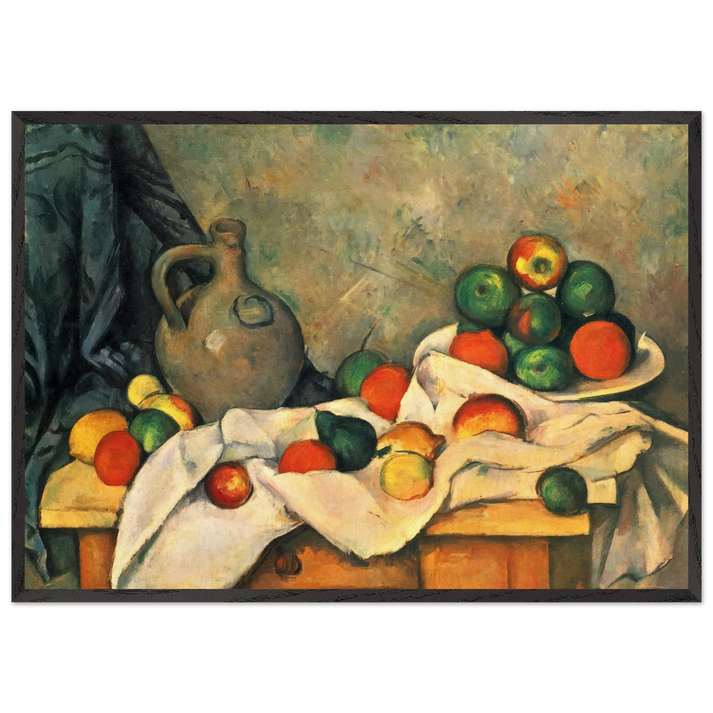
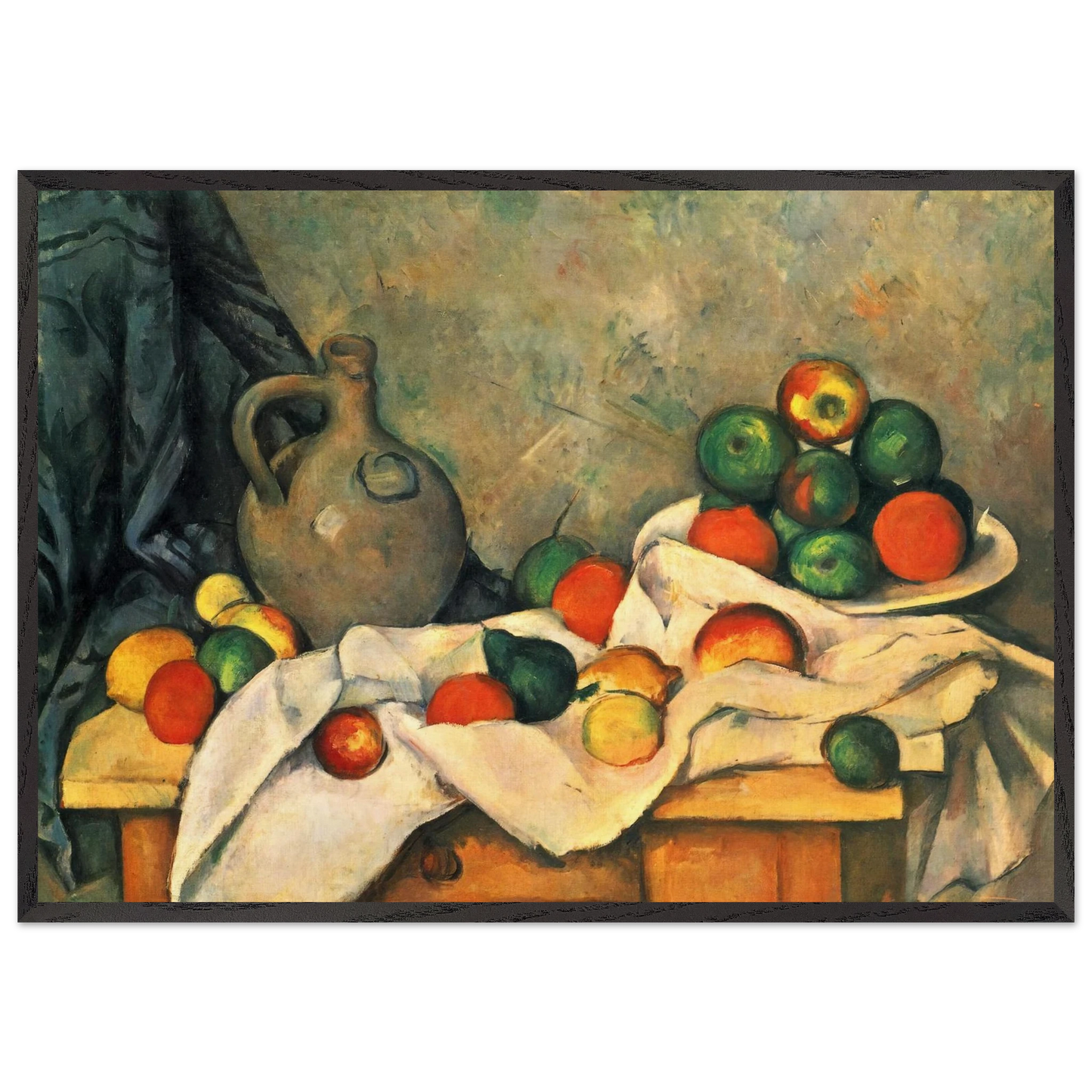
Curtain Jug and Fruit - Paul Cezanne 70x100 cm / 28x40 inches Framed Art Print – Black Wooden Frame
Curtain Jug and Fruit - Paul Cezanne 70x100 cm / 28x40 inches Framed Art Print – Black Wooden Frame
Couldn't load pickup availability
Curtain Jug and Fruit by Paul Cézanne: A Museum-Quality Fine Art Print
Experience the groundbreaking artistry of Paul Cézanne with this exquisite museum-quality reproduction of his still life masterpiece, Curtain Jug and Fruit. Cézanne, often hailed as the bridge between Impressionism and Cubism, revolutionized the way artists perceived and depicted form. This captivating piece showcases his signature approach to deconstructing objects into their geometric essentials, rendered with a rich palette and textured brushwork that still resonates with profound depth.
RedKalion is proud to present this archival fine art print, meticulously crafted to honor Cézanne's vision. Each print is produced on heavy, 250 gsm (110 lb), matte, uncoated, natural white archival paper, chosen for its exceptional texture and ability to faithfully reproduce the subtle nuances of Cézanne's original palette. The 0.29 mm (11.4 mils) thickness ensures a substantial feel, befitting a work of such historical significance.
Presented in a classic black frame made from responsibly sourced oak and ash wood, this piece measures 20mm (0.79") thick and wide, offering a more substantial presence than standard frames. To ensure your artwork arrives ready to enhance your space, it is equipped with a hanging kit. The print is protected by shatterproof plexiglass, offering clarity and durability without compromising the viewing experience. This FSC-certified print is not just a decoration, but an enduring testament to artistic innovation.
Artwork Details:
- Artist: Paul Cézanne
- Title: Curtain Jug and Fruit
- Dimensions: 70x100 cm / 28x40 inches
- Print Type: Museum-quality fine art print
- Paper: 250 gsm (110 lb) matte, uncoated, natural white archival paper (0.29 mm thickness)
- Frame: 20mm (0.79") thick and wide, responsibly sourced oak and ash wood, black finish
- Protection: Shatterproof plexiglass
- Ready to Hang: Includes hanging kit
- Sustainability: FSC-certified paper
Elevate your collection with this significant reproduction, a piece that embodies Cézanne's pivotal role in modern art history.
Discover Unlimited Art Possibilities
At RedKalion, you can find virtually any artwork from any artist, available in a wide range of sizes to perfectly match your space.
If you didn’t find what you’re looking for, contact us at support@redkalion.com . We will source any artwork and produce it in any size and format you need, including art prints, posters, canvas, framed pieces, framed canvas, and more.
For dedicated art enthusiasts, we also offer handcrafted replicas of any artwork, carefully painted by highly skilled artists using traditional techniques.
For custom requests, contact us at support@redkalion.com .
Frequently Asked Questions
What is the size of the Curtain Jug and Fruit art print?
This museum-quality fine art print of Paul Cézanne's "Curtain Jug and Fruit" measures 70x100 cm (28x40 inches), presented in a substantial black frame.
What kind of paper is used for this Paul Cézanne print?
The print utilizes archival museum-quality paper, weighing 250 gsm (110 lb) with a matte, uncoated, natural white finish and a thickness of 0.29 mm (11.4 mils).
What are the frame specifications for this artwork?
The frame is crafted from responsibly sourced oak and ash wood, finished in black. It measures 20mm (0.79") thick and wide, offering a robust presentation for the fine art print.
How is the artwork protected and prepared for display?
This framed art print is protected by shatterproof plexiglass and includes a hanging kit, ensuring it is ready to hang and display securely upon arrival.
What makes this print archival and sustainable?
The print is on FSC-certified paper, guaranteeing it meets high environmental and quality standards, ensuring the longevity and archival integrity of the reproduction.
Can you tell me more about Paul Cézanne's influence on art history?
Paul Cézanne's innovative approach to form and perspective is considered a crucial link between Impressionism and Cubism, fundamentally shaping modern art.
What is notable about the composition of Curtain Jug and Fruit?
In "Curtain Jug and Fruit," Cézanne's masterful use of geometric simplification and textured brushstrokes demonstrates his unique ability to represent three-dimensional form on a two-dimensional surface.