RedKalion
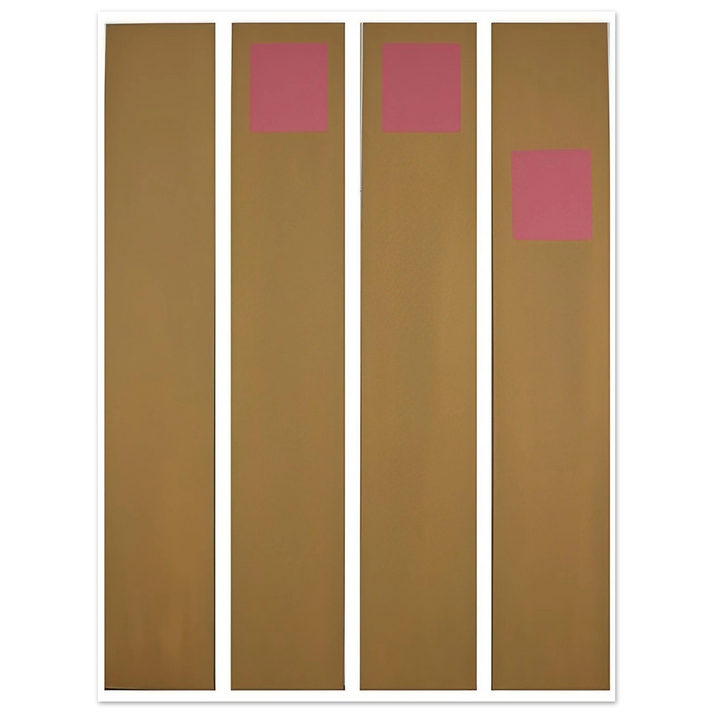
Doug Ohlson - Slip - 1967 75x100 cm / 30x40inches Fine Art Poster
Doug Ohlson - Slip - 1967 75x100 cm / 30x40inches Fine Art Poster
Couldn't load pickup availability
Doug Ohlson - Slip - 1967 (75x100 cm / 30x40 inches) Fine Art Print
Immerse yourself in the vibrant geometric abstraction of Doug Ohlson's iconic "Slip," created in 1967. This striking fine art print captures the dynamic tension and bold color fields characteristic of Ohlson's influential work from the Post-Painterly Abstraction movement. Originally conceived during a pivotal era of minimalist and hard-edge painting, "Slip" exemplifies Ohlson's masterful exploration of optical effects and spatial depth through precise color interactions.
RedKalion is proud to present this museum-quality reproduction, meticulously crafted to honor the original artwork's integrity. Our prints are produced on Master's Edition archival paper, a superior, uncoated, natural white stock that offers a luxurious, matte finish and exceptional texture. This paper is celebrated for its substantial 250 gsm weight (110 lb) and a thickness of 0.29 mm (11.4 mils), providing a tangible, premium feel.
We ensure the longevity of your investment. The acid-free nature of our archival paper (pH above 7) guarantees that your print will resist yellowing and degradation over time, preserving its vivid colors and sharp details for generations. Committed to sustainability, all our paper is FSC-certified. Elevate your space with an archival masterpiece that endures, a testament to Doug Ohlson's significant contribution to American art.
Product Details:
- Artist: Doug Ohlson
- Artwork: Slip, 1967
- Dimensions: 75x100 cm / 30x40 inches
- Paper Type: Master's Edition Archival Paper, Museum-Quality
- Finish: Matte, Uncoated, Natural White (Off-White)
- Weight & Thickness: 250 gsm (110 lb), 0.29 mm (11.4 mils)
- Archival Properties: Acid-free (pH > 7) for long-term preservation
- Sustainability: FSC-certified paper
- Fulfillment: Printed and shipped on demand, no minimum orders.
Discover Unlimited Art Possibilities
At RedKalion, you can find virtually any artwork from any artist, available in a wide range of sizes to perfectly match your space.
If you didn’t find what you’re looking for, contact us at support@redkalion.com . We will source any artwork and produce it in any size and format you need, including art prints, posters, canvas, framed pieces, framed canvas, and more.
For dedicated art enthusiasts, we also offer handcrafted replicas of any artwork, carefully painted by highly skilled artists using traditional techniques.
For custom requests, contact us at support@redkalion.com .
What artwork is featured in this fine art print?
This fine art print showcases "Slip," an iconic abstract artwork by Doug Ohlson, originally created in 1967. It's a museum-quality reproduction.
What are the dimensions of this Doug Ohlson print?
The dimensions for this Doug Ohlson "Slip" reproduction are 75x100 cm, which is equivalent to 30x40 inches. Perfect for statement wall art.
What type of paper is used for this fine art reproduction?
This print is made on Master's Edition archival paper. It's a museum-quality, uncoated, natural white stock with a matte finish, weighing 250 gsm.
What is the finish and texture of the archival paper?
The paper has a luxurious matte, uncoated finish in a natural white (off-white) hue, providing a rich texture that enhances the visual depth of the artwork.
How long will this archival print last?
Our prints utilize acid-free, museum-quality paper (pH above 7), preventing yellowing and ensuring the longevity of this fine art reproduction for generations.
What is the significance of Doug Ohlson's "Slip" from 1967?
Created in 1967, "Slip" is a key work of Post-Painterly Abstraction, showcasing Ohlson's exploration of optical effects and spatial depth through precise color interaction.
Can you tell me more about the Post-Painterly Abstraction movement?
Post-Painterly Abstraction, or Hard-edge painting, emerged in the 1960s, emphasizing flat planes of color and crisp edges, moving away from the gestural qualities of Abstract Expressionism.