RedKalion
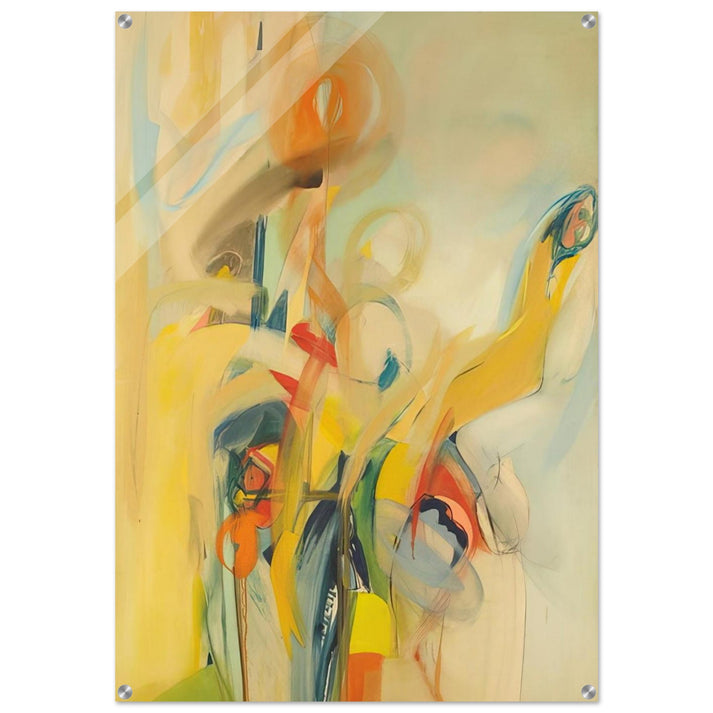
Down to Earth - 1959 - Miriam Schapiro Acrylic Print - 70x100 cm / 28x40″ inches | Miriam Schapiro Wall Art | Miriam Schapiro Prints
Down to Earth - 1959 - Miriam Schapiro Acrylic Print - 70x100 cm / 28x40″ inches | Miriam Schapiro Wall Art | Miriam Schapiro Prints
Couldn't load pickup availability
Miriam Schapiro's "Down to Earth" - A Mid-Century Masterpiece
Immerse yourself in the vibrant spirit of mid-century modernism with Miriam Schapiro's iconic "Down to Earth," originally created in 1959. This exceptional fine art print captures the artist's early explorations, showcasing her distinctive approach to form and color that would define her later celebrated career. Schapiro, a pioneering figure in feminist art and a co-founder of the Pattern and Decoration movement, infused her early works with a profound connection to the abstract and the tangible.
This museum-quality reproduction is meticulously rendered on a durable 4mm (0.15") acrylic panel, offering a sleek, contemporary presentation that enhances the artwork's inherent vibrancy. The straight-cut corners provide a clean, modern aesthetic, while the transparency defaults to a crisp white background, ensuring "Down to Earth" commands attention in any setting. Elevate your space with an archival masterpiece that endures, a testament to Miriam Schapiro's enduring legacy.
Product Features:
- Artwork: "Down to Earth" by Miriam Schapiro, 1959
- Material: Premium 4mm (0.15") acrylic
- Finish: Vibrant, durable, and sleek
- Design: Modern straight-cut corners
- Mounting: Includes a comprehensive hanging kit with hardware, screws, and pre-drilled holes for effortless installation.

Discover Unlimited Art Possibilities
At RedKalion, you can find virtually any artwork from any artist, available in a wide range of sizes to perfectly match your space.
If you didn’t find what you’re looking for, contact us at support@redkalion.com . We will source any artwork and produce it in any size and format you need, including art prints, posters, canvas, framed pieces, framed canvas, and more.
For dedicated art enthusiasts, we also offer handcrafted replicas of any artwork, carefully painted by highly skilled artists using traditional techniques.
For custom requests, contact us at support@redkalion.com .
What artwork is featured in this acrylic print?
This museum-quality acrylic print features Miriam Schapiro's influential 1959 artwork titled "Down to Earth." It is a prime example of her early abstract style.
What are the dimensions of the Miriam Schapiro "Down to Earth" print?
The artwork "Down to Earth" by Miriam Schapiro is presented in a 70x100 cm / 28x40 inch size, ideal for making a statement on your wall.
What material is the Miriam Schapiro wall art printed on?
This Miriam Schapiro print is crafted on a 4mm (0.15") thick acrylic panel, offering a sleek, vibrant, and durable finish for lasting visual impact.
Does the acrylic print come with a hanging kit?
Yes, your Miriam Schapiro fine art reproduction includes a complete hanging kit. It features hardware, screws, and pre-drilled corner holes for secure and easy mounting.
How long will the vibrant colors of this archival print last?
Our premium acrylic prints are designed for exceptional longevity and color fastness, ensuring the vibrancy of Miriam Schapiro's "Down to Earth" endures for years to come.
Tell me more about Miriam Schapiro's artistic significance.
Miriam Schapiro was a pivotal figure in the feminist art movement and co-founder of the Pattern and Decoration movement, known for her innovative use of materials and vibrant aesthetics.
What historical art movement does "Down to Earth" represent?
"Down to Earth" by Miriam Schapiro, created in 1959, reflects the transition into mid-century modern abstraction and foreshadows her later involvement in Pattern and Decoration.