RedKalion
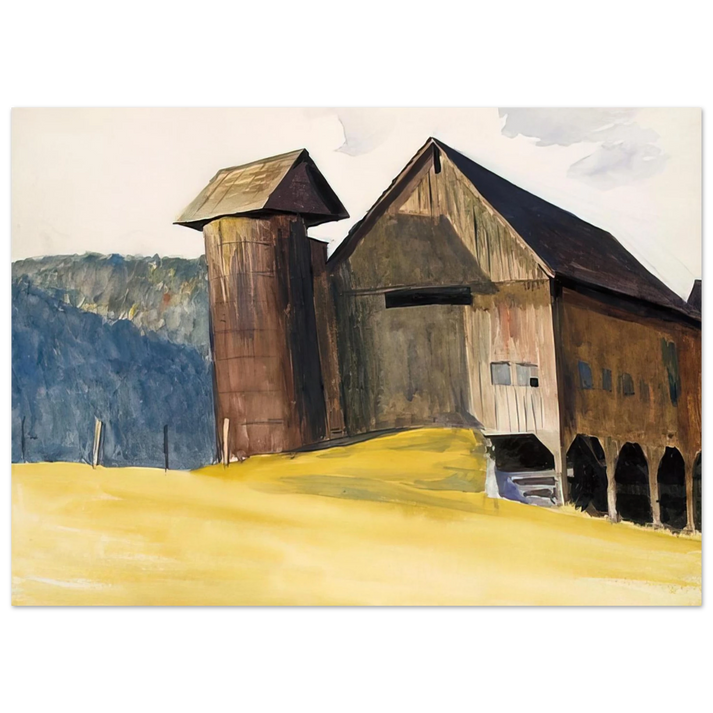
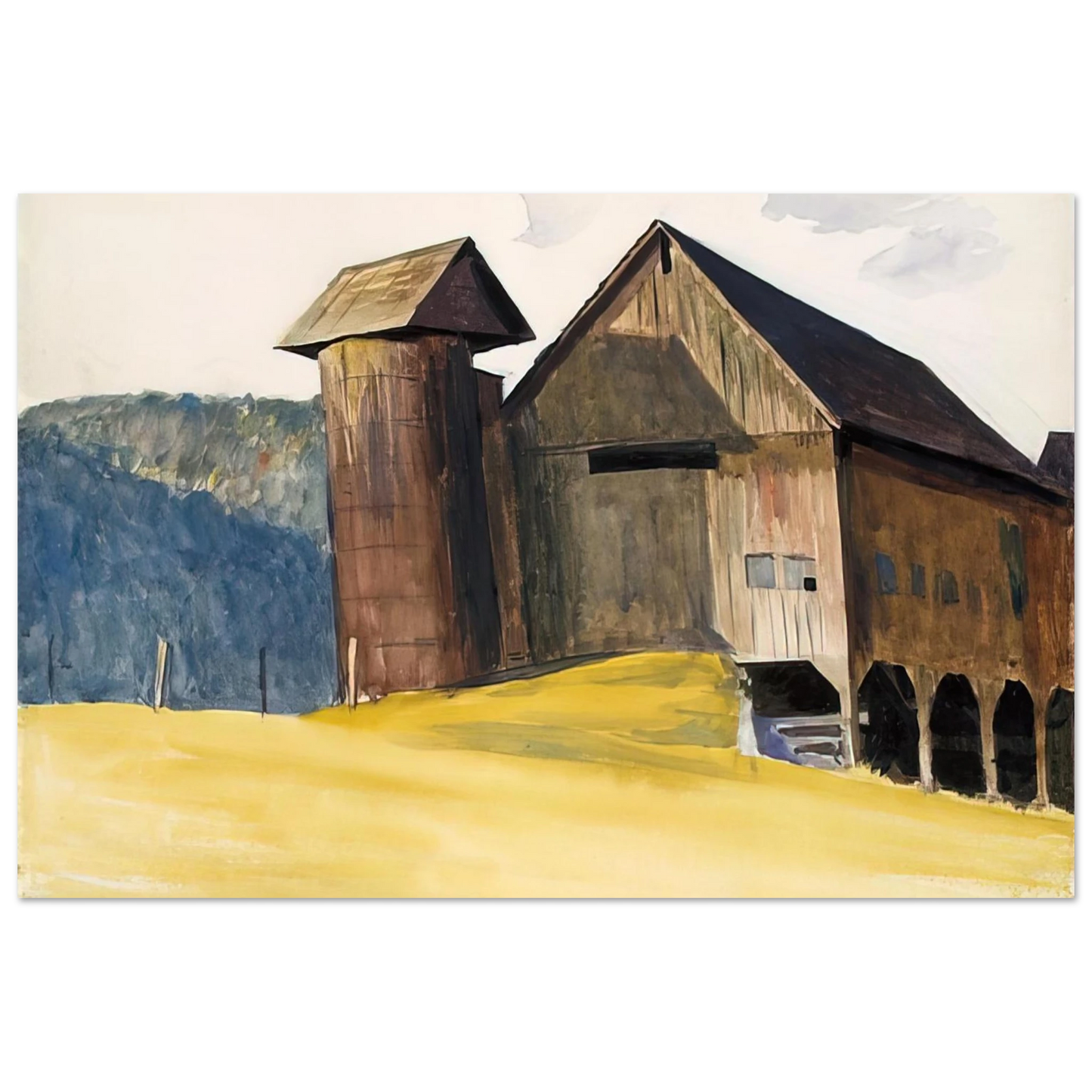
Edward Hopper - Barn and Silo, Vermont Fine Art Poster
Edward Hopper - Barn and Silo, Vermont Fine Art Poster
Couldn't load pickup availability
Edward Hopper's Barn and Silo, Vermont: A Masterpiece of American Realism
Immerse yourself in the contemplative stillness of Edward Hopper's Barn and Silo, Vermont. This iconic work, masterfully reproduced as a museum-quality fine art print by RedKalion, captures the essence of rural American life with Hopper's signature stark realism and profound sense of isolation. Expertly printed on our Master's Edition archival paper, this fine art poster brings the artist's vision to life with exceptional clarity and depth.
Edward Hopper, a towering figure of 20th-century American art, was renowned for his ability to convey psychological depth and emotional resonance through seemingly simple scenes. In Barn and Silo, Vermont, he transforms a humble agricultural landscape into a study of light, form, and solitude. The strong architectural lines of the barn and silo are softened by the natural textures and subtle color palette, inviting viewers to pause and reflect.
RedKalion is dedicated to preserving the integrity of masterpieces like this. Our reproductions are printed on acid-free, museum-quality paper with a substantial 250 gsm (110 lb) weight and a natural white, uncoated matte finish. This ensures that your Edward Hopper fine art print not only looks magnificent but is also built to last, resisting yellowing and fading for generations. Experience the enduring power of American art with a print that embodies both artistic heritage and uncompromising quality, printed on sustainable, FSC-certified paper.
- Artwork: Barn and Silo, Vermont by Edward Hopper
- Print Type: Museum-Quality Fine Art Reproduction
- Paper: Master's Edition Archival Paper, 250 gsm (110 lb), Matte, Uncoated, Natural White
- Features: Acid-Free, FSC-Certified Paper for Longevity and Sustainability
- Ideal for: Elevating any space with classic American art


Discover Unlimited Art Possibilities
At RedKalion, you can find virtually any artwork from any artist, available in a wide range of sizes to perfectly match your space.
If you didn’t find what you’re looking for, contact us at support@redkalion.com . We will source any artwork and produce it in any size and format you need, including art prints, posters, canvas, framed pieces, framed canvas, and more.
For dedicated art enthusiasts, we also offer handcrafted replicas of any artwork, carefully painted by highly skilled artists using traditional techniques.
For custom requests, contact us at support@redkalion.com .
What artwork is featured in this fine art print?
This museum-quality print showcases Edward Hopper's iconic "Barn and Silo, Vermont," a quintessential piece of American Realism.
What are the dimensions and weight of the archival paper?
The fine art print uses Master's Edition archival paper, weighing 250 gsm (110 lb) with a thickness of 0.29 mm (11.4 mils).
What is the finish of the museum-quality reproduction?
This Edward Hopper print features a natural white, uncoated matte finish, offering a luxurious texture and reducing glare.
How long will this archival print last?
Our prints are acid-free (pH above 7) and utilize archival paper, ensuring the artwork resists yellowing and fading for lasting beauty.
Where are these fine art posters printed and shipped from?
Each Edward Hopper fine art poster is printed and shipped on demand from our facilities, ensuring a fresh, high-quality reproduction.
What makes this Barn and Silo, Vermont print sustainable?
The paper used for this fine art print is FSC-certified, guaranteeing responsible forest management and environmental sustainability.
Can you tell me more about Edward Hopper's style in this artwork?
In "Barn and Silo, Vermont," Hopper uses strong lines and a subdued palette to evoke a sense of quiet solitude characteristic of his American Realist style.
What is the historical context of Barn and Silo, Vermont?
Created during a period when Hopper explored rural American landscapes, this piece reflects his fascination with the quiet dignity and inherent isolation of country life.