

RedKalion
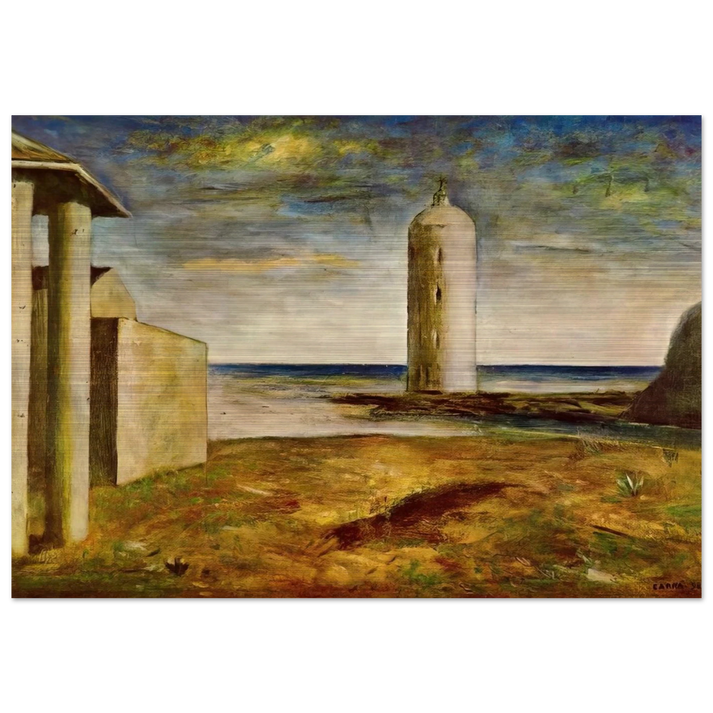
EL FARO 1928 - Carlo Carra Brushed Aluminum Print - 70x100 cm / 28x40 inches | Carlo Carra Aluminum Print | Carlo Carra Prints
EL FARO 1928 - Carlo Carra Brushed Aluminum Print - 70x100 cm / 28x40 inches | Carlo Carra Aluminum Print | Carlo Carra Prints
Couldn't load pickup availability
Carlo Carrà's "El Faro" (1928): A Masterpiece of Italian Futurism, Rendered on Brushed Aluminum
Immerse yourself in the dynamic world of Carlo Carrà with this exquisite museum-quality reproduction of his iconic 1928 work, "El Faro." This fine art print captures the bold energy and revolutionary spirit of Italian Futurism, a movement Carrà co-founded. "El Faro" exemplifies his exploration of light, form, and the machine age, rendered with a striking clarity that translates beautifully to our premium printing medium.
This Carlo Carrà print is meticulously produced on 3mm (0.12") thick Brushed silver Aluminum DIBOND®. This innovative material features a subtle horizontal grain, providing a dynamic, metallic finish that enhances the visual depth of the artwork. The direct print process ensures vivid colors and a sophisticated matte appearance, with unprinted white areas revealing the dazzling brushed silver substrate for an unparalleled luminous effect. This matte finish is particularly adept at showcasing the sharp contrasts and bold lines characteristic of Carrà's style, making it ideal for this piece.
Elevate your space with an archival masterpiece that endures. Each Carlo Carrà aluminum print from RedKalion is a testament to both artistic genius and cutting-edge printing technology, offering a unique tactile and visual experience. The included hanging kit ensures effortless display, allowing you to immediately appreciate the profound impact of this significant work.
Artwork Details:
- Artist: Carlo Carrà
- Title: El Faro
- Year: 1928
- Medium: Oil on canvas (Original)
- Style: Italian Futurism, Metaphysical Art
Print Specifications:
- Material: 3mm Brushed silver Aluminum DIBOND® with horizontal grain
- Finish: Matte, glare-free
- Printing: Direct print, revealing metallic silver in unprinted areas
- Dimensions: 70x100 cm / 28x40 inches
- Includes: Museum-quality print with a professional hanging kit


Discover Unlimited Art Possibilities
At RedKalion, you can find virtually any artwork from any artist, available in a wide range of sizes to perfectly match your space.
If you didn’t find what you’re looking for, contact us at support@redkalion.com . We will source any artwork and produce it in any size and format you need, including art prints, posters, canvas, framed pieces, framed canvas, and more.
For dedicated art enthusiasts, we also offer handcrafted replicas of any artwork, carefully painted by highly skilled artists using traditional techniques.
For custom requests, contact us at support@redkalion.com .
What is "El Faro" by Carlo Carrà?
"El Faro" is a significant 1928 artwork by Carlo Carrà, a pivotal figure in Italian Futurism. This museum-quality reproduction captures its dynamic composition.
What are the dimensions of this Carlo Carrà print?
This Carlo Carrà fine art print measures 70x100 cm (28x40 inches), offering a substantial presence for your collection.
What material is this Carlo Carrà reproduction printed on?
The Carlo Carrà print is directly printed on 3mm brushed silver Aluminum DIBOND®, featuring a metallic finish and matte appearance.
How is the quality of the print archival?
Our direct print method on AluDibond ensures vivid colors and longevity, presenting a durable, museum-quality Carlo Carrà reproduction.
Is a hanging kit included with this aluminum print?
Yes, each Carlo Carrà aluminum print comes with a professional hanging kit for easy and secure installation.
What is the significance of Carlo Carrà's "El Faro" in art history?
Created in 1928, "El Faro" reflects Carrà's transition towards a more classical and monumental style, blending Futurist dynamism with Metaphysical stillness.
How does the brushed aluminum affect the artwork's appearance?
The brushed silver Aluminum DIBOND® provides a unique metallic sheen and a matte, glare-free surface, enhancing the artwork's depth and contrast.
What is the historical context of Carlo Carrà's work in 1928?
By 1928, Carrà was exploring a renewed classicality after his Futurist phase, influencing the Novecento Italiano movement with his evocative, solid forms.