RedKalion
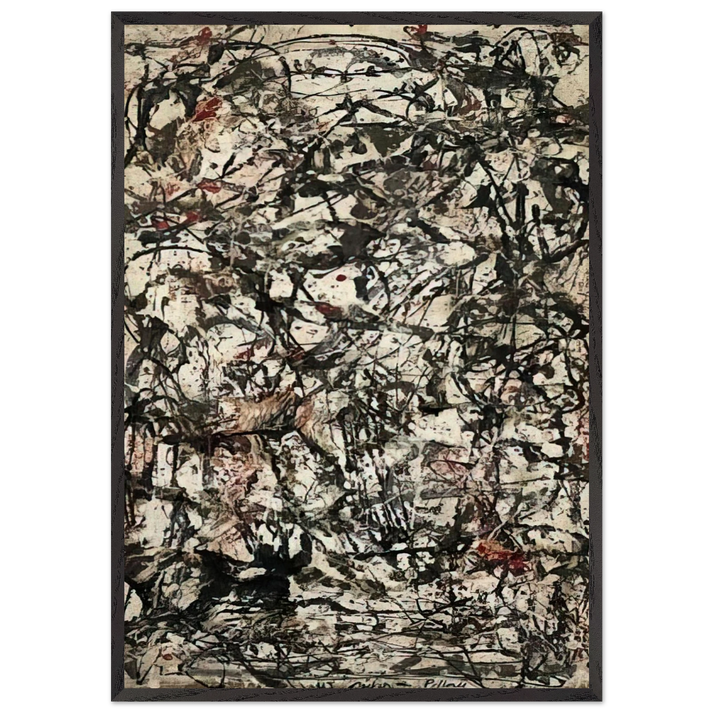
ENCHANTED FOREST 1947 - Jackson Pollock 70x100 cm / 28x40 inches Framed Art Print – Black Wooden Frame
ENCHANTED FOREST 1947 - Jackson Pollock 70x100 cm / 28x40 inches Framed Art Print – Black Wooden Frame
Couldn't load pickup availability
ENCHANTED FOREST 1947 - Jackson Pollock - Museum-Quality Framed Art Print
Immerse yourself in the primal energy of Jackson Pollock's "ENCHANTED FOREST 1947," a pivotal early work that showcases the artist's nascent explorations into abstract expressionism. This exceptional museum-quality reproduction captures the dynamic interplay of line and form that would define Pollock's revolutionary artistic trajectory. Expertly rendered on 250 gsm (110 lb) matte, uncoated, natural white archival paper, this fine art print offers a tactile and visually stunning experience. The paper's substantial thickness (0.29 mm / 11.4 mils) ensures a premium feel, while its FSC-certified sustainability aligns with conscious collecting.
"ENCHANTED FOREST 1947" exemplifies Pollock's early fascination with mythology and the subconscious, elements that would later coalesce into his iconic drip paintings. This piece, with its intricate, almost calligraphic marks, hints at the raw, untamed wilderness that inspired its title and suggests a profound connection to the natural world. Owning this fine art print is an opportunity to bring a piece of art history into your home, a testament to the evolution of one of the 20th century's most influential artists.
Each print is meticulously framed in a sleek, 20mm (0.79") thick and wide frame crafted from responsibly sourced oak and ash wood, offering a more substantial presence than standard framing. The artwork is protected by shatterproof plexiglass, ensuring clarity and durability. This art print comes complete with a hanging kit, making it ready to adorn your walls immediately. Elevate your space with an archival masterpiece that endures, a testament to Jackson Pollock's groundbreaking vision.
- Artwork: ENCHANTED FOREST 1947
- Artist: Jackson Pollock
- Print Size: 70x100 cm / 28x40 inches
- Frame Material: Responsibly sourced oak and ash wood
- Frame Dimensions: 20mm (0.79") thick and wide
- Paper: 250 gsm (110 lb) weight, 0.29 mm (11.4 mils) thickness, matte, uncoated, natural white, archival museum-quality paper
- Protection: Shatterproof plexiglass
- Sustainability: FSC-certified materials or equivalent
- Ready to Hang: Includes hanging kit

Discover Unlimited Art Possibilities
At RedKalion, you can find virtually any artwork from any artist, available in a wide range of sizes to perfectly match your space.
If you didn’t find what you’re looking for, contact us at support@redkalion.com . We will source any artwork and produce it in any size and format you need, including art prints, posters, canvas, framed pieces, framed canvas, and more.
For dedicated art enthusiasts, we also offer handcrafted replicas of any artwork, carefully painted by highly skilled artists using traditional techniques.
For custom requests, contact us at support@redkalion.com .
What is the artwork featured in this framed print?
This museum-quality framed art print features "ENCHANTED FOREST 1947" by the renowned artist Jackson Pollock, an early and significant work.
What are the dimensions of the framed print?
The framed print measures 70x100 cm (28x40 inches), providing a substantial and impactful presence for this fine art reproduction.
What type of paper is used for this Jackson Pollock print?
The art print utilizes 250 gsm (110 lb) weight, matte, uncoated, natural white, archival museum-quality paper with a thickness of 0.29 mm (11.4 mils).
What material is the frame made from and what are its dimensions?
The frame is crafted from responsibly sourced oak and ash wood, measuring a substantial 20mm (0.79") thick and wide for a premium look.
How is the print protected, and is it ready to hang?
The print is protected by shatterproof plexiglass and comes with a hanging kit, making this archival fine art print ready to hang immediately.
What is the historical significance of "ENCHANTED FOREST 1947"?
"ENCHANTED FOREST 1947" is an important early work by Jackson Pollock, predating his famous drip paintings, and showcases his exploration of abstract forms and mythological themes.
Can you tell me more about Jackson Pollock's artistic style evident in this piece?
This fine art reproduction of "ENCHANTED FOREST 1947" reveals Pollock's early interest in intricate lines and symbolic representation, hinting at the gestural freedom of his later groundbreaking work.