
RedKalion
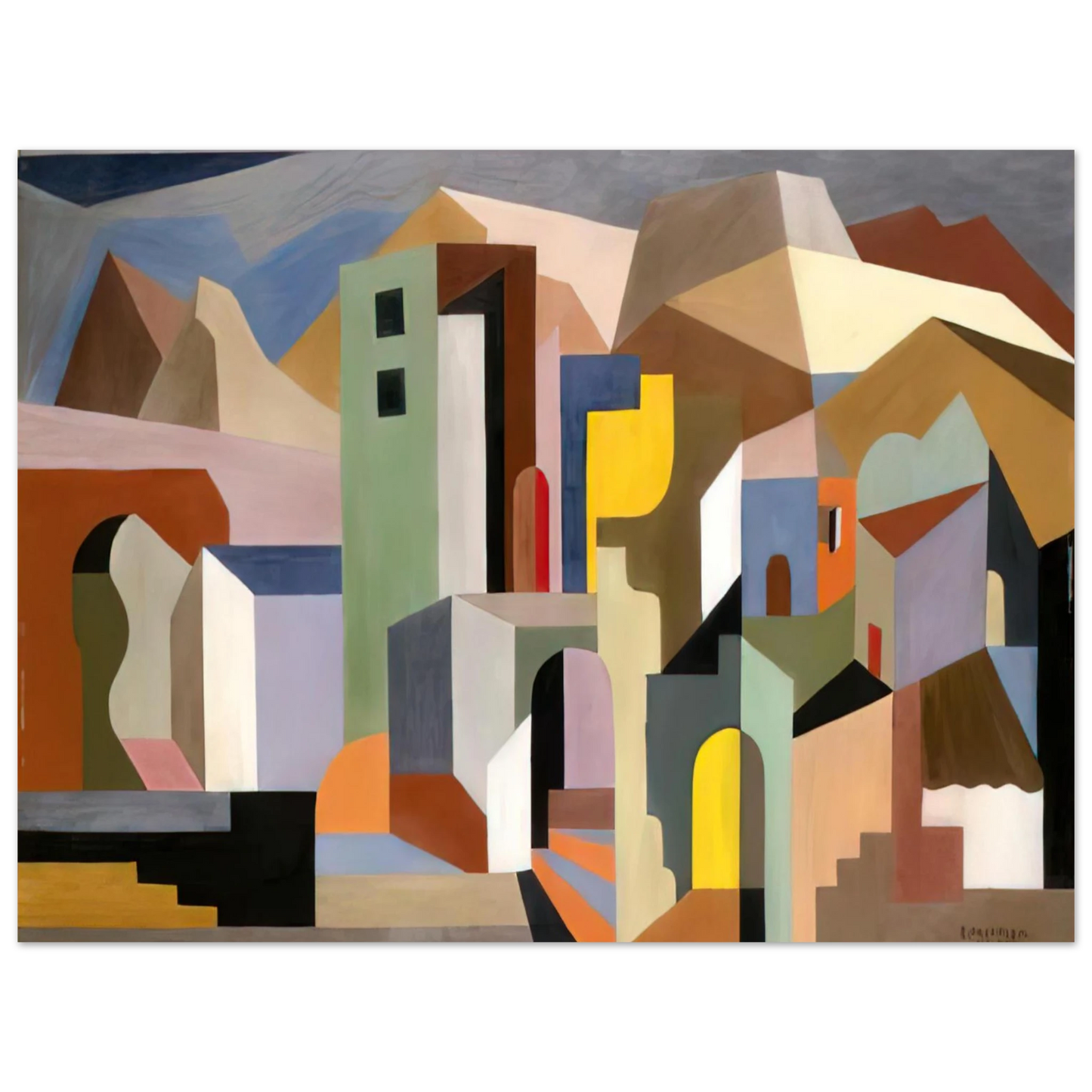
Enrico Prampolini - ARCHITECTURAL FORM OF FUTURE IDEAL LANDSCAPE 1921 75x100 cm / 30x40inches Fine Art Poster
Enrico Prampolini - ARCHITECTURAL FORM OF FUTURE IDEAL LANDSCAPE 1921 75x100 cm / 30x40inches Fine Art Poster
Couldn't load pickup availability
Enrico Prampolini: ARCHITECTURAL FORM OF FUTURE IDEAL LANDSCAPE 1921 - A Vision of Futurist Architecture
Immerse yourself in the dynamic, forward-thinking world of Futurism with this exquisite museum-quality reproduction of Enrico Prampolini's seminal 1921 masterpiece, "ARCHITECTURAL FORM OF FUTURE IDEAL LANDSCAPE." This striking artwork, meticulously recreated as a fine art print, captures the essence of the Futurist movement's radical reimagining of urban environments and future possibilities.
Enrico Prampolini, a pivotal figure in Italian Futurism, was renowned for his synesthetic approach, seeking to translate sensory experiences into visual forms. In "ARCHITECTURAL FORM OF FUTURE IDEAL LANDSCAPE," he explores complex geometric structures and dynamic spatial relationships, offering a visionary blueprint for an idealized, technologically advanced future landscape. The piece exemplifies the Futurist fascination with speed, machinery, and the dissolution of traditional architectural boundaries.
RedKalion is proud to present this important work as a premium, archival-grade fine art print. Each reproduction is crafted on our signature Master's Edition archival paper, renowned for its museum-quality standards. The paper boasts a natural white, uncoated finish, providing a luxurious matte texture that enhances the depth and vibrancy of Prampolini's original vision. Weighing 250 gsm (110 lb) with a substantial thickness of 0.29 mm (11.4 mils), this paper ensures exceptional durability and a tactile, sophisticated feel. Its acid-free composition guarantees that your investment will resist yellowing and degradation, preserving the artwork's integrity for generations.
Key Features of your Enrico Prampolini Fine Art Print:
- Artwork: ARCHITECTURAL FORM OF FUTURE IDEAL LANDSCAPE 1921 by Enrico Prampolini
- Print Type: Museum-Quality Fine Art Reproduction
- Paper: Master's Edition Archival Paper, FSC-certified
- Finish: Matte, Uncoated, Natural White
- Weight: 250 gsm (110 lb)
- Thickness: 0.29 mm (11.4 mils)
- Longevity: Acid-Free (pH > 7) for superior archival stability
- Dimensions: Available in 75x100 cm / 30x40 inches
Elevate your space with an archival masterpiece that endures. This fine art poster is printed on demand, reflecting our commitment to sustainability and ensuring your print is freshly produced with the utmost care. Experience the bold spirit of Futurism with this exceptional Enrico Prampolini reproduction from RedKalion.
Discover Unlimited Art Possibilities
At RedKalion, you can find virtually any artwork from any artist, available in a wide range of sizes to perfectly match your space.
If you didn’t find what you’re looking for, contact us at support@redkalion.com . We will source any artwork and produce it in any size and format you need, including art prints, posters, canvas, framed pieces, framed canvas, and more.
For dedicated art enthusiasts, we also offer handcrafted replicas of any artwork, carefully painted by highly skilled artists using traditional techniques.
For custom requests, contact us at support@redkalion.com .
What artwork is being reproduced?
This is a museum-quality fine art print reproduction of Enrico Prampolini's 1921 masterpiece, "ARCHITECTURAL FORM OF FUTURE IDEAL LANDSCAPE." It captures the essence of Futurist architectural concepts.
What paper is used for this fine art print?
The print is made on Master's Edition archival paper. This museum-quality paper is FSC-certified, acid-free, and has a natural white matte finish.
What are the physical specifications of the paper?
The paper is 250 gsm (110 lb) and has a thickness of 0.29 mm (11.4 mils), offering a substantial and luxurious feel for this fine art poster.
How long will this archival print last?
Thanks to its acid-free composition (pH above 7) and museum-quality status, this print is designed to resist yellowing and degradation, ensuring lasting archival longevity.
Is this print made sustainably?
Yes, the Master's Edition paper used for this fine art reproduction is FSC-certified, supporting responsible forest management.
What is the historical significance of Enrico Prampolini's work?
Prampolini was a key figure in Italian Futurism, known for his synesthetic approach to art and his visionary explorations of future landscapes and abstract forms.
What does "ARCHITECTURAL FORM OF FUTURE IDEAL LANDSCAPE" represent?
This 1921 artwork by Prampolini visually interprets the Futurist ideal of dynamic, technologically advanced, and unbound architectural environments, moving beyond traditional structures.