RedKalion
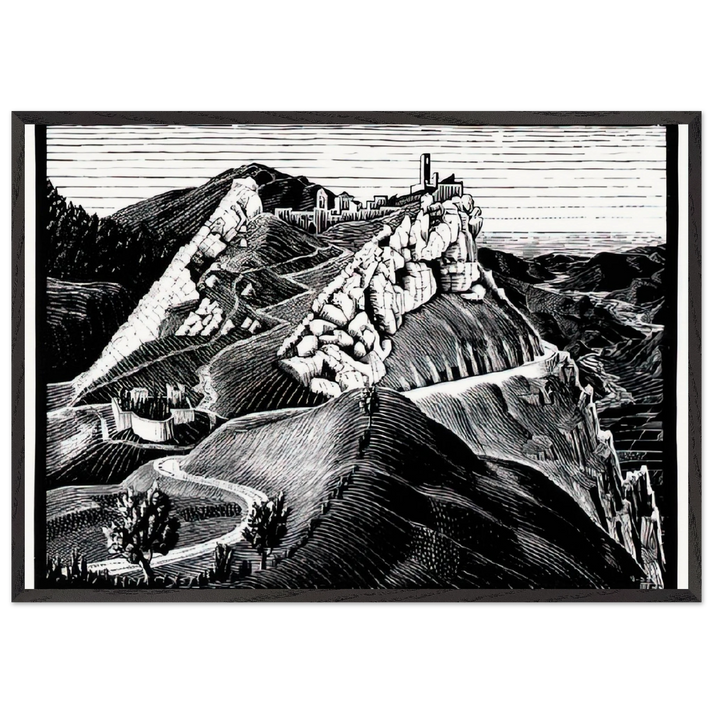
ESCHER 16 - MC Escher 70x100 cm / 28x40 inches Framed Art Print – Black Wooden Frame | Maurits Cornelis Escher Prints
ESCHER 16 - MC Escher 70x100 cm / 28x40 inches Framed Art Print – Black Wooden Frame | Maurits Cornelis Escher Prints
Couldn't load pickup availability
ESCHER 16 - MC Escher 70x100 cm / 28x40 inches Framed Art Print – Black Wooden Frame
Immerse yourself in the mesmerizing world of Maurits Cornelis Escher with this museum-quality reproduction of his iconic work, ESCHER 16. This fine art print captures the intricate geometric patterns and impossible realities that define Escher's legacy, offering a captivating centerpiece for any modern interior. Measuring 70x100 cm (28x40 inches), this piece invites viewers into a realm of optical illusion and mathematical precision, evoking a sense of intellectual curiosity and artistic wonder.
RedKalion presents this archival masterpiece on 250 gsm (110 lb) matte, uncoated, natural white paper, ensuring vibrant detail and longevity. The print is protected by shatterproof plexiglass and elegantly framed in a responsibly sourced oak and ash wood frame with a sleek black finish. At 20mm (0.79") thick and wide—wider than classic frames—it adds substantial presence to your space. Ready-to-hang with an included kit, this piece arrives as a complete, curated artwork, allowing you to elevate your decor with ease and sophistication.
As a premier online gallery, RedKalion combines expertise in art history with a commitment to sustainability, using FSC-certified materials for an eco-conscious choice. This Maurits Cornelis Escher print is not just a decoration but a testament to the enduring appeal of surrealist and mathematical art, perfect for collectors and enthusiasts seeking a conversation-starting addition to their home or office.

Discover Unlimited Art Possibilities
At RedKalion, you can find virtually any artwork from any artist, available in a wide range of sizes to perfectly match your space.
If you didn’t find what you’re looking for, contact us at support@redkalion.com . We will source any artwork and produce it in any size and format you need, including art prints, posters, canvas, framed pieces, framed canvas, and more.
For dedicated art enthusiasts, we also offer handcrafted replicas of any artwork, carefully painted by highly skilled artists using traditional techniques.
For custom requests, contact us at support@redkalion.com .
What are the dimensions of this MC Escher framed art print?
This fine art print measures 70x100 cm (28x40 inches) and is framed in a 20mm (0.79") thick black wooden frame, offering a substantial presence for your wall decor.
What type of paper is used for this museum-quality reproduction?
We use 250 gsm (110 lb) matte, uncoated, natural white archival museum-quality paper, ideal for vibrant detail and long-lasting fine art prints.
Is this MC Escher print ready to hang upon arrival?
Yes, this framed art print includes a hanging kit and is ready to hang directly on your wall, making installation quick and hassle-free.
How durable is the framing and protection for this artwork?
The frame is made from responsibly sourced oak and ash wood with shatterproof plexiglass, ensuring your Maurits Cornelis Escher print stays protected and elegant.
What makes this Escher print an archival-quality piece?
It features FSC-certified sustainable paper and archival materials, designed to resist fading and maintain its quality for years as a premium art reproduction.
What is the historical significance of MC Escher's work like ESCHER 16?
Maurits Cornelis Escher was a Dutch graphic artist known for his mathematically inspired woodcuts and lithographs, exploring themes of infinity and impossible geometry in the early to mid-20th century.
Can you describe the artistic techniques in this Escher print?
Escher often used tessellation and perspective distortion in works like ESCHER 16, creating optical illusions that challenge perception and blend art with mathematical principles.