RedKalion
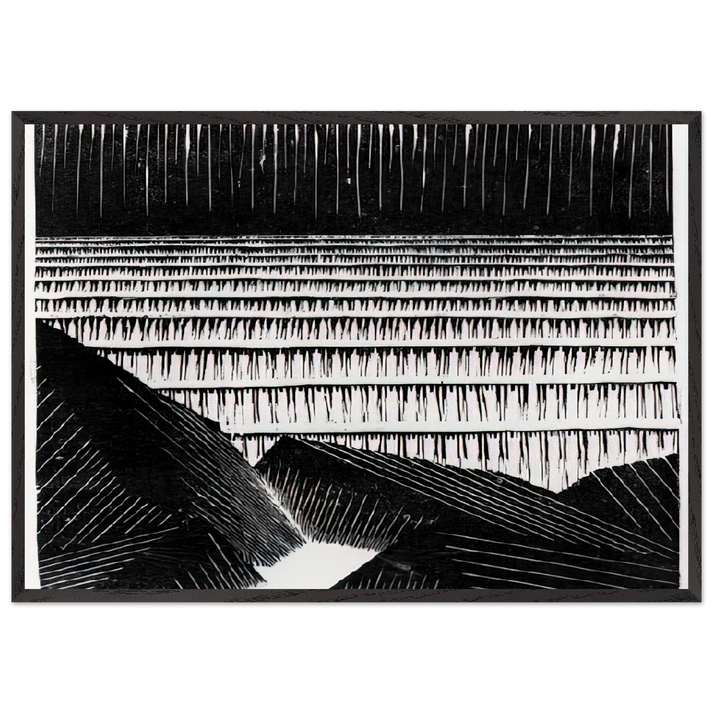
ESCHER 4 - MC Escher 70x100 cm / 28x40 inches Framed Art Print – Black Wooden Frame | Maurits Cornelis Escher Prints
ESCHER 4 - MC Escher 70x100 cm / 28x40 inches Framed Art Print – Black Wooden Frame | Maurits Cornelis Escher Prints
Couldn't load pickup availability
ESCHER 4: A Masterpiece of Mathematical Artistry
Immerse yourself in the mesmerizing world of Maurits Cornelis Escher with this museum-quality reproduction of ESCHER 4. This fine art print captures the intricate, mind-bending patterns that define Escher's iconic style, where geometry and imagination converge to challenge perception. Measuring 70x100 cm / 28x40 inches, this piece is a statement of intellectual elegance, perfect for elevating modern interiors, offices, or creative spaces with its timeless, enigmatic appeal.
Historical Significance & Artistic Insight
Maurits Cornelis Escher (1898-1972) was a Dutch graphic artist renowned for his mathematically inspired woodcuts, lithographs, and mezzotints. ESCHER 4 exemplifies his fascination with tessellations, impossible constructions, and infinity—themes that bridge art and science. A fascinating detail: Escher's work often explored the concept of "metamorphosis," where shapes seamlessly transform, reflecting his deep interest in symmetry and the infinite plane. This print invites viewers to ponder the boundaries between reality and illusion, making it a conversation-starting centerpiece.
Premium Framed Art Print Specifications
RedKalion delivers this archival masterpiece with uncompromising quality, ensuring it endures as a cherished heirloom. Our framed print is ready-to-hang, complete with a hanging kit for immediate display.
- Frame: Crafted from responsibly sourced oak and ash wood in a sleek black finish. The frame measures 20mm (0.79") thick and wide, offering a robust, contemporary profile that enhances the artwork's visual impact.
- Paper: Printed on 250 gsm (110 lb) matte, uncoated, natural white archival museum-quality paper with a thickness of 0.29 mm (11.4 mils). This sustainable, FSC-certified material ensures vibrant, fade-resistant colors and a tactile, gallery-worthy finish.
- Protection: Safeguarded by shatterproof plexiglass, providing durability and clarity while protecting against dust and damage.
Elevate your space with this fine art reproduction that combines historical artistry with modern craftsmanship, backed by RedKalion's expertise in museum-quality prints.

Discover Unlimited Art Possibilities
At RedKalion, you can find virtually any artwork from any artist, available in a wide range of sizes to perfectly match your space.
If you didn’t find what you’re looking for, contact us at support@redkalion.com . We will source any artwork and produce it in any size and format you need, including art prints, posters, canvas, framed pieces, framed canvas, and more.
For dedicated art enthusiasts, we also offer handcrafted replicas of any artwork, carefully painted by highly skilled artists using traditional techniques.
For custom requests, contact us at support@redkalion.com .
What are the dimensions of this ESCHER 4 framed art print?
The framed print measures 70x100 cm (28x40 inches), including the black wooden frame, making it an ideal size for wall display in homes or offices.
What type of paper is used for this fine art print?
We use 250 gsm (110 lb) matte, uncoated, natural white archival museum-quality paper, which is FSC-certified for sustainability and ensures long-lasting color fidelity.
Is this framed print ready to hang upon delivery?
Yes, it includes a hanging kit and is ready-to-hang directly on your wall, offering convenience and immediate enjoyment of your Maurits Cornelis Escher print.
How durable is the framing and protection for this artwork?
The frame is made from responsibly sourced oak and ash wood, 20mm thick, with shatterproof plexiglass to protect against damage, ensuring archival longevity for your investment.
What makes this a museum-quality reproduction of ESCHER 4?
It features high-resolution printing on archival paper with precise color matching, capturing the intricate details of Escher's original work for an authentic fine art experience.
What artistic techniques did Maurits Cornelis Escher use in ESCHER 4?
Escher employed lithography and woodcut techniques to create tessellations and impossible geometries, blending mathematical precision with visual illusion in ESCHER 4.
Why is ESCHER 4 significant in art history?
It represents Escher's exploration of infinity and metamorphosis, influencing both art and science by challenging perceptions of space and reality in the 20th century.