RedKalion
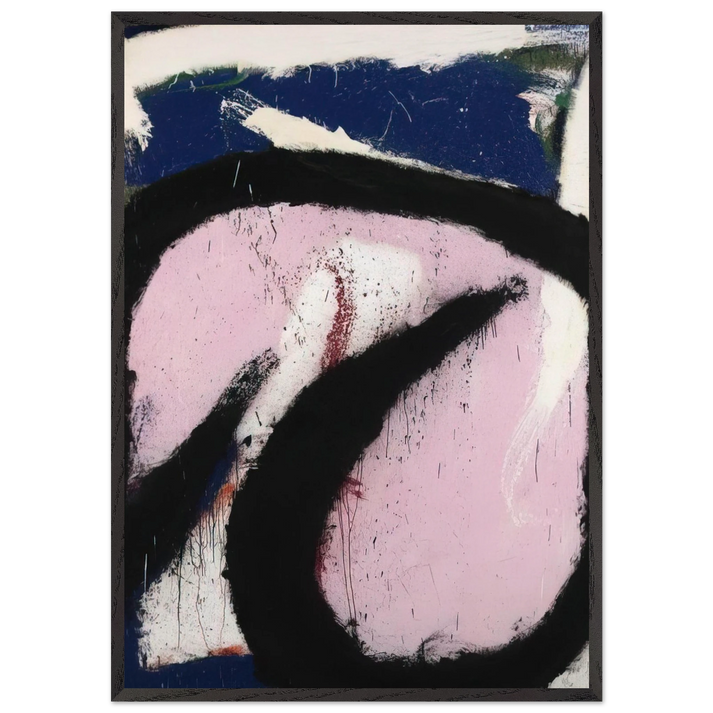
Eudocia - 1967 - Norman Bluhm 70x100 cm / 28x40 inches Framed Art Print – Black Wooden Frame
Eudocia - 1967 - Norman Bluhm 70x100 cm / 28x40 inches Framed Art Print – Black Wooden Frame
Couldn't load pickup availability
Eudocia (1967) by Norman Bluhm: A Vibrant Abstract Expressionist Masterpiece
Immerse yourself in the dynamic energy of Norman Bluhm's Eudocia, a 1967 abstract expressionist painting that captures the raw, gestural spirit of mid-century American art. This museum-quality reproduction on archival paper brings Bluhm's bold brushstrokes and vibrant palette to life, offering a fine art print that transforms any space into a gallery of modern elegance.
Bluhm, a key figure in the New York School, pioneered a style that fused abstraction with emotional intensity. In Eudocia, his technique of layering colors and spontaneous marks creates a sense of movement and depth, reflecting the post-war era's exploration of freedom and form. This piece is not just a decoration but a historical artifact, evoking a mood of creative exuberance and intellectual curiosity.
At RedKalion, we curate only the highest archival-grade reproductions. This framed art print features a responsibly sourced black oak and ash wood frame, measuring 20mm thick for a substantial, gallery-worthy presence. The print is protected by shatterproof plexiglass and mounted on 250 gsm matte, uncoated archival paper, ensuring longevity and a premium finish. Elevate your home or office with a piece that endures as a testament to artistic innovation.
- Frame: Black wooden frame made from responsibly sourced oak and ash, 20mm thick and wide.
- Print: 70x100 cm / 28x40 inches, on 250 gsm (110 lb) matte, uncoated archival museum-quality paper.
- Protection: Shatterproof plexiglass for durability.
- Sustainability: FSC-certified materials used.
- Ready-to-Hang: Includes hanging kit for immediate display.

Discover Unlimited Art Possibilities
At RedKalion, you can find virtually any artwork from any artist, available in a wide range of sizes to perfectly match your space.
If you didn’t find what you’re looking for, contact us at support@redkalion.com . We will source any artwork and produce it in any size and format you need, including art prints, posters, canvas, framed pieces, framed canvas, and more.
For dedicated art enthusiasts, we also offer handcrafted replicas of any artwork, carefully painted by highly skilled artists using traditional techniques.
For custom requests, contact us at support@redkalion.com .
What is the historical significance of Norman Bluhm's Eudocia?
Eudocia, created in 1967, is a prime example of Norman Bluhm's abstract expressionist work from the New York School, showcasing his innovative layering techniques and vibrant color palette that defined mid-20th century American art.
How does the frame enhance this fine art print?
The black wooden frame, made from responsibly sourced oak and ash, is 20mm thick for a sturdy, gallery-quality look that complements the abstract expressionist style of this museum-quality reproduction.
What are the specifications of the archival paper used?
This print uses 250 gsm (110 lb) matte, uncoated archival museum-quality paper with a thickness of 0.29 mm, ensuring durability and a premium finish for your abstract art collection.
Is this framed art print ready to hang?
Yes, it includes a hanging kit and is ready to hang directly on your wall, making it easy to display this Norman Bluhm masterpiece immediately.
How is the print protected for long-term display?
The print is protected by shatterproof plexiglass, offering durability and safety while maintaining the clarity of this archival-grade reproduction.
What makes this a sustainable art print option?
We use FSC-certified materials or equivalents, ensuring this framed art print is environmentally responsible without compromising on quality.
Can you describe Bluhm's technique in Eudocia?
Bluhm employed spontaneous brushstrokes and layered colors in Eudocia to create dynamic textures and emotional depth, characteristic of his abstract expressionist approach from the 1960s.