

RedKalion
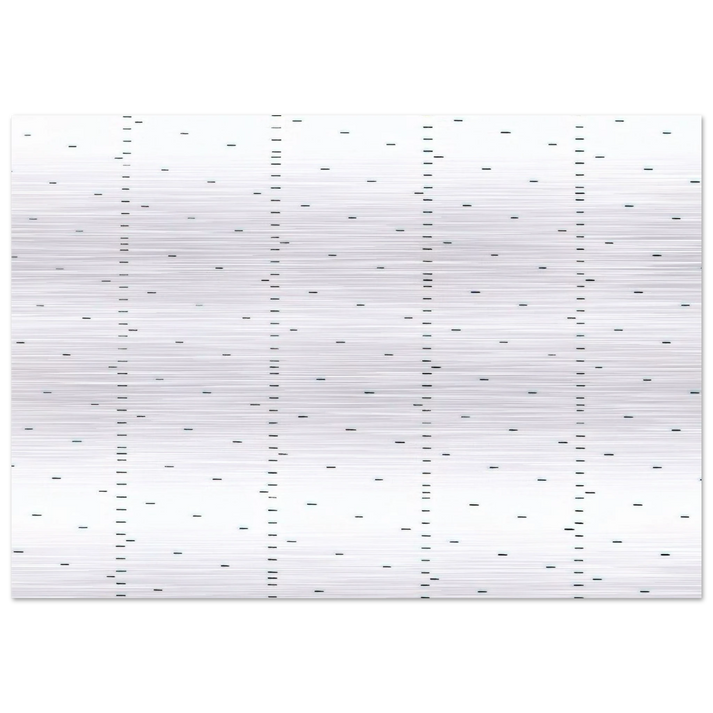
Every 15 cms, every 16 cms dash of one cm long - 1974 - Francois Morellet Brushed Aluminum Print - 70x100 cm / 28x40 inches | Francois Morellet Aluminum Print | Francois Morellet Prints
Every 15 cms, every 16 cms dash of one cm long - 1974 - Francois Morellet Brushed Aluminum Print - 70x100 cm / 28x40 inches | Francois Morellet Aluminum Print | Francois Morellet Prints
Couldn't load pickup availability
Every 15 cms, every 16 cms dash of one cm long - 1974 - Francois Morellet Brushed Aluminum Print
Experience the minimalist precision of Francois Morellet's 1974 masterpiece, "Every 15 cms, every 16 cms dash of one cm long," now available as a museum-quality reproduction from RedKalion. This iconic work exemplifies Morellet's systematic approach to geometric abstraction, where mathematical rules govern artistic expression. The composition features rhythmic dashes spaced at intervals of 15 and 16 centimeters, creating a visual harmony that challenges perception and celebrates order. As a leading figure in the GRAV (Groupe de Recherche d'Art Visuel) movement, Morellet pioneered art that engages viewers through optical effects and conceptual rigor, making this piece a cornerstone of contemporary art history.
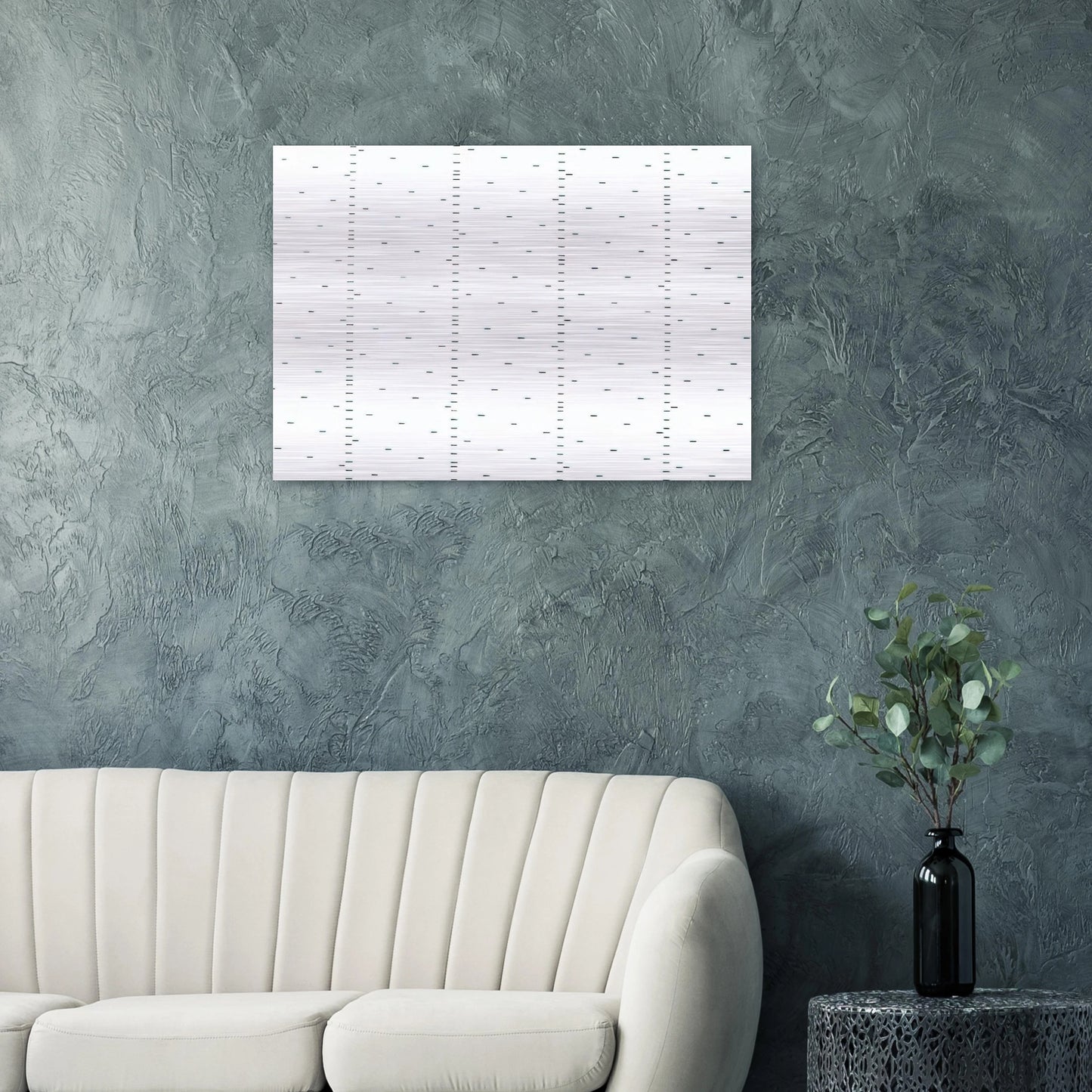
RedKalion presents this artwork as a premium brushed silver Aluminum DIBOND® print, measuring 70x100 cm (28x40 inches). Crafted with a 3mm (0.12") thickness, the rigid base ensures durability and a sleek profile. The direct print on AluDibond delivers vivid colors and a matte, glare-free finish, while unprinted white areas reveal a striking metallic silver effect with a horizontal grain for dynamic visual appeal. This archival-grade reproduction captures every detail of Morellet's original, offering a sophisticated addition to modern interiors.
Elevate your space with an archival masterpiece that endures, blending art historical significance with cutting-edge print technology. Trust RedKalion for expertly curated, high-quality fine art prints that honor the integrity of the artist's vision.


Discover Unlimited Art Possibilities
At RedKalion, you can find virtually any artwork from any artist, available in a wide range of sizes to perfectly match your space.
If you didn’t find what you’re looking for, contact us at support@redkalion.com . We will source any artwork and produce it in any size and format you need, including art prints, posters, canvas, framed pieces, framed canvas, and more.
For dedicated art enthusiasts, we also offer handcrafted replicas of any artwork, carefully painted by highly skilled artists using traditional techniques.
For custom requests, contact us at support@redkalion.com .
What is the significance of Francois Morellet's "Every 15 cms, every 16 cms dash of one cm long" from 1974?
This artwork is a key example of Morellet's systematic geometric abstraction, using mathematical intervals to create optical rhythm, reflecting his role in the GRAV movement and 1970s conceptual art.
How does the brushed silver Aluminum DIBOND® material enhance this print?
The brushed silver Aluminum DIBOND® provides a metallic finish with horizontal grain, adding dynamic texture and a durable 3mm base for a museum-quality reproduction.
What are the dimensions and specifications of this Francois Morellet aluminum print?
It measures 70x100 cm (28x40 inches), with a 3mm thickness, matte finish, and direct print on AluDibond for vivid colors and archival longevity.
Is a hanging kit included with this fine art print?
Yes, a hanging kit is included; specific components may vary by fulfillment country to ensure secure installation.
How does the printing technique affect the appearance of this artwork?
Direct printing on AluDibond ensures vibrant colors and a glare-free matte finish, with unprinted areas revealing a metallic silver effect for striking contrast.
What makes this reproduction archival-grade and suitable for long-term display?
Using high-quality Aluminum DIBOND® and advanced printing methods, this print resists fading and damage, offering durable preservation like original artworks.
Can you explain the historical context of Morellet's use of geometric patterns in the 1970s?
In the 1970s, Morellet explored systematic art with GRAV, focusing on viewer interaction and mathematical structures to challenge traditional aesthetics in post-war Europe.