
RedKalion
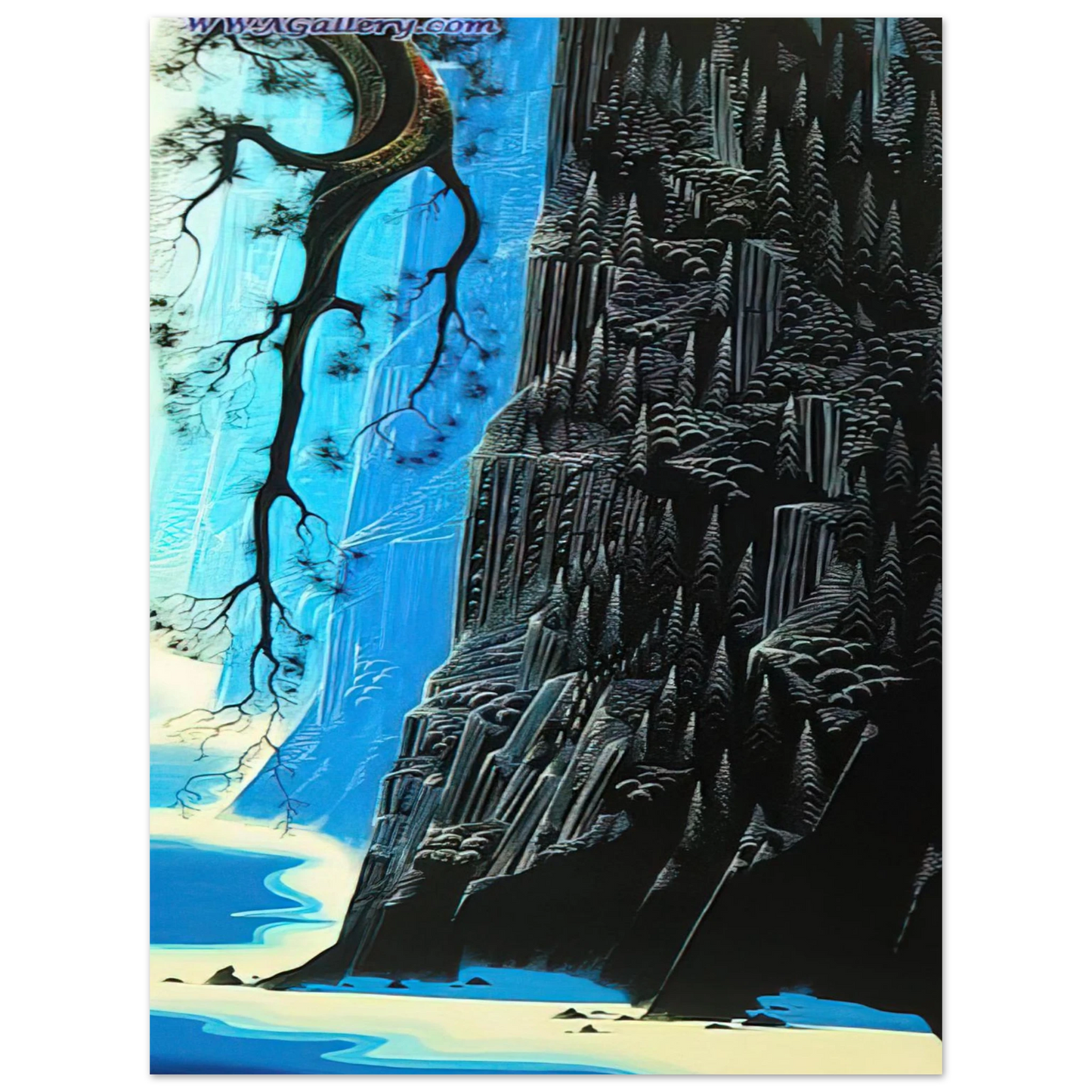
Eyvind Earle - Cliffs Ascending 75x100 cm / 30x40inches Fine Art Poster
Eyvind Earle - Cliffs Ascending 75x100 cm / 30x40inches Fine Art Poster
Couldn't load pickup availability
Eyvind Earle - Cliffs Ascending: A Monumental Fine Art Print
Immerse yourself in the majestic world of Eyvind Earle with "Cliffs Ascending," a museum-quality reproduction that captures the artist's iconic style. This 75x100 cm (30x40 inches) fine art poster brings Earle's visionary landscape to life, featuring towering cliffs that evoke a sense of awe and serenity. As a premier piece from RedKalion's collection, it represents the pinnacle of archival-grade artistry, designed to transform any space into a gallery-worthy sanctuary.
Eyvind Earle (1916-2000), renowned for his work as a background artist at Disney and his distinctive mid-century modern aesthetic, created "Cliffs Ascending" as a testament to his mastery of texture and light. This artwork blends geometric precision with organic forms, reflecting Earle's fascination with nature's grandeur and his innovative use of layered colors. A fascinating insight: Earle often employed a meticulous stippling technique to achieve depth, making each reproduction a tribute to his painstaking craftsmanship.
At RedKalion, we ensure every detail honors the original. Printed on Master's Edition archival paper, this fine art print boasts a matte, uncoated finish in a natural white hue, offering a luxurious texture that enhances the visual impact. The acid-free composition (pH above 7) guarantees longevity, preventing yellowing over time, while the 250 gsm (110 lb) weight and 0.29 mm (11.4 mils) thickness provide a substantial, premium feel. Crafted from FSC-certified paper, it aligns with sustainable practices, and with no minimum orders, it's printed and shipped on demand to deliver an exclusive experience.
Elevate your home or office with this archival masterpiece that endures, blending historical significance with contemporary elegance. Trust RedKalion as your curator for world-class reproductions that inspire and endure.
Discover Unlimited Art Possibilities
At RedKalion, you can find virtually any artwork from any artist, available in a wide range of sizes to perfectly match your space.
If you didn’t find what you’re looking for, contact us at support@redkalion.com . We will source any artwork and produce it in any size and format you need, including art prints, posters, canvas, framed pieces, framed canvas, and more.
For dedicated art enthusiasts, we also offer handcrafted replicas of any artwork, carefully painted by highly skilled artists using traditional techniques.
For custom requests, contact us at support@redkalion.com .
What are the dimensions of the Cliffs Ascending fine art print?
The print measures 75x100 cm (30x40 inches), making it an ideal size for a statement piece in any room, perfect for showcasing Eyvind Earle's detailed artwork.
What type of paper is used for this museum-quality reproduction?
It's printed on Master's Edition archival paper, a museum-quality, acid-free material with a matte finish and natural white color for a luxurious texture and long-lasting durability.
How is the print shipped and are there minimum order requirements?
We offer no minimum orders and print on demand, ensuring fast, eco-friendly fulfillment and reliable shipping for your fine art poster needs.
What makes this print archival and resistant to yellowing?
The acid-free paper (pH above 7) and FSC-certified sustainability ensure this archival-grade reproduction maintains its vibrancy without yellowing over time.
Can you describe the weight and thickness of the paper?
The paper is 250 gsm (110 lb) with a thickness of 0.29 mm (11.4 mils), providing a premium, substantial feel for a high-end fine art print.
What is the historical significance of Eyvind Earle's Cliffs Ascending?
Cliffs Ascending reflects Earle's mid-century modern style, showcasing his innovative use of geometric forms and layered colors inspired by nature, developed during his influential career at Disney.
What artistic techniques did Eyvind Earle use in this artwork?
Earle employed a meticulous stippling technique to create depth and texture, blending precise lines with organic shapes to evoke the grandeur of natural landscapes.