RedKalion
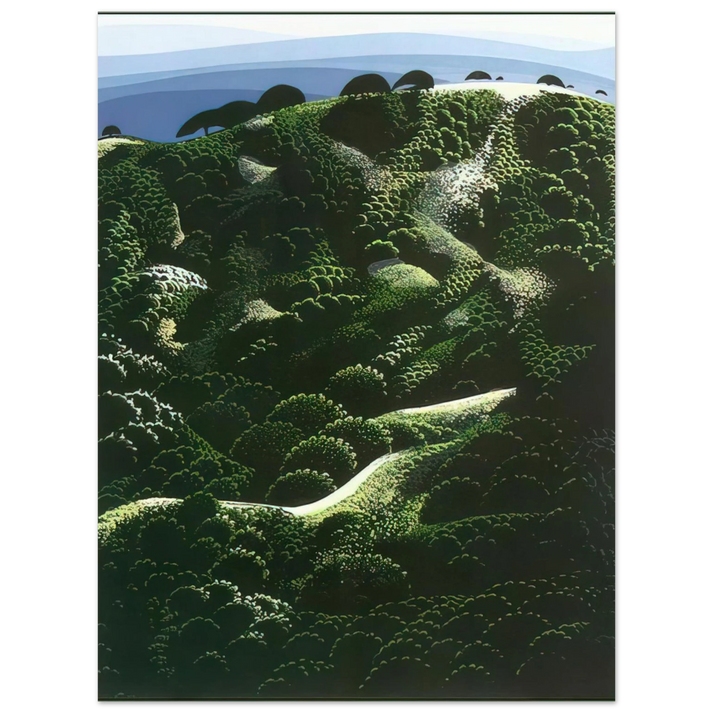
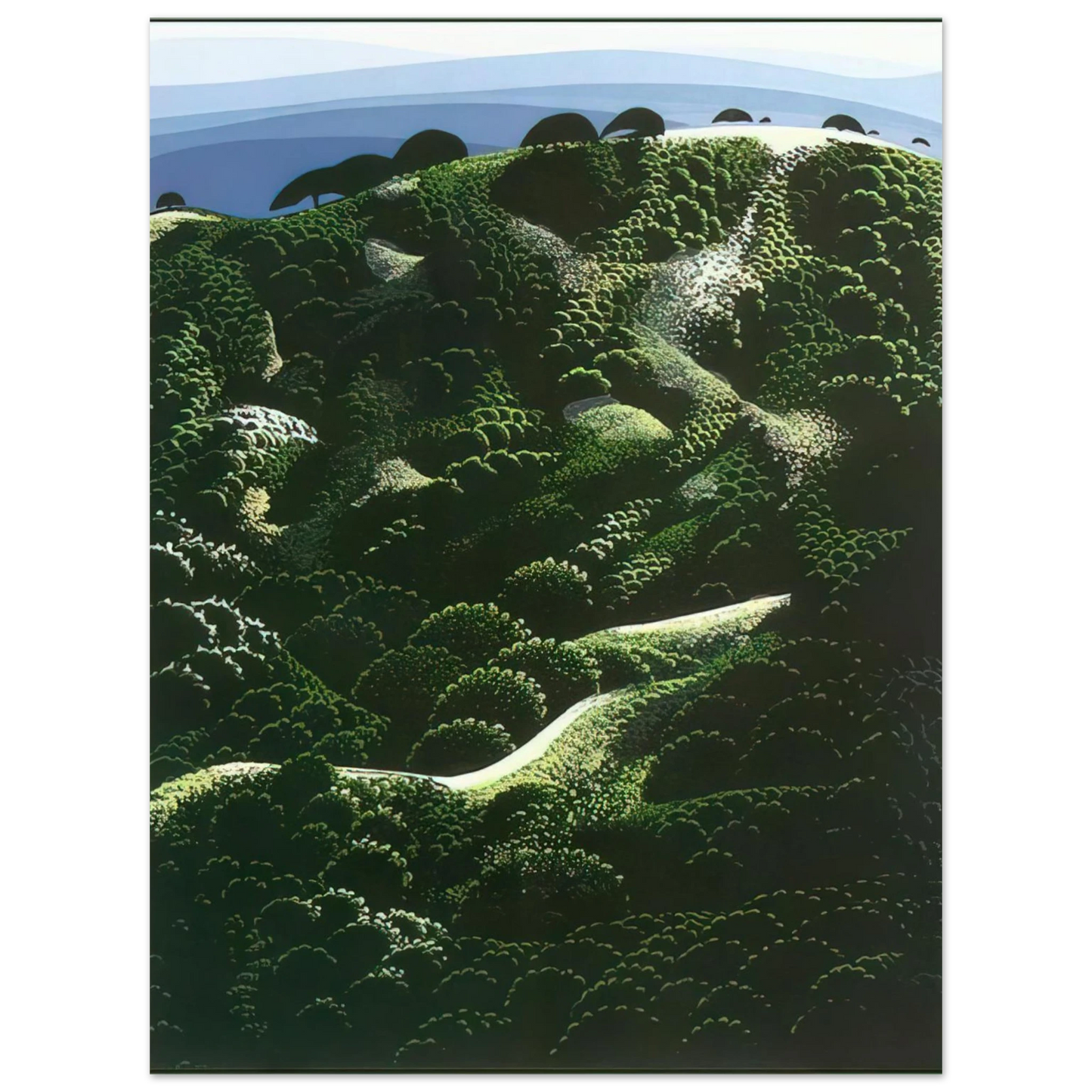
Eyvind Earle - Santa Barbara Mountains 75x100 cm / 30x40inches Fine Art Poster
Eyvind Earle - Santa Barbara Mountains 75x100 cm / 30x40inches Fine Art Poster
Couldn't load pickup availability
Eyvind Earle - Santa Barbara Mountains Fine Art Print
Immerse yourself in the serene majesty of Eyvind Earle's "Santa Barbara Mountains", now available as a museum-quality fine art print from RedKalion. This iconic 75x100 cm (30x40 inches) reproduction captures Earle's distinctive mid-century modern style, where stylized natural forms and a harmonious color palette evoke a timeless sense of peace and grandeur. As a leading figure in American illustration and animation, Earle's work for Disney and his personal landscapes blend realism with decorative abstraction, making this piece a sophisticated addition to any interior.
Our archival-grade print is meticulously crafted on Master's Edition archival paper, featuring a matte, uncoated finish in a natural white hue that enhances the artwork's subtle textures and prevents glare. With an acid-free composition (pH above 7) and FSC-certified sustainability, this 250 gsm (110 lb), 0.29 mm thick paper ensures your investment resists yellowing and endures for generations. Printed and shipped on demand with no minimum orders, RedKalion delivers a premium reproduction that honors Earle's artistic legacy while elevating your space with enduring beauty.
- Dimensions: 75x100 cm / 30x40 inches
- Paper: Master's Edition archival, museum-quality
- Finish: Matte, uncoated, natural white (off-white)
- Longevity: Acid-free (pH above 7) to prevent yellowing
- Weight & Thickness: 250 gsm (110 lb), 0.29 mm (11.4 mils)
- Sustainability: FSC-certified paper
- Fulfillment: Printed and shipped on demand, no minimum orders
Discover Unlimited Art Possibilities
At RedKalion, you can find virtually any artwork from any artist, available in a wide range of sizes to perfectly match your space.
If you didn’t find what you’re looking for, contact us at support@redkalion.com . We will source any artwork and produce it in any size and format you need, including art prints, posters, canvas, framed pieces, framed canvas, and more.
For dedicated art enthusiasts, we also offer handcrafted replicas of any artwork, carefully painted by highly skilled artists using traditional techniques.
For custom requests, contact us at support@redkalion.com .
What are the dimensions of this Eyvind Earle fine art print?
This museum-quality reproduction measures 75x100 cm (30x40 inches), perfect for creating a focal point in any room with its generous size and detailed artwork.
What type of paper is used for this archival print?
We use Master's Edition archival paper, a museum-quality, acid-free (pH above 7) material that ensures longevity and prevents yellowing over time for your fine art poster.
How is this print shipped and are there minimum orders?
Our prints are printed and shipped on demand with no minimum orders, offering convenient fulfillment for your Eyvind Earle Santa Barbara Mountains reproduction.
Is the paper sustainable and what is its weight?
Yes, the paper is FSC-certified for sustainability and has a weight of 250 gsm (110 lb) with a thickness of 0.29 mm, providing a durable, luxurious texture for your art print.
What finish does this fine art poster have?
It features a matte, uncoated finish in a natural white (off-white) color, enhancing the artwork's details without glare for a premium look in your home decor.
Who was Eyvind Earle and what is his significance in art history?
Eyvind Earle was a renowned American artist and illustrator, famous for his work at Disney and his mid-century modern landscapes that blend realism with stylized, decorative elements.
What makes the Santa Barbara Mountains artwork unique in Earle's portfolio?
This piece showcases Earle's signature use of simplified forms and harmonious colors to depict nature, reflecting his influence from American regionalism and modernist design trends.