RedKalion
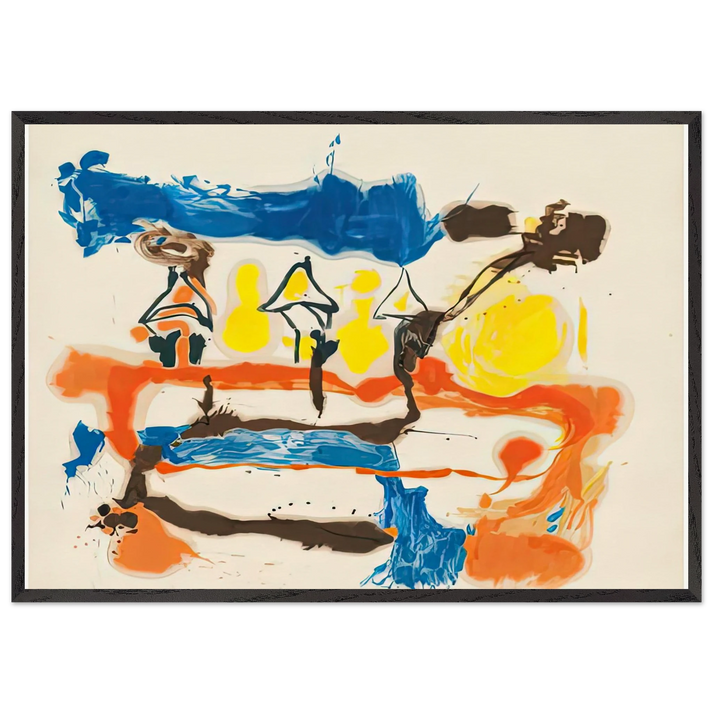
Fable 1961- - Helen Frankenthaler 70x100 cm / 28x40 inches Framed Art Print – Black Wooden Frame
Fable 1961- - Helen Frankenthaler 70x100 cm / 28x40 inches Framed Art Print – Black Wooden Frame
Couldn't load pickup availability
Fable 1961- by Helen Frankenthaler: A Soak-Stain Masterpiece
Immerse yourself in the lyrical abstraction of Helen Frankenthaler's Fable 1961-, a seminal work from the height of her pioneering soak-stain technique. This museum-quality art print captures the ethereal, watercolor-like washes of thinned oil paint that Frankenthaler poured directly onto unprimed canvas, creating luminous fields of color that seem to float in space. The title Fable hints at the narrative ambiguity and poetic resonance of her abstract forms, inviting personal interpretation and emotional connection.
RedKalion presents this iconic piece as a framed fine art print, meticulously reproduced to honor the original's delicate color transitions and spontaneous energy. Our commitment to archival excellence ensures this reproduction becomes a lasting heirloom.
Premium Framed Presentation
This artwork arrives ready-to-hang, complete with a hanging kit for immediate display. It is elegantly framed in a black wooden frame crafted from responsibly sourced oak and ash wood. The frame measures 20mm (0.79") thick and wide, offering a substantial, gallery-worthy presence that enhances the artwork's impact without overpowering its subtle beauty.
Archival Quality & Protection
The print is produced on 250 gsm (110 lb) matte, uncoated, natural white paper with a thickness of 0.29 mm (11.4 mils), an ideal weight for fine art reproductions that prevents warping and ensures rich color depth. We use FSC-certified sustainable paper to align with eco-conscious values. The artwork is protected by shatterproof plexiglass, which safeguards against damage while providing a clear, glare-resistant view, making it perfect for well-lit spaces.
Elevate your interior with this 70x100 cm / 28x40 inches framed art print, a testament to Frankenthaler's revolutionary role in the Color Field movement and RedKalion's dedication to curating archival masterpieces that endure.

Discover Unlimited Art Possibilities
At RedKalion, you can find virtually any artwork from any artist, available in a wide range of sizes to perfectly match your space.
If you didn’t find what you’re looking for, contact us at support@redkalion.com . We will source any artwork and produce it in any size and format you need, including art prints, posters, canvas, framed pieces, framed canvas, and more.
For dedicated art enthusiasts, we also offer handcrafted replicas of any artwork, carefully painted by highly skilled artists using traditional techniques.
For custom requests, contact us at support@redkalion.com .
What are the dimensions of this framed Helen Frankenthaler print?
This framed fine art print measures 70x100 cm (approximately 28x40 inches), including the black wooden frame, making it a statement piece for any room.
What type of paper is used for this museum-quality reproduction?
We use 250 gsm (110 lb) matte, uncoated, natural white archival paper, which is FSC-certified for sustainability and ideal for capturing the delicate hues of Frankenthaler's soak-stain technique.
Is this framed print ready to hang?
Yes, this ready-to-hang art print includes a hanging kit, allowing you to display it directly on your wall upon arrival without additional framing.
How does the frame protect and enhance the artwork?
The frame is made from responsibly sourced oak and ash wood, 20mm thick and wide, with shatterproof plexiglass that protects against damage while offering a gallery-style presentation.
Is this print archival and long-lasting?
Yes, it features archival museum-quality paper and materials designed to resist fading, ensuring your Helen Frankenthaler reproduction remains vibrant for generations.
What is the significance of Helen Frankenthaler's soak-stain technique in 'Fable 1961-'?
Frankenthaler's soak-stain technique involved pouring thinned oil paint onto unprimed canvas, creating fluid, transparent layers that revolutionized abstract expressionism and influenced Color Field painting.
Why is 'Fable 1961-' considered an important work in art history?
This piece exemplifies Frankenthaler's innovative approach in the early 1960s, blending abstraction with lyrical emotion, and it highlights her role as a key female artist in the post-war American art scene.