

RedKalion
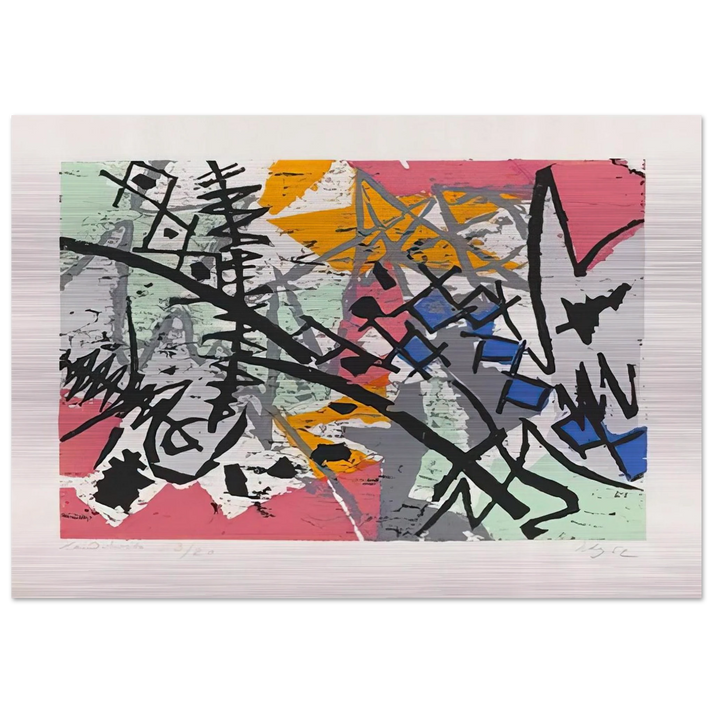
Farbholzschnitt 1952-4 - 1952 - Ernst Wilhelm Nay Brushed Aluminum Print - 70x100 cm / 28x40 inches | Ernst Wilhelm Nay Aluminum Print | Ernst Wilhelm Nay Prints
Farbholzschnitt 1952-4 - 1952 - Ernst Wilhelm Nay Brushed Aluminum Print - 70x100 cm / 28x40 inches | Ernst Wilhelm Nay Aluminum Print | Ernst Wilhelm Nay Prints
Couldn't load pickup availability
Farbholzschnitt 1952-4 (1952) by Ernst Wilhelm Nay
Immerse yourself in the bold abstraction of Ernst Wilhelm Nay's Farbholzschnitt 1952-4, a seminal work from 1952 that captures the artist's pioneering exploration of color and form. This museum-quality reproduction on brushed aluminum transforms Nay's dynamic woodcut into a contemporary masterpiece, perfect for modern interiors seeking artistic depth and archival longevity.
As a leading figure in post-war German art, Nay developed his "Scheiben" (disc) series in the 1950s, using vibrant, rhythmic shapes to evoke emotional resonance beyond figurative representation. Farbholzschnitt 1952-4 exemplifies this breakthrough, with its interplay of organic forms and chromatic harmony reflecting Nay's belief in painting as a "spiritual event." RedKalion's expert reproduction ensures every nuance of his woodcut technique—from the textured grain to the layered hues—is preserved with fidelity.
This fine art print is crafted on premium Brushed Silver Aluminum DIBOND®, featuring a 3mm thickness for a durable, rigid display. The direct print technology delivers vivid, fade-resistant colors with a matte, glare-free finish, while unprinted areas reveal a striking metallic silver effect that enhances the artwork's modern aesthetic. Measuring 70x100 cm (28x40 inches), it includes a hanging kit for effortless installation.
Elevate your space with an archival masterpiece that endures, blending Nay's historic innovation with RedKalion's commitment to premium art reproductions. Ideal for collectors and design enthusiasts, this piece offers a timeless conversation starter rooted in artistic excellence.


Discover Unlimited Art Possibilities
At RedKalion, you can find virtually any artwork from any artist, available in a wide range of sizes to perfectly match your space.
If you didn’t find what you’re looking for, contact us at support@redkalion.com . We will source any artwork and produce it in any size and format you need, including art prints, posters, canvas, framed pieces, framed canvas, and more.
For dedicated art enthusiasts, we also offer handcrafted replicas of any artwork, carefully painted by highly skilled artists using traditional techniques.
For custom requests, contact us at support@redkalion.com .
What are the specifications of this Ernst Wilhelm Nay aluminum print?
This print measures 70x100 cm (28x40 inches), made from 3mm thick Brushed Silver Aluminum DIBOND® with a direct print for vivid colors and a matte finish, featuring a metallic silver effect in unprinted areas.
How does the brushed aluminum enhance this fine art reproduction?
The brushed silver aluminum with horizontal grain adds a dynamic, modern look, complementing Nay's abstract forms with a durable, glare-free surface ideal for museum-quality displays.
Is a hanging kit included with this museum-quality print?
Yes, a hanging kit is included; specific components may vary by fulfillment country to ensure secure installation for your premium art reproduction.
How archival is this Ernst Wilhelm Nay print on aluminum?
This print uses direct printing on Aluminum DIBOND® for fade-resistant colors, offering long-lasting durability as a premium archival art piece for your collection.
What makes Farbholzschnitt 1952-4 significant in art history?
Created in 1952, it's part of Nay's "Scheiben" series, showcasing his abstract use of color and form to evoke emotional depth, marking a key moment in post-war German art.
How does the matte finish benefit this black-and-white design?
The matte, glare-free finish minimizes reflections, enhancing the contrast and brushed silver effect, making it ideal for displaying abstract designs with striking clarity.
What was Ernst Wilhelm Nay's technique in this woodcut?
Nay used woodcut printing to layer vibrant colors and organic shapes, creating rhythmic compositions that explore spiritual themes beyond traditional representation.