
RedKalion
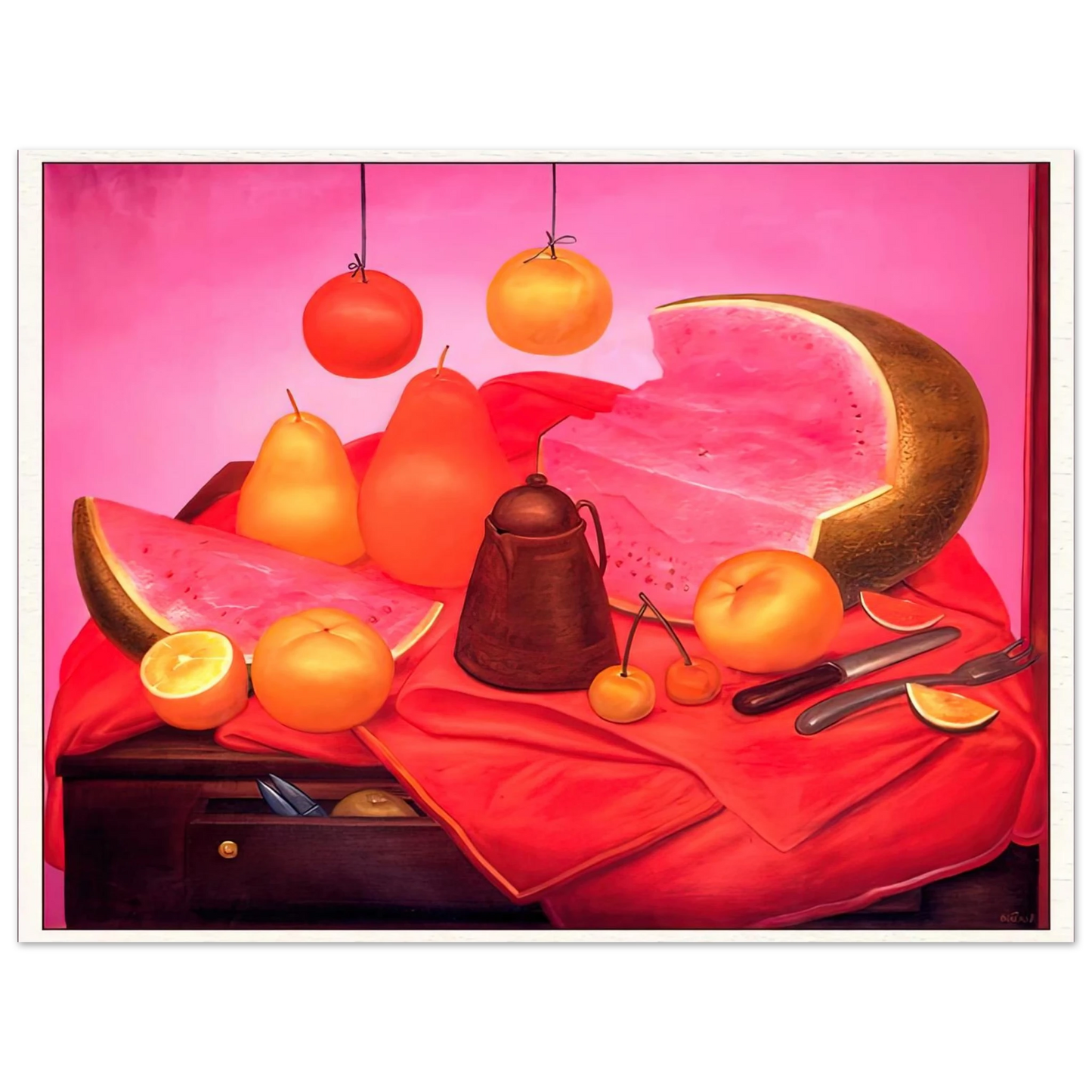
Fernando Botero - STILL LIFE WITH WATERMELON 1 75x100 cm / 30x40inches Fine Art Poster
Fernando Botero - STILL LIFE WITH WATERMELON 1 75x100 cm / 30x40inches Fine Art Poster
Couldn't load pickup availability
Fernando Botero - Still Life with Watermelon 1: A Monumental Feast in Fine Art
Immerse yourself in the voluptuous world of Fernando Botero with this premium fine art print of "Still Life with Watermelon 1". This iconic 75x100 cm (30x40 inches) reproduction captures Botero's signature Boterismo style, where everyday objects swell with playful, exaggerated forms to celebrate abundance and sensuality. The watermelon, grapes, and pitcher become monumental characters, rendered in bold, flat colors that defy traditional perspective—a hallmark of Botero's subversive approach to classical still life painting.
RedKalion presents this artwork on our exclusive Master's Edition archival paper, a museum-quality substrate chosen for its exceptional fidelity to Botero's original palette. The matte, uncoated finish in a natural white hue enhances the tactile, painterly quality of the print, while the 250 gsm (110 lb) weight and 0.29 mm thickness ensure a luxurious, gallery-worthy presence. Crafted from acid-free, FSC-certified materials, this print is designed to resist yellowing and endure for generations, making it a sustainable heirloom for discerning collectors.
Elevate your space with an archival masterpiece that endures, printed and shipped on demand with no minimum orders. This Fernando Botero fine art poster is not just a decoration but a conversation piece that bridges modern Latin American art with timeless elegance.
Discover Unlimited Art Possibilities
At RedKalion, you can find virtually any artwork from any artist, available in a wide range of sizes to perfectly match your space.
If you didn’t find what you’re looking for, contact us at support@redkalion.com . We will source any artwork and produce it in any size and format you need, including art prints, posters, canvas, framed pieces, framed canvas, and more.
For dedicated art enthusiasts, we also offer handcrafted replicas of any artwork, carefully painted by highly skilled artists using traditional techniques.
For custom requests, contact us at support@redkalion.com .
What are the dimensions of this Fernando Botero fine art print?
This museum-quality reproduction measures 75x100 cm (30x40 inches), perfectly capturing the monumental scale of Botero's original artwork for a bold statement in any room.
What type of paper is used for this archival print?
We use Master's Edition archival paper, a matte, uncoated, natural white paper that is acid-free (pH above 7) and FSC-certified, ensuring vibrant colors and long-term durability without yellowing.
How is this Botero still life print shipped?
All prints are printed and shipped on demand with no minimum orders, carefully packaged in protective materials to arrive in pristine condition, ready for framing.
What is the weight and thickness of the paper?
The paper is 250 gsm (110 lb) with a thickness of 0.29 mm (11.4 mils), providing a substantial, luxurious feel ideal for a premium fine art poster.
How long will this archival reproduction last?
With acid-free materials and museum-quality standards, this print is designed to resist fading and deterioration, preserving its beauty for decades in proper conditions.
What is the historical significance of Botero's "Still Life with Watermelon 1"?
This artwork exemplifies Botero's Boterismo style from the late 20th century, using exaggerated, voluptuous forms to subvert traditional still life and comment on Latin American culture and abundance.
Why did Botero use such bold, flat colors in this piece?
Botero employed bold, flat colors to emphasize volume and form, drawing from folk art and pre-Columbian influences to create a playful, accessible aesthetic that challenges classical art norms.