RedKalion
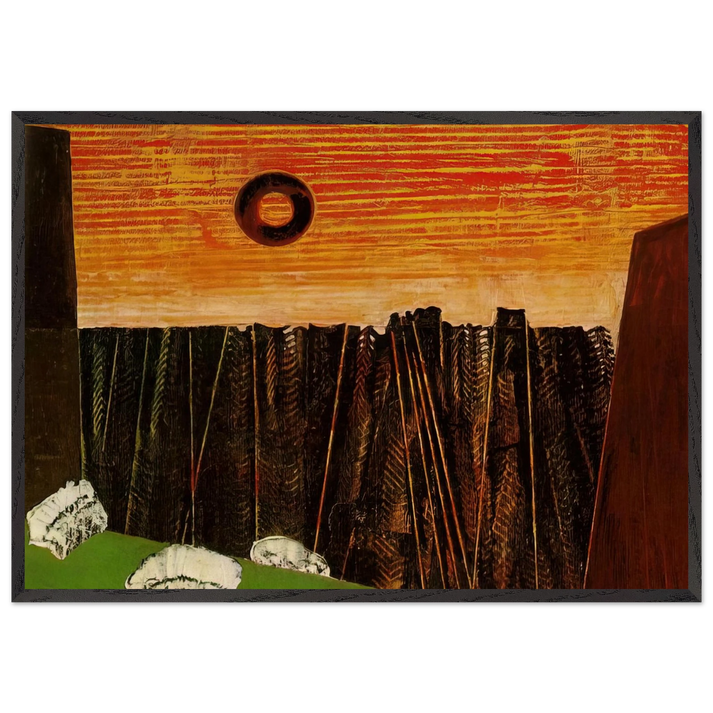
Fishbone Forest - Max Ernst 70x100 cm / 28x40 inches Framed Art Print – Black Wooden Frame
Fishbone Forest - Max Ernst 70x100 cm / 28x40 inches Framed Art Print – Black Wooden Frame
Couldn't load pickup availability
Fishbone Forest - Max Ernst: A Surrealist Masterpiece in Archival Print
Immerse yourself in the enigmatic world of Max Ernst with this museum-quality reproduction of Fishbone Forest, a quintessential work from the Surrealist movement. This fine art print captures Ernst's innovative frottage technique, where textured surfaces were rubbed onto paper to create dreamlike, organic forms that blur the line between reality and imagination. The artwork's haunting, skeletal trees evoke a sense of mystery and primal energy, making it a captivating centerpiece for any modern interior.
RedKalion presents this archival-grade reproduction on 250 gsm (110 lb) matte, uncoated paper with a natural white finish, ensuring vibrant color fidelity and exceptional durability. The print is elegantly framed in a 20mm (0.79") thick black wooden frame crafted from responsibly sourced oak and ash wood, offering a wider, more substantial profile than classic 14mm frames. Protected by shatterproof plexiglass and including a ready-to-hang kit, this piece arrives fully prepared to elevate your space with timeless artistry.
- Frame: Black wooden frame (oak/ash, 20mm thick/wide) with hanging kit
- Paper: 250 gsm (110 lb), 0.29 mm thick, matte, uncoated, archival museum-quality
- Protection: Shatterproof plexiglass
- Sustainability: FSC-certified or equivalent materials
- Dimensions: 70x100 cm / 28x40 inches (framed)
Trust RedKalion to deliver a premium reproduction that honors Ernst's legacy, combining art historical expertise with uncompromising craftsmanship for a piece that endures.

Discover Unlimited Art Possibilities
At RedKalion, you can find virtually any artwork from any artist, available in a wide range of sizes to perfectly match your space.
If you didn’t find what you’re looking for, contact us at support@redkalion.com . We will source any artwork and produce it in any size and format you need, including art prints, posters, canvas, framed pieces, framed canvas, and more.
For dedicated art enthusiasts, we also offer handcrafted replicas of any artwork, carefully painted by highly skilled artists using traditional techniques.
For custom requests, contact us at support@redkalion.com .
What is the historical significance of Max Ernst's Fishbone Forest?
Fishbone Forest exemplifies Max Ernst's pioneering frottage technique from the 1920s Surrealist movement, creating dreamlike imagery that explores the subconscious through textured rubbings, making it a key fine art print for collectors.
What are the specifications of the paper used for this art print?
This museum-quality reproduction uses 250 gsm (110 lb) matte, uncoated archival paper with a 0.29 mm thickness and natural white finish, ensuring vibrant color and longevity for your framed art print.
How is the black wooden frame constructed and is it ready to hang?
The frame is made from responsibly sourced oak and ash wood, 20mm thick and wide, and includes a hanging kit, so it arrives as a ready-to-hang framed art print for immediate display.
What protection does the shatterproof plexiglass provide?
Shatterproof plexiglass safeguards the Max Ernst print from damage, offering durable protection while maintaining clarity for this premium fine art reproduction.
Are the materials in this print sustainable and archival?
Yes, it features FSC-certified or equivalent sustainable paper and archival-quality materials, ensuring an eco-friendly and long-lasting museum-quality print.
How does Ernst's frottage technique influence the mood of Fishbone Forest?
Ernst's frottage creates textured, skeletal forms that evoke a mysterious, primal atmosphere, blending natural and surreal elements in this iconic art print.
Why is the frame wider than classic frames at 20mm?
The 20mm thick black wooden frame provides a substantial, modern profile that enhances the artwork's presence, offering a premium look compared to standard 14mm frames.