RedKalion
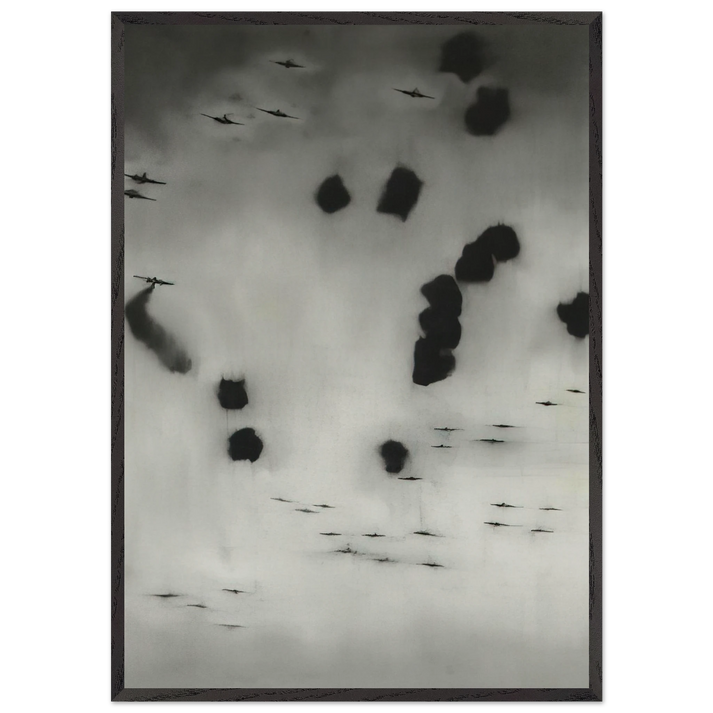
FLIEGER 1964 - Gerhard Richter 70x100 cm / 28x40 inches Framed Art Print – Black Wooden Frame
FLIEGER 1964 - Gerhard Richter 70x100 cm / 28x40 inches Framed Art Print – Black Wooden Frame
Couldn't load pickup availability
FLIEGER 1964 - Gerhard Richter: A Masterpiece of Ambiguity and Precision
Introducing FLIEGER 1964, a seminal work by Gerhard Richter, one of the most influential contemporary artists of our time. This fine art print captures Richter's early exploration into photorealism and abstraction, a hallmark of his groundbreaking oeuvre. Created during a pivotal moment in his career, "Flieger" (German for "aviator" or "flyer") reflects Richter's fascination with mechanical imagery and the blurring of photographic sources, challenging perceptions of reality and memory. The artwork's monochromatic tones and meticulous detail evoke a sense of mystery and technical precision, making it a compelling centerpiece for modern interiors, offices, or galleries.
At RedKalion, we pride ourselves on offering museum-quality reproductions that honor the integrity of original masterpieces. Our FLIEGER 1964 framed art print is meticulously crafted to archival standards, ensuring it stands the test of time. The print is produced on 250 gsm (110 lb) matte, uncoated, natural white paper with a thickness of 0.29 mm (11.4 mils), ideal for capturing every nuance of Richter's technique. It is framed in a black wooden frame made from responsibly sourced oak and ash wood, measuring 20mm (0.79") thick and wide—wider than classic 14mm (0.55") frames for a bold, contemporary presence. The frame includes a ready-to-hang kit for effortless installation, and the artwork is protected by shatterproof plexiglass, combining durability with aesthetic appeal. All materials are FSC-certified or equivalent, reflecting our commitment to sustainability.
Elevate your space with this archival masterpiece that endures, blending art historical significance with premium craftsmanship. RedKalion is your trusted curator for world-class reproductions, bringing the legacy of Gerhard Richter into your home or collection.

Discover Unlimited Art Possibilities
At RedKalion, you can find virtually any artwork from any artist, available in a wide range of sizes to perfectly match your space.
If you didn’t find what you’re looking for, contact us at support@redkalion.com . We will source any artwork and produce it in any size and format you need, including art prints, posters, canvas, framed pieces, framed canvas, and more.
For dedicated art enthusiasts, we also offer handcrafted replicas of any artwork, carefully painted by highly skilled artists using traditional techniques.
For custom requests, contact us at support@redkalion.com .
What is the significance of FLIEGER 1964 by Gerhard Richter?
FLIEGER 1964 is a key early work by Gerhard Richter, showcasing his transition to photorealism and exploration of mechanical imagery, reflecting themes of memory and ambiguity in post-war German art.
What are the specifications of the paper used for this fine art print?
The print uses 250 gsm (110 lb) matte, uncoated, natural white archival museum-quality paper with a thickness of 0.29 mm (11.4 mils), ideal for high-resolution reproduction and longevity.
How is the black wooden frame constructed and what are its measurements?
The frame is made from responsibly sourced oak and ash wood, measuring 20mm (0.79") thick and wide, wider than classic 14mm (0.55") frames, and includes a ready-to-hang kit for easy installation.
Is this framed art print ready to hang and what protection does it offer?
Yes, it comes with a hanging kit for direct wall mounting and features shatterproof plexiglass to protect the print from damage while ensuring clarity and durability.
What sustainability practices are used in this museum-quality reproduction?
We use FSC-certified materials or equivalent for the paper and frame, ensuring eco-friendly production without compromising on archival quality or fine art standards.
How does Gerhard Richter's technique in FLIEGER 1964 influence its visual impact?
Richter used blurred photographic sources and monochromatic tones to create ambiguity, enhancing the artwork's mysterious and precise aesthetic that challenges viewer perception.
What era does FLIEGER 1964 represent in art history, and why is it important?
It represents the 1960s post-war era in Germany, highlighting Richter's innovative approach to reconciling photography with painting, which redefined contemporary art movements.