

RedKalion
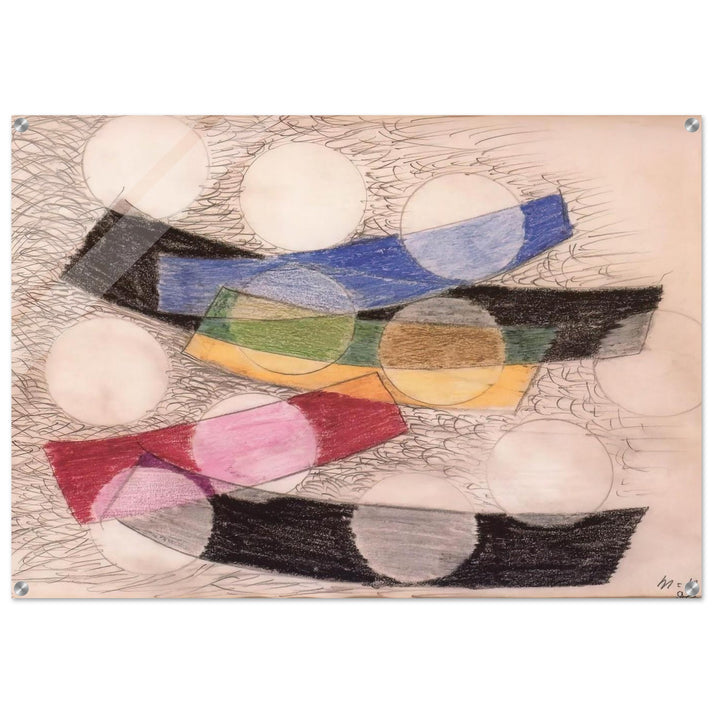
Floating Forms - Laszlo Moholy-Nagy Acrylic Print - 70x100 cm / 28x40″ inches
Floating Forms - Laszlo Moholy-Nagy Acrylic Print - 70x100 cm / 28x40″ inches
Couldn't load pickup availability
Floating Forms by László Moholy-Nagy: A Modernist Masterpiece in Acrylic
Elevate your contemporary space with Floating Forms, a museum-quality acrylic print of László Moholy-Nagy's iconic 1922 abstract composition. This premium reproduction captures the dynamic interplay of geometric shapes and ethereal light that defines the Bauhaus movement, offering a vibrant statement piece for modern interiors.
Moholy-Nagy, a pioneering figure in 20th-century art and design, explored light, space, and transparency through innovative techniques like photograms and kinetic sculptures. Floating Forms exemplifies his vision of integrating art with technology—a principle that resonates in our archival-grade acrylic presentation.
RedKalion's fine art print is meticulously crafted on 4mm (0.15") acrylic, ensuring a sleek, durable finish with exceptional color vibrancy. The straight-cut corners and modern design enhance its minimalist aesthetic, while transparent backgrounds are rendered in white for optimal visual clarity. Each piece includes a complete hanging kit with hardware, screws, and precisely placed screw holes (14mm/0.55" from the edge, 8mm/0.31" diameter) for effortless installation.
Dimensions: 70x100 cm / 28x40" inches—ideal for creating a focal point in living rooms, offices, or galleries. Trust RedKalion to deliver an archival masterpiece that endures, blending art historical significance with contemporary craftsmanship.


Discover Unlimited Art Possibilities
At RedKalion, you can find virtually any artwork from any artist, available in a wide range of sizes to perfectly match your space.
If you didn’t find what you’re looking for, contact us at support@redkalion.com . We will source any artwork and produce it in any size and format you need, including art prints, posters, canvas, framed pieces, framed canvas, and more.
For dedicated art enthusiasts, we also offer handcrafted replicas of any artwork, carefully painted by highly skilled artists using traditional techniques.
For custom requests, contact us at support@redkalion.com .
What is the historical significance of Floating Forms by László Moholy-Nagy?
Floating Forms (1922) is a key abstract work from Moholy-Nagy's Bauhaus period, reflecting his innovative use of geometric shapes and light to explore modernism and technology in art.
What materials are used in this acrylic print?
This museum-quality reproduction features 4mm (0.15") acrylic for a vibrant, durable finish with straight-cut corners and a modern design, ensuring a premium fine art print.
How is the acrylic print shipped and installed?
It includes a hanging kit with hardware, screws, and screw holes (14mm/0.55" from edge, 8mm/0.31" diameter) for easy wall mounting, shipped securely to protect your archival art piece.
What are the dimensions of this artwork?
The print measures 70x100 cm / 28x40" inches, making it an ideal size for enhancing spaces with a high-quality acrylic art reproduction.
How long will the colors and materials last?
Made with archival-grade acrylic, this durable print resists fading and damage, offering long-lasting color vibrancy for your premium art collection.
Why does the artwork have a white background instead of transparent?
Transparent backgrounds default to white in our acrylic prints to optimize presentation and ensure clarity, aligning with Moholy-Nagy's focus on light and form.
What makes Moholy-Nagy's technique unique in this piece?
Moholy-Nagy blended painting, photography, and industrial design in Floating Forms, using abstract forms to experiment with spatial dynamics and modernist aesthetics.