RedKalion
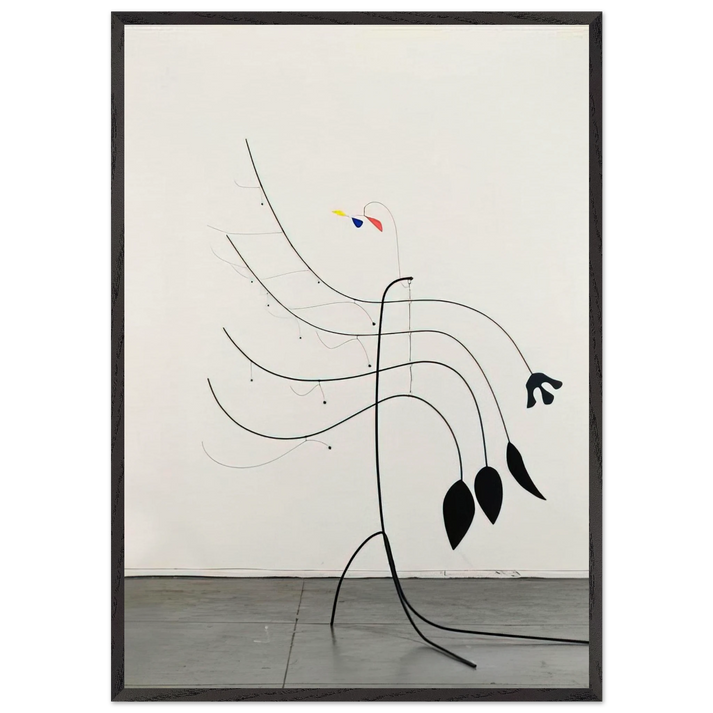
FOUR LEAVES AND THREE PETALS 1939 - Alexander Calder 70x100 cm / 28x40 inches Framed Art Print – Black Wooden Frame
FOUR LEAVES AND THREE PETALS 1939 - Alexander Calder 70x100 cm / 28x40 inches Framed Art Print – Black Wooden Frame
Couldn't load pickup availability
FOUR LEAVES AND THREE PETALS 1939 by Alexander Calder
Immerse yourself in the whimsical genius of Alexander Calder with this museum-quality framed art print of FOUR LEAVES AND THREE PETALS 1939. This iconic work from Calder's groundbreaking period showcases his masterful balance of abstract organic forms and playful geometry, capturing the essence of biomorphic Surrealism that defined his early career. Measuring 70x100 cm / 28x40 inches, this reproduction brings Calder's dynamic composition into your space with archival precision.
Expertly crafted on 250 gsm (110 lb) matte, uncoated, natural white archival museum-quality paper, this print ensures vibrant color fidelity and exceptional durability. The shatterproof plexiglass provides superior protection while maintaining clarity, housed in a responsibly sourced oak and ash wood frame that measures 20mm (0.79") thick and wide—offering a substantial, gallery-worthy presence. Each piece is ready-to-hang with an included hanging kit, allowing for immediate display of this timeless artwork.
RedKalion curates this edition as a definitive reproduction, utilizing FSC-certified materials to uphold sustainability without compromising on artistic integrity. Elevate your environment with a piece that bridges Calder's innovative spirit and contemporary elegance, designed to endure as a focal point of sophistication.

Discover Unlimited Art Possibilities
At RedKalion, you can find virtually any artwork from any artist, available in a wide range of sizes to perfectly match your space.
If you didn’t find what you’re looking for, contact us at support@redkalion.com . We will source any artwork and produce it in any size and format you need, including art prints, posters, canvas, framed pieces, framed canvas, and more.
For dedicated art enthusiasts, we also offer handcrafted replicas of any artwork, carefully painted by highly skilled artists using traditional techniques.
For custom requests, contact us at support@redkalion.com .
What is the significance of FOUR LEAVES AND THREE PETALS 1939 by Alexander Calder?
This artwork represents Calder's exploration of biomorphic forms during his Surrealist phase, blending abstract shapes with organic inspiration to create a playful, dynamic composition that predates his famous mobiles.
What are the dimensions of this framed art print?
The print measures 70x100 cm / 28x40 inches, framed in a 20mm thick black wooden frame, making it a substantial piece ideal for prominent wall display.
What type of paper is used for this museum-quality reproduction?
It's printed on 250 gsm (110 lb) matte, uncoated, natural white archival museum-quality paper, ensuring longevity and vibrant color reproduction for fine art prints.
Is this framed print ready to hang?
Yes, it includes a hanging kit and is ready-to-hang directly on the wall, offering convenience for immediate display of your Alexander Calder art.
How does the frame protect the artwork?
The frame features shatterproof plexiglass to safeguard the print from damage, combined with responsibly sourced oak and ash wood for durability.
What makes this reproduction archival and sustainable?
It uses FSC-certified materials and archival-grade paper, ensuring eco-friendly production and long-term preservation of this Calder masterpiece.
Can you describe Calder's technique in this piece?
Calder employed flat, painted shapes with clean lines and balanced asymmetry, reflecting his transition from drawing to sculptural forms in the late 1930s.