RedKalion
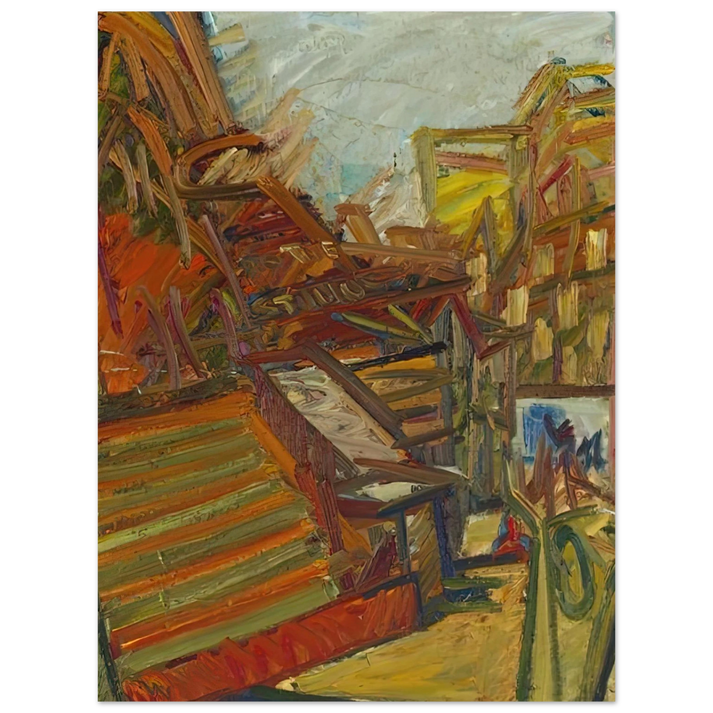
Frank Auerbach - TO THE STUDIOS 1991 75x100 cm / 30x40inches Fine Art Poster
Frank Auerbach - TO THE STUDIOS 1991 75x100 cm / 30x40inches Fine Art Poster
Couldn't load pickup availability
Frank Auerbach - TO THE STUDIOS 1991: A Masterpiece of Post-War Expressionism
Immerse yourself in the raw, visceral energy of Frank Auerbach's TO THE STUDIOS 1991, now available as a museum-quality fine art print from RedKalion. This powerful work, measuring 75x100 cm (30x40 inches), captures the artist's signature impasto technique—a thick, sculptural application of paint that transforms the canvas into a dynamic, textured landscape. Created during Auerbach's mature period, this piece reflects his lifelong obsession with London's urban scenes and studio interiors, evoking a sense of gritty, atmospheric depth that resonates with collectors of modern British art.
At RedKalion, we honor Auerbach's legacy with archival-grade reproductions that mirror the intensity of the original. Printed on our exclusive Master's Edition archival paper, this fine art poster features a matte, uncoated finish in a natural white hue, enhancing the luxurious texture and subtle tonal variations. The acid-free composition (pH above 7) ensures longevity, preventing yellowing over time, while the substantial 250 gsm weight (0.29 mm thickness) provides a durable, premium feel. Crafted from FSC-certified paper, this piece combines aesthetic excellence with sustainable practices.
Elevate your space with an archival masterpiece that endures, printed and shipped on demand with no minimum orders. Trust RedKalion—your curator of world-class reproductions—to bring the bold spirit of Auerbach's studio into your home or office.
Discover Unlimited Art Possibilities
At RedKalion, you can find virtually any artwork from any artist, available in a wide range of sizes to perfectly match your space.
If you didn’t find what you’re looking for, contact us at support@redkalion.com . We will source any artwork and produce it in any size and format you need, including art prints, posters, canvas, framed pieces, framed canvas, and more.
For dedicated art enthusiasts, we also offer handcrafted replicas of any artwork, carefully painted by highly skilled artists using traditional techniques.
For custom requests, contact us at support@redkalion.com .
What are the dimensions and details of this Frank Auerbach print?
This fine art print measures 75x100 cm (30x40 inches) and reproduces Auerbach's TO THE STUDIOS 1991, showcasing his expressive impasto technique in a museum-quality archival reproduction.
What type of paper is used for this fine art poster?
It's printed on Master's Edition archival paper, a museum-quality, acid-free material with a matte, uncoated finish in natural white for a luxurious texture and long-lasting durability.
How is this print shipped and are there order minimums?
We offer on-demand printing and shipping with no minimum orders, ensuring fast fulfillment and careful handling for your archival art print.
Will this print resist yellowing over time?
Yes, the acid-free paper (pH above 7) prevents yellowing, making this a long-lasting, archival-grade reproduction for your collection.
What is the weight and thickness of the paper?
The paper is 250 gsm (110 lb) with a thickness of 0.29 mm (11.4 mils), providing a substantial, premium feel for this high-quality art print.
What inspired Frank Auerbach's TO THE STUDIOS 1991?
This work reflects Auerbach's deep engagement with London's urban environment and studio spaces, using thick impasto to convey emotional and physical depth in post-war expressionism.
How does Auerbach's technique enhance this reproduction?
His impasto method creates textured, sculptural surfaces, which our archival printing captures in detail, preserving the dynamic energy of the original artwork.