
RedKalion
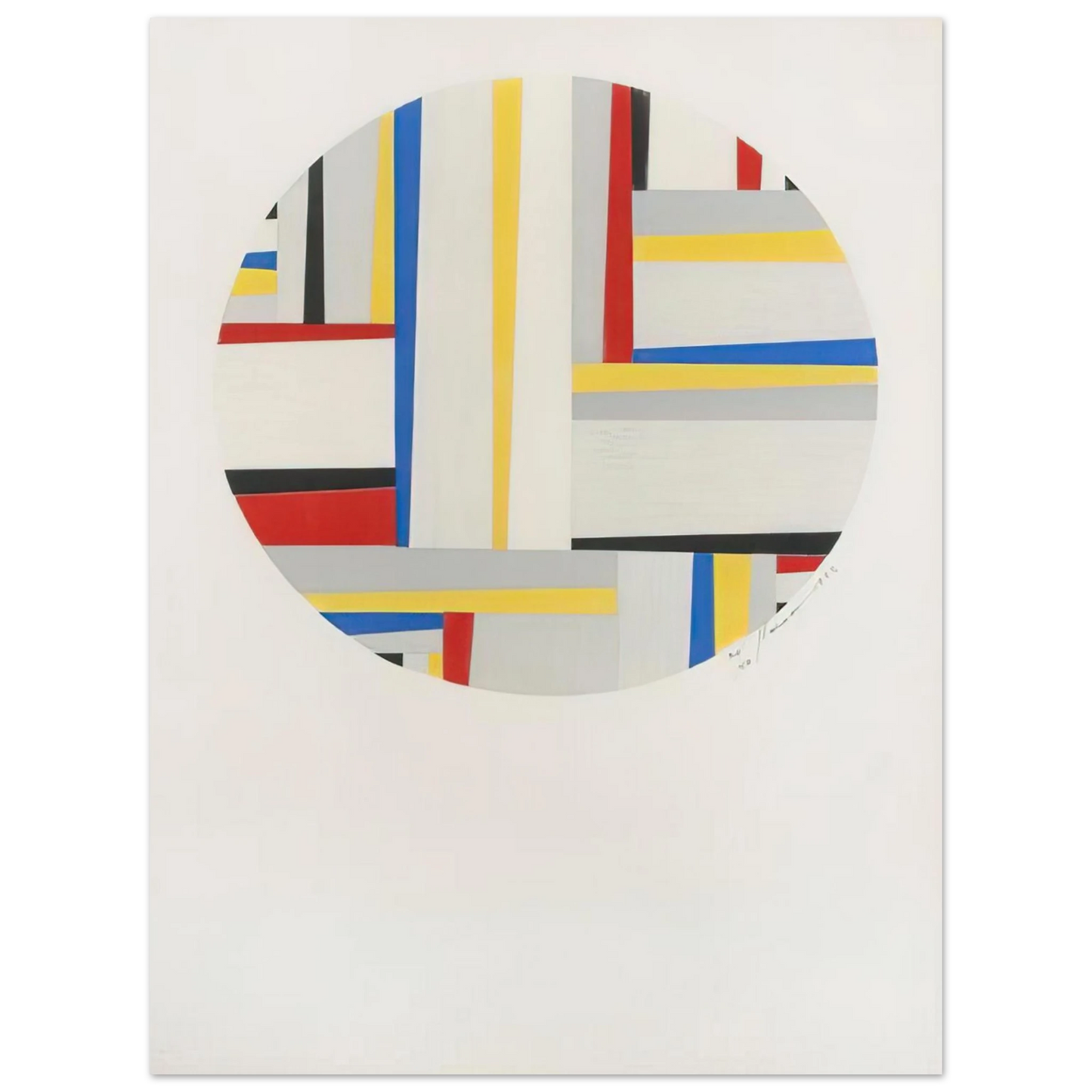
Fritz Glarner - Relational Painting, Tondo #49 - 1952 75x100 cm / 30x40inches Fine Art Poster
Fritz Glarner - Relational Painting, Tondo #49 - 1952 75x100 cm / 30x40inches Fine Art Poster
Couldn't load pickup availability
Fritz Glarner - Relational Painting, Tondo #49 - 1952
Immerse yourself in the geometric precision of Fritz Glarner's Relational Painting, Tondo #49, a 1952 masterpiece that epitomizes the artist's lifelong exploration of relational painting. This museum-quality reproduction captures every nuance of Glarner's dynamic composition, where interlocking circles and rectangles create a harmonious balance of form and color. As a key figure in the Concrete Art movement, Glarner refined Piet Mondrian's principles into his own distinctive tondo format, using a restricted palette to evoke spatial tension and rhythmic energy. This fine art print is not merely a decorative piece but a historical artifact that brings mid-century modernist innovation into your contemporary space.
RedKalion presents this archival-grade reproduction on our exclusive Master's Edition archival paper, ensuring unparalleled fidelity to the original. The matte, uncoated finish in a natural white hue enhances the artwork's subtle textures, while the acid-free composition (pH above 7) guarantees resistance to yellowing for generations. Crafted from FSC-certified paper with a substantial 250 gsm weight (110 lb) and 0.29 mm thickness (11.4 mils), this print offers a luxurious tactile experience. Elevate your home or office with a 75x100 cm (30x40 inches) fine art poster that embodies both artistic legacy and enduring quality, printed and shipped on demand with no minimum orders required.
Discover Unlimited Art Possibilities
At RedKalion, you can find virtually any artwork from any artist, available in a wide range of sizes to perfectly match your space.
If you didn’t find what you’re looking for, contact us at support@redkalion.com . We will source any artwork and produce it in any size and format you need, including art prints, posters, canvas, framed pieces, framed canvas, and more.
For dedicated art enthusiasts, we also offer handcrafted replicas of any artwork, carefully painted by highly skilled artists using traditional techniques.
For custom requests, contact us at support@redkalion.com .
What is the historical significance of Fritz Glarner's Relational Painting, Tondo #49?
Created in 1952, this artwork is a pivotal example of Glarner's relational painting series, blending Concrete Art principles with his signature tondo format to explore geometric harmony and color dynamics in mid-century modernism.
How does the tondo shape influence the composition of this artwork?
The circular tondo shape creates a self-contained universe where Glarner's interlocking forms and restricted palette interact dynamically, emphasizing balance and movement without traditional rectangular constraints.
What are the specifications of the paper used for this fine art print?
This museum-quality reproduction is printed on Master's Edition archival paper, featuring a matte, uncoated finish in natural white, with 250 gsm weight (110 lb) and 0.29 mm thickness (11.4 mils) for premium durability.
How long will this archival print last without yellowing?
Our acid-free paper (pH above 7) ensures long-term preservation, preventing yellowing and degradation for decades when displayed under normal indoor conditions.
Is the paper environmentally sustainable?
Yes, we use FSC-certified paper, guaranteeing responsible sourcing from managed forests for an eco-friendly fine art poster.
What is the shipping process for this on-demand print?
We print and ship each order individually with no minimums, ensuring careful handling and prompt delivery of your museum-quality reproduction.
What are the dimensions of this fine art poster?
The print measures 75x100 cm (30x40 inches), ideal for creating a striking focal point in any room with its relational painting design.