RedKalion
Gabriele Munter - DORFSTRASSE IN BLAU 75x100 cm / 30x40inches Fine Art Poster
Gabriele Munter - DORFSTRASSE IN BLAU 75x100 cm / 30x40inches Fine Art Poster
Couldn't load pickup availability
Gabriele Münter - Dorfstrasse in Blau: A Masterpiece of Expressionist Color
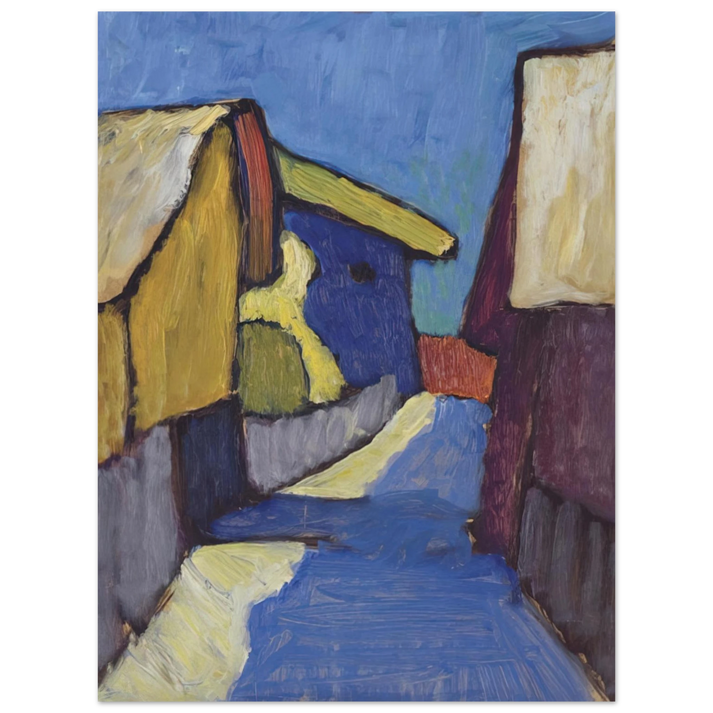
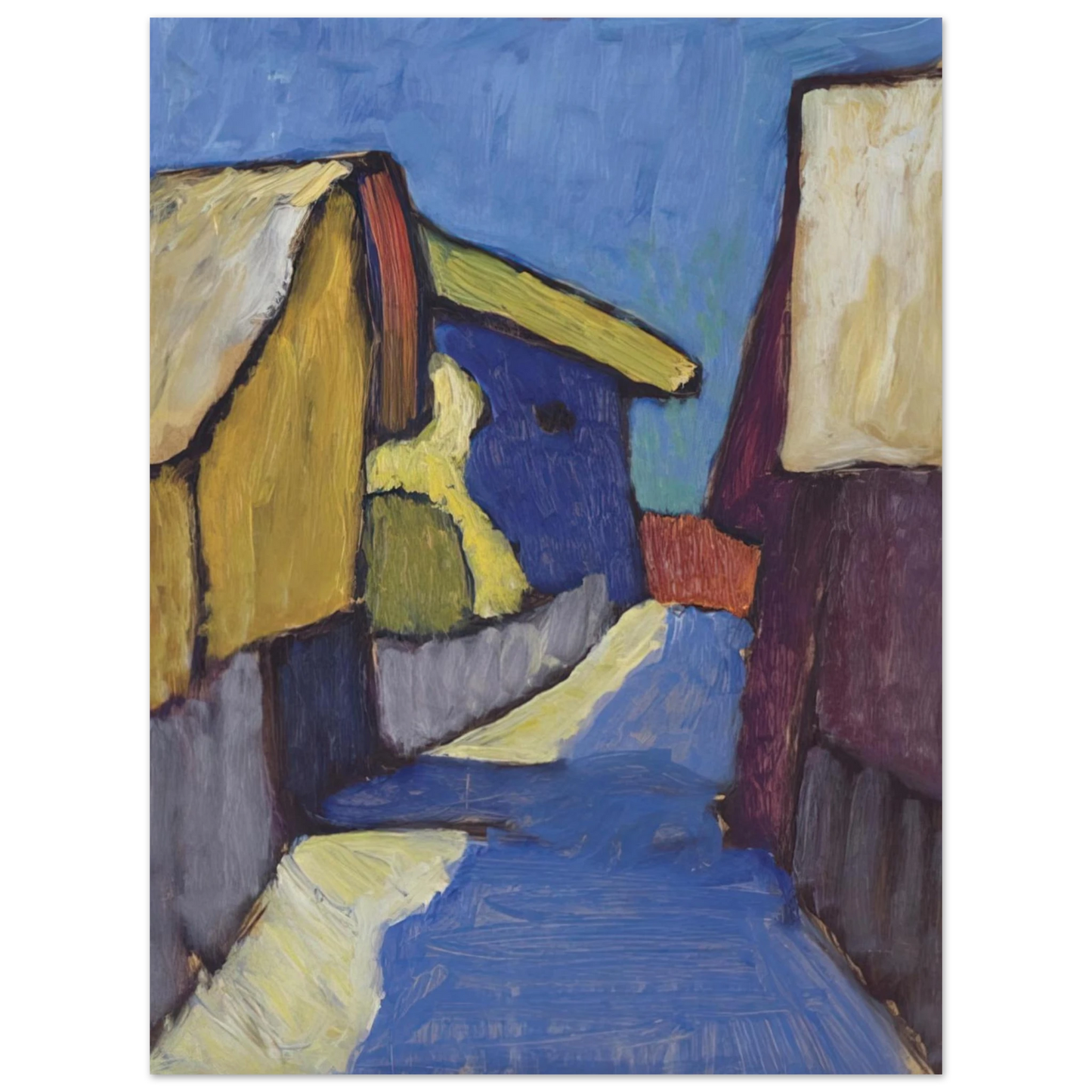
Immerse yourself in the vibrant world of German Expressionism with this museum-quality fine art print of Gabriele Münter's "Dorfstrasse in Blau". Created around 1908-1909, this iconic work showcases Münter's bold use of color and simplified forms, capturing a village street in Murnau, Bavaria, with intense blues and dynamic brushstrokes that evoke a sense of emotional depth and modernist innovation.
As a key figure in the Blaue Reiter group alongside Wassily Kandinsky, Münter broke from traditional representation to explore spiritual and emotional truths through art. This piece exemplifies her mastery of woodcut-inspired composition and flat planes of color, making it a cornerstone of early 20th-century art history. The title, meaning "Village Street in Blue," reflects her fascination with rural life and the expressive power of hue.
RedKalion presents this archival reproduction on our exclusive Master's Edition archival paper, ensuring every detail of Münter's original vision is preserved. The matte, uncoated finish and natural white (off-white) surface provide a luxurious texture that mimics the feel of original artworks, while the acid-free (pH above 7) composition guarantees it resists yellowing for generations. With a substantial weight of 250 gsm (110 lb) and thickness of 0.29 mm (11.4 mils), this print offers durability and a premium presence. Crafted from FSC-certified paper, it aligns with sustainable art practices, and as part of our on-demand fulfillment, there are no minimum orders—each piece is printed and shipped to your specifications.
Elevate your space with an archival masterpiece that endures, bringing the revolutionary spirit of Expressionism into your home or office. This fine art poster, sized at 75x100 cm (30x40 inches), is perfect for collectors and enthusiasts seeking authentic, high-quality reproductions.
Discover Unlimited Art Possibilities
At RedKalion, you can find virtually any artwork from any artist, available in a wide range of sizes to perfectly match your space.
If you didn’t find what you’re looking for, contact us at support@redkalion.com . We will source any artwork and produce it in any size and format you need, including art prints, posters, canvas, framed pieces, framed canvas, and more.
For dedicated art enthusiasts, we also offer handcrafted replicas of any artwork, carefully painted by highly skilled artists using traditional techniques.
For custom requests, contact us at support@redkalion.com .
What are the key details of Gabriele Münter's "Dorfstrasse in Blau" artwork?
This Expressionist piece, created around 1908-1909, depicts a Bavarian village street with bold blues and simplified forms, reflecting Münter's role in the Blaue Reiter group and her innovative use of color in fine art prints.
What paper is used for this museum-quality reproduction?
It's printed on Master's Edition archival paper, a matte, uncoated, natural white (off-white) sheet that offers a luxurious texture and acid-free (pH above 7) properties to prevent yellowing in archival art prints.
How durable and sustainable is this fine art poster?
With a weight of 250 gsm (110 lb) and thickness of 0.29 mm (11.4 mils), it's highly durable. The FSC-certified paper ensures sustainability, making it an eco-friendly choice for premium art reproductions.
What is the shipping and fulfillment process for this print?
We offer on-demand printing with no minimum orders, so each Gabriele Münter poster is custom-made and shipped directly to you, ensuring fresh, high-quality fine art prints every time.
How does the archival quality protect this print over time?
The acid-free composition (pH above 7) and museum-quality materials ensure long-term preservation, resisting fading and yellowing to maintain the vibrant colors of this Expressionist masterpiece for years.
Why is "Dorfstrasse in Blau" significant in art history?
It exemplifies Gabriele Münter's contribution to German Expressionism, showcasing her woodcut-inspired style and emotional use of color within the Blaue Reiter movement, key for collectors of historical art prints.
What makes the color blue prominent in this artwork?
Münter used intense blues to evoke mood and spirituality, a hallmark of her technique that transforms a simple village scene into a dynamic, modernist fine art reproduction.