
RedKalion
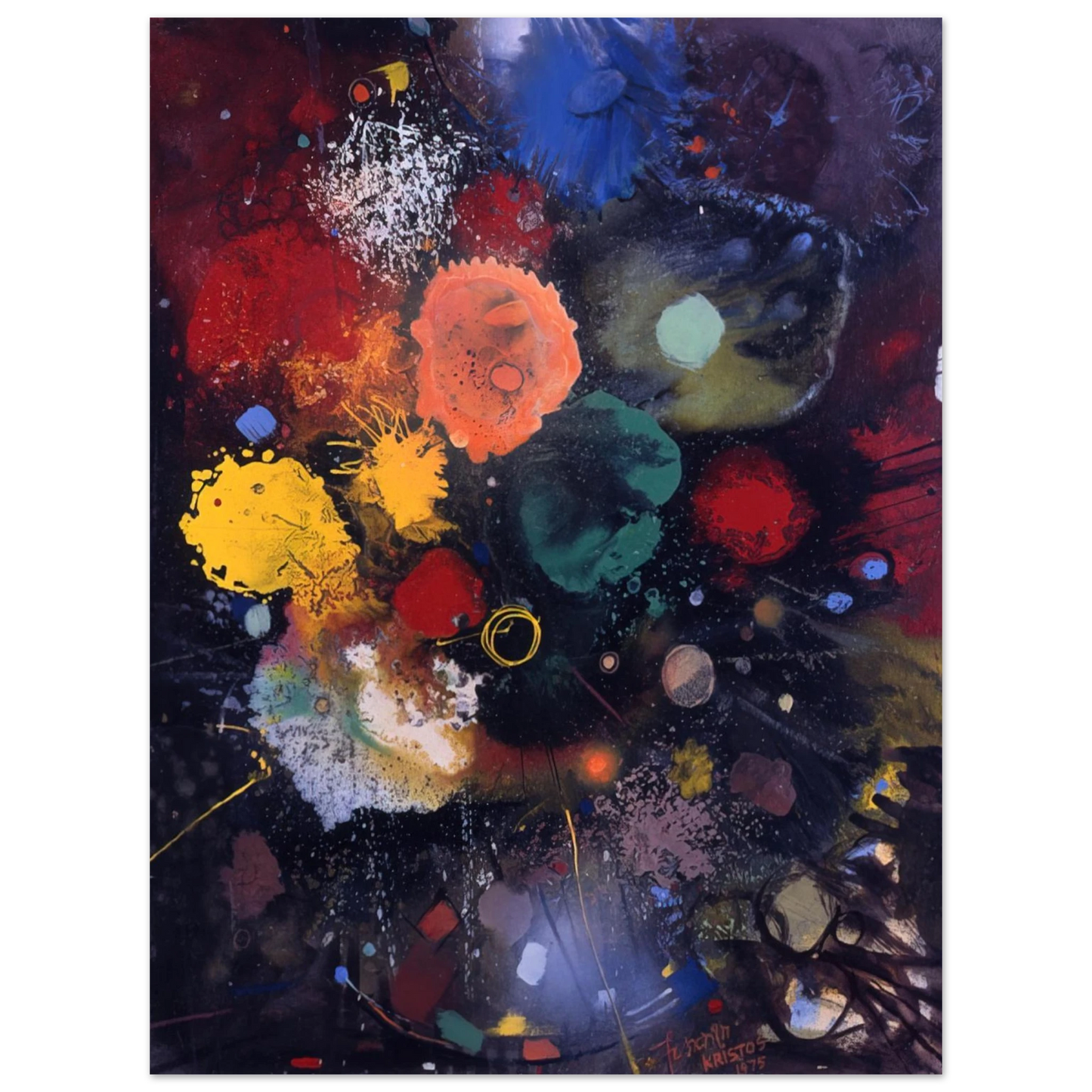
Gebre Kristos Desta - Flowers No. 5 - 1975 75x100 cm / 30x40inches Fine Art Poster
Gebre Kristos Desta - Flowers No. 5 - 1975 75x100 cm / 30x40inches Fine Art Poster
Couldn't load pickup availability
Gebre Kristos Desta - Flowers No. 5 (1975) - Fine Art Print
Immerse yourself in the vibrant, abstract beauty of Gebre Kristos Desta's "Flowers No. 5", a 1975 masterpiece that captures the Ethiopian modernist's unique fusion of traditional African motifs with contemporary expressionism. This museum-quality reproduction, sized at 75x100 cm (30x40 inches), brings the artist's bold color palette and dynamic brushwork into your space, evoking a sense of organic growth and joyful energy. As a pioneering figure in 20th-century African art, Desta's work often explored themes of nature and identity, with this piece showcasing his innovative use of semi-abstract forms to reinterpret floral subjects—a testament to his role in bridging cultural narratives through visual art.
RedKalion presents this archival-grade fine art print on our exclusive Master's Edition archival paper, designed to preserve the integrity of Desta's original vision. The matte, uncoated finish in a natural white hue enhances the artwork's texture and depth, while the acid-free composition (pH above 7) ensures longevity without yellowing. Crafted from FSC-certified, sustainable materials at 250 gsm (110 lb) and 0.29 mm thickness, this print offers a luxurious, gallery-worthy feel. Printed and shipped on demand with no minimum orders, it allows you to elevate your home or office with a piece that endures as both a historical artifact and a modern statement.
- Dimensions: 75x100 cm / 30x40 inches
- Paper: Master's Edition archival paper, museum-quality
- Finish: Matte, uncoated, natural white (off-white)
- Longevity: Acid-free (pH above 7) to prevent yellowing
- Weight & Thickness: 250 gsm (110 lb), 0.29 mm (11.4 mils)
- Sustainability: FSC-certified paper
- Fulfillment: Printed and shipped on demand, no minimum orders
Discover Unlimited Art Possibilities
At RedKalion, you can find virtually any artwork from any artist, available in a wide range of sizes to perfectly match your space.
If you didn’t find what you’re looking for, contact us at support@redkalion.com . We will source any artwork and produce it in any size and format you need, including art prints, posters, canvas, framed pieces, framed canvas, and more.
For dedicated art enthusiasts, we also offer handcrafted replicas of any artwork, carefully painted by highly skilled artists using traditional techniques.
For custom requests, contact us at support@redkalion.com .
What are the dimensions and details of this Gebre Kristos Desta fine art print?
This museum-quality reproduction measures 75x100 cm (30x40 inches) and features "Flowers No. 5" from 1975, showcasing Desta's abstract floral motifs on archival paper for a premium display.
What type of paper is used for this archival art print?
It's printed on Master's Edition archival paper, a museum-quality, acid-free (pH above 7) material that prevents yellowing and ensures long-lasting vibrancy for your fine art poster.
How is this print shipped and are there minimum order requirements?
We print and ship on demand with no minimum orders, offering convenient fulfillment for this Gebre Kristos Desta reproduction to your location.
What is the finish and texture of this fine art poster?
The print has a matte, uncoated finish in natural white (off-white), providing a luxurious texture that enhances the artwork's depth without glare.
How durable and sustainable is this archival print?
Made from FSC-certified, 250 gsm (110 lb) paper at 0.29 mm thickness, it's both sustainable and built to last, resisting wear over time.
What is the historical significance of Gebre Kristos Desta's "Flowers No. 5"?
Created in 1975, this piece reflects Desta's role in Ethiopian modernism, blending abstract forms with floral themes to explore cultural identity and natural beauty in post-colonial art.
Can you describe the artistic technique in "Flowers No. 5"?
Desta used vibrant colors and semi-abstract brushwork to reinterpret flowers, emphasizing organic shapes and emotional expression, characteristic of his innovative modernist style.