
RedKalion
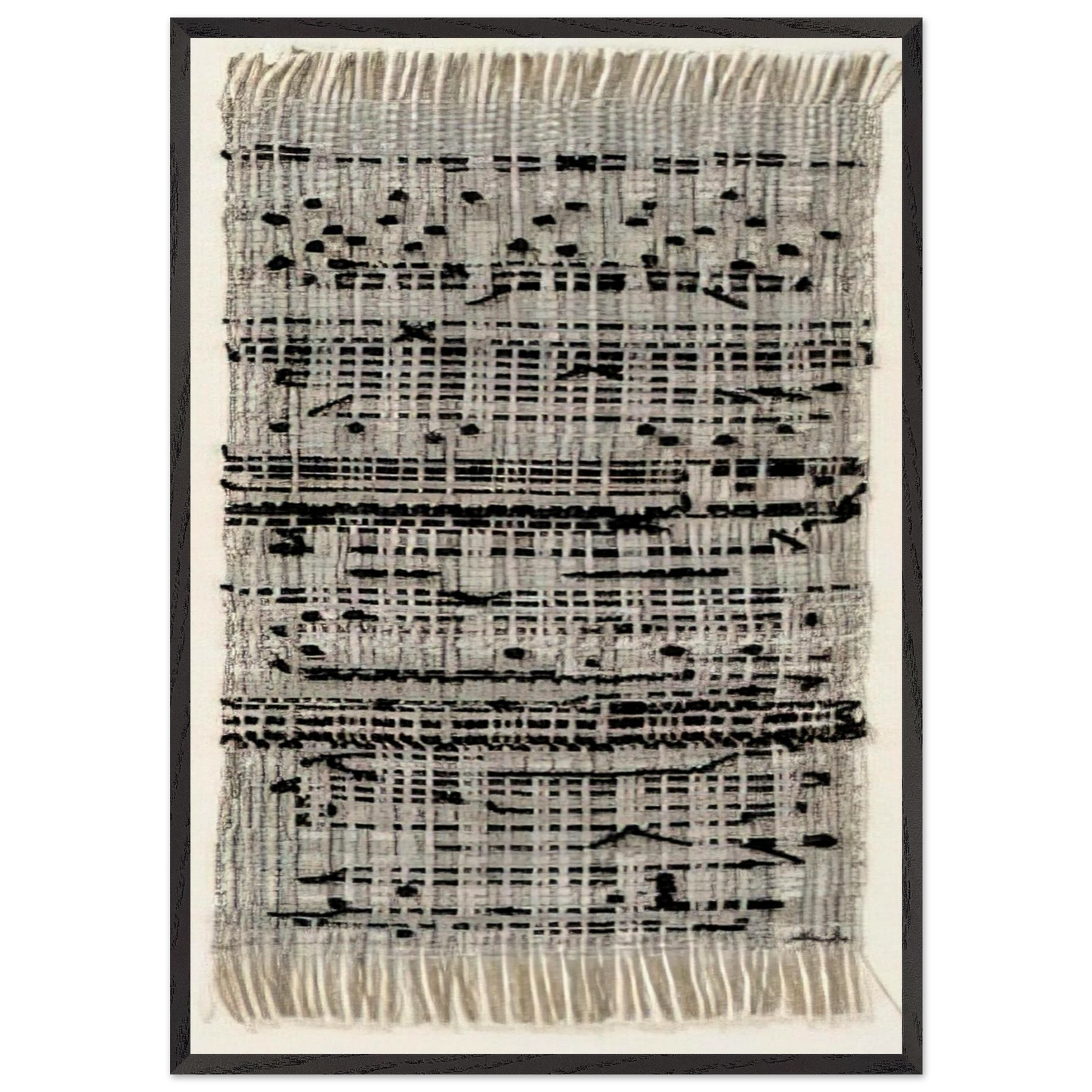
HAIKU 1961 - Anni Albers 70x100 cm / 28x40 inches Framed Art Print – Black Wooden Frame
HAIKU 1961 - Anni Albers 70x100 cm / 28x40 inches Framed Art Print – Black Wooden Frame
Couldn't load pickup availability
HAIKU 1961 by Anni Albers: A Masterpiece of Geometric Abstraction
Immerse yourself in the serene precision of Anni Albers' HAIKU 1961, now available as a museum-quality fine art print from RedKalion. This iconic work from the Bauhaus pioneer captures the essence of minimalist design, blending rhythmic patterns and subtle textures that evoke a meditative calm. Albers, renowned for her groundbreaking textile art, translates her mastery of weave and form into this graphic composition, reflecting her lifelong exploration of structure and harmony. The piece stands as a testament to mid-20th century modernism, offering timeless elegance for contemporary spaces.
This framed art print arrives ready-to-hang with an included hanging kit, allowing you to elevate your home or office instantly. Encased in a sleek black wooden frame crafted from responsibly sourced oak and ash wood, the frame measures 20mm (0.79") thick and wide—more substantial than classic 14mm frames—for a bold, gallery-worthy presence. The print itself is reproduced on archival museum-quality paper with a matte, uncoated, natural white finish, weighing 250 gsm (110 lb) and 0.29 mm (11.4 mils) thick, ensuring durability and vibrant detail. Protection is provided by shatterproof plexiglass, safeguarding your investment, while the use of FSC-certified materials underscores our commitment to sustainability. At 70x100 cm / 28x40 inches, this piece commands attention without overwhelming, perfect for adding sophisticated artistry to any room.
RedKalion curates only the finest reproductions, combining historical accuracy with premium craftsmanship. Trust in our expertise to bring archival-grade art into your life, where each print is a lasting tribute to artistic legacy.
Discover Unlimited Art Possibilities
At RedKalion, you can find virtually any artwork from any artist, available in a wide range of sizes to perfectly match your space.
If you didn’t find what you’re looking for, contact us at support@redkalion.com . We will source any artwork and produce it in any size and format you need, including art prints, posters, canvas, framed pieces, framed canvas, and more.
For dedicated art enthusiasts, we also offer handcrafted replicas of any artwork, carefully painted by highly skilled artists using traditional techniques.
For custom requests, contact us at support@redkalion.com .
What are the dimensions and details of the HAIKU 1961 framed print?
This framed art print measures 70x100 cm / 28x40 inches, featuring a black wooden frame made from responsibly sourced oak and ash wood, with a thickness of 20mm (0.79") for a bold, gallery-style look.
What type of paper is used for this museum-quality reproduction?
We use archival museum-quality paper with a matte, uncoated, natural white finish, weighing 250 gsm (110 lb) and 0.29 mm (11.4 mils) thick, ideal for fine art prints and ensuring longevity.
Is this framed print ready to hang, and what protection does it include?
Yes, it arrives ready-to-hang with a hanging kit and is protected by shatterproof plexiglass, offering durability and ease of display for your home or office.
How sustainable are the materials in this Anni Albers art print?
We prioritize sustainability with FSC-certified materials or equivalent for the paper and responsibly sourced wood for the frame, aligning with eco-friendly practices.
What is the historical significance of HAIKU 1961 by Anni Albers?
HAIKU 1961 reflects Anni Albers' mastery of geometric abstraction and textile influences from the Bauhaus movement, showcasing her innovative approach to pattern and form in mid-20th century modern art.
How does the frame thickness compare to standard frames?
At 20mm (0.79") thick and wide, this frame is wider than the classic 14mm (0.55") frame, providing a more substantial and contemporary aesthetic for your fine art display.
Can you describe Anni Albers' technique in this artwork?
Anni Albers employed a minimalist, grid-based technique in HAIKU 1961, drawing from her textile background to create rhythmic, abstract patterns that explore balance and visual harmony.