
RedKalion
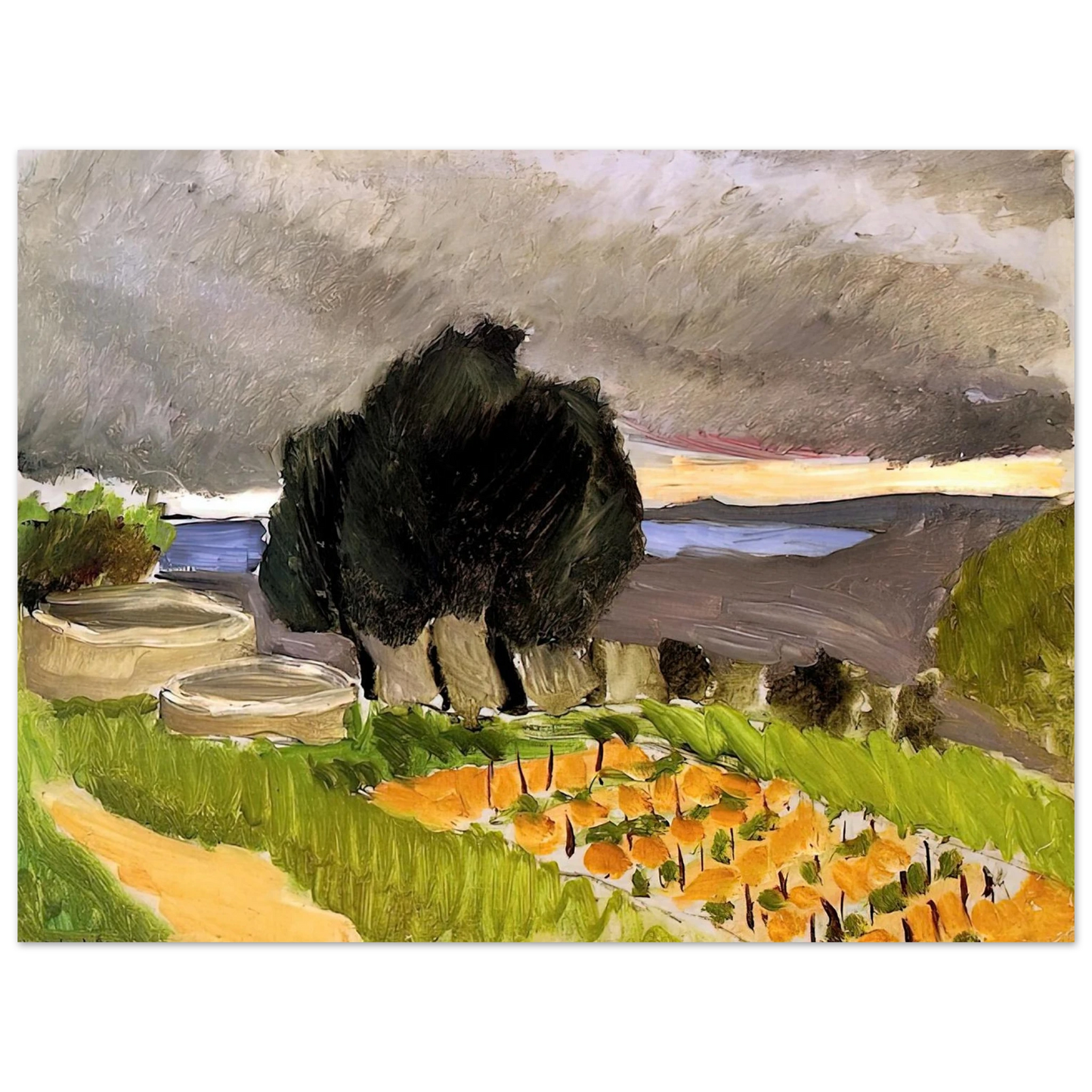
Henri Matisse - LANDSCAPE OF THE MIDI BEFORE THE STORM 1921 75x100 cm / 30x40inches Fine Art Poster
Henri Matisse - LANDSCAPE OF THE MIDI BEFORE THE STORM 1921 75x100 cm / 30x40inches Fine Art Poster
Couldn't load pickup availability
Henri Matisse - LANDSCAPE OF THE MIDI BEFORE THE STORM 1921
Experience the dramatic tension of the French Riviera with this museum-quality fine art print of Henri Matisse's LANDSCAPE OF THE MIDI BEFORE THE STORM from 1921. Measuring 75x100 cm (30x40 inches), this archival reproduction captures the artist's bold Fauvist palette and expressive brushwork as he depicts the Midi region under brooding skies, evoking a mood of anticipation and raw natural power.
Created during Matisse's later period in Nice, this work showcases his mastery of color and simplified forms to convey emotional intensity. The composition balances vibrant greens and earthy tones against ominous clouds, reflecting his innovative approach to landscape that moved beyond mere representation to capture the essence of atmosphere.
RedKalion presents this piece on our exclusive Master's Edition archival paper, a museum-quality matte, uncoated surface in a natural white (off-white) hue that enhances the artwork's texture and depth. The acid-free (pH above 7) FSC-certified paper, with a weight of 250 gsm (110 lb) and thickness of 0.29 mm (11.4 mils), ensures longevity and prevents yellowing, making it a sustainable choice for discerning collectors.
Elevate your space with an archival masterpiece that endures, printed and shipped on demand with no minimum orders. This fine art poster is a testament to RedKalion's commitment to curating world-class reproductions that honor artistic legacy.
Discover Unlimited Art Possibilities
At RedKalion, you can find virtually any artwork from any artist, available in a wide range of sizes to perfectly match your space.
If you didn’t find what you’re looking for, contact us at support@redkalion.com . We will source any artwork and produce it in any size and format you need, including art prints, posters, canvas, framed pieces, framed canvas, and more.
For dedicated art enthusiasts, we also offer handcrafted replicas of any artwork, carefully painted by highly skilled artists using traditional techniques.
For custom requests, contact us at support@redkalion.com .
What are the dimensions of this Henri Matisse fine art print?
This museum-quality reproduction measures 75x100 cm (30x40 inches), perfectly capturing the original scale of Matisse's 1921 landscape artwork.
What type of paper is used for this archival print?
It's printed on Master's Edition archival paper, a matte, uncoated, natural white (off-white) surface that offers a luxurious texture and museum-quality durability for fine art posters.
How does the paper ensure long-term preservation?
The acid-free paper (pH above 7) prevents yellowing over time, with a weight of 250 gsm and thickness of 0.29 mm, making it a premium choice for archival art reproductions.
Is this print sustainable and eco-friendly?
Yes, it uses FSC-certified paper, supporting responsible forestry and sustainable practices in high-quality art printing.
How is shipping handled for this on-demand print?
We print and ship on demand with no minimum orders, ensuring efficient fulfillment and careful handling of your museum-quality fine art poster.
What artistic style does this Matisse landscape represent?
This 1921 work reflects Matisse's Fauvist influences, using bold colors and expressive forms to depict the Midi region's atmosphere before a storm, showcasing his innovative approach to modern art.
Why is this landscape significant in Matisse's career?
Created during his time in Nice, it highlights his mastery of emotional intensity through simplified compositions, bridging his earlier Fauvist experiments with later explorations of light and mood in French Riviera scenes.