
RedKalion
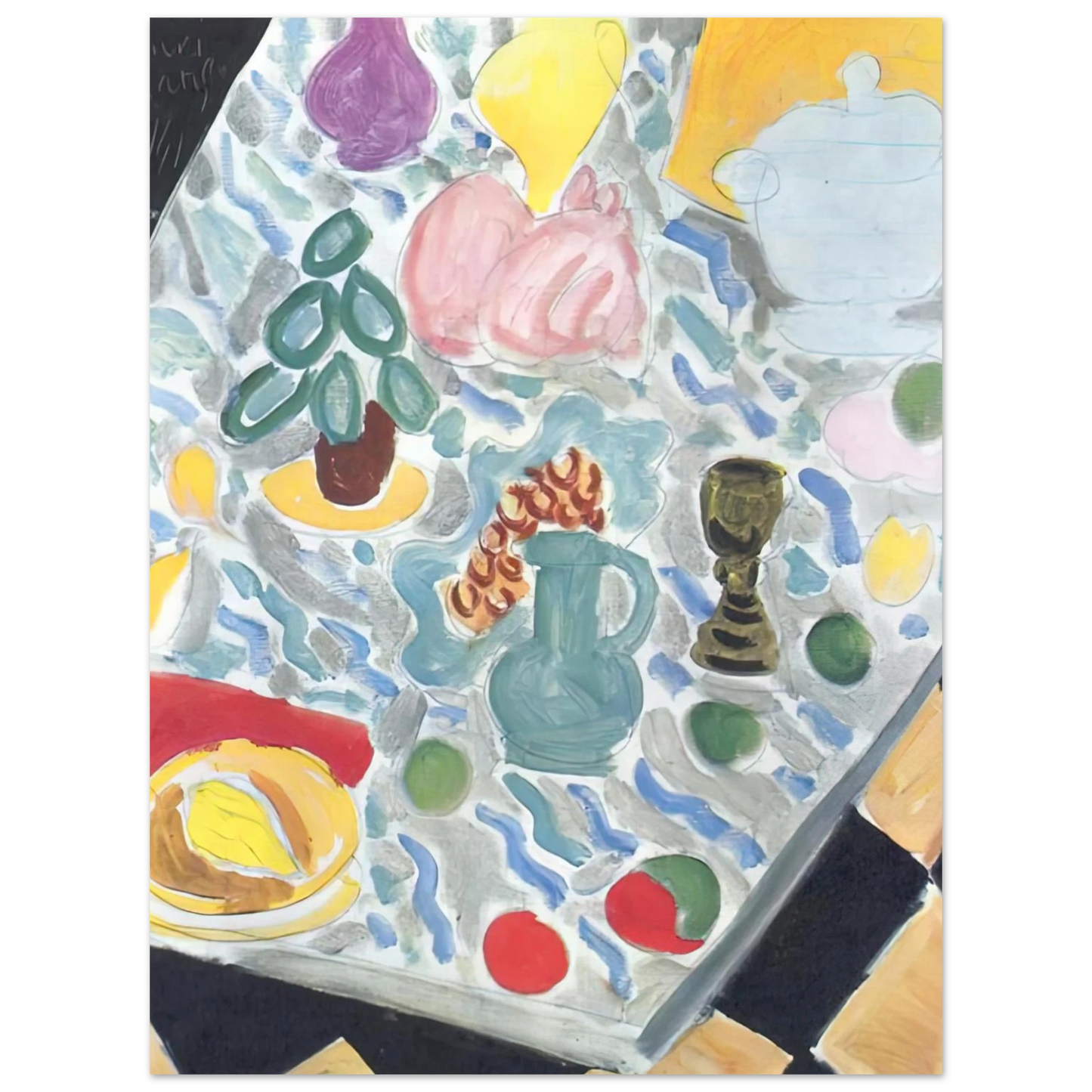
Henri Matisse - STILL LIFE WITH A MARBLE TABLE 1941 75x100 cm / 30x40inches Fine Art Poster
Henri Matisse - STILL LIFE WITH A MARBLE TABLE 1941 75x100 cm / 30x40inches Fine Art Poster
Couldn't load pickup availability
Henri Matisse - Still Life with a Marble Table (1941)
Immerse yourself in the vibrant world of Henri Matisse with this museum-quality fine art print of "Still Life with a Marble Table" from 1941. Measuring 75x100 cm (30x40 inches), this reproduction captures the bold colors and dynamic composition that define Matisse's late period, offering a timeless piece that elevates any interior with artistic sophistication.
Created during the artist's later years in Nice, this work exemplifies Matisse's mastery of color and form. The painting features a striking arrangement of objects on a marble table, showcasing his signature use of flat planes, decorative patterns, and expressive hues to evoke a sense of joy and harmony. A fascinating insight: Matisse often used cut-paper techniques (papiers découpés) around this time, influencing the simplified, graphic quality seen here, which bridges his earlier Fauvist experiments with modern abstraction.
At RedKalion, we curate only the highest-quality reproductions. This print is produced on our Master's Edition archival paper, ensuring a matte, uncoated finish in a natural white tone that enhances the artwork's texture and depth. With a weight of 250 gsm (110 lb) and thickness of 0.29 mm (11.4 mils), it offers a luxurious feel and durability. The paper is acid-free (pH above 7) to prevent yellowing over time and FSC-certified for sustainability, reflecting our commitment to both art preservation and environmental responsibility.
Elevate your space with an archival masterpiece that endures, printed and shipped on demand with no minimum orders. Trust RedKalion as your premier source for authentic, gallery-worthy art prints that bring history and beauty into your home.
Discover Unlimited Art Possibilities
At RedKalion, you can find virtually any artwork from any artist, available in a wide range of sizes to perfectly match your space.
If you didn’t find what you’re looking for, contact us at support@redkalion.com . We will source any artwork and produce it in any size and format you need, including art prints, posters, canvas, framed pieces, framed canvas, and more.
For dedicated art enthusiasts, we also offer handcrafted replicas of any artwork, carefully painted by highly skilled artists using traditional techniques.
For custom requests, contact us at support@redkalion.com .
What are the details of Henri Matisse's "Still Life with a Marble Table"?
This artwork is a 1941 painting by Henri Matisse, measuring 75x100 cm (30x40 inches). It features a vibrant still life composition with bold colors and dynamic forms, reflecting Matisse's late-period style and mastery of modern art techniques.
What type of paper is used for this fine art print?
We use Master's Edition archival paper, a museum-quality, matte, uncoated paper in a natural white (off-white) tone. It is 250 gsm (110 lb) with a thickness of 0.29 mm (11.4 mils), offering a luxurious texture for premium art reproductions.
How is this print shipped and are there minimum orders?
This print is printed and shipped on demand with no minimum orders, ensuring efficient fulfillment and reducing waste for sustainable art collecting.
How long will this archival print last without yellowing?
The print is made on acid-free paper with a pH above 7, designed to prevent yellowing over time and ensure long-term archival longevity for your museum-quality reproduction.
Is the paper environmentally sustainable?
Yes, the paper is FSC-certified, supporting responsible forestry and sustainability in our fine art print production.
What artistic techniques did Matisse use in this 1941 painting?
Matisse employed flat planes, decorative patterns, and expressive colors, influenced by his cut-paper techniques (papiers découpés), which simplified forms and enhanced the graphic quality of this late-period work.
Why is "Still Life with a Marble Table" significant in Matisse's career?
This painting bridges Matisse's earlier Fauvist experiments with modern abstraction, showcasing his evolution in color theory and composition during his later years in Nice, making it a key piece for art history enthusiasts.