
RedKalion
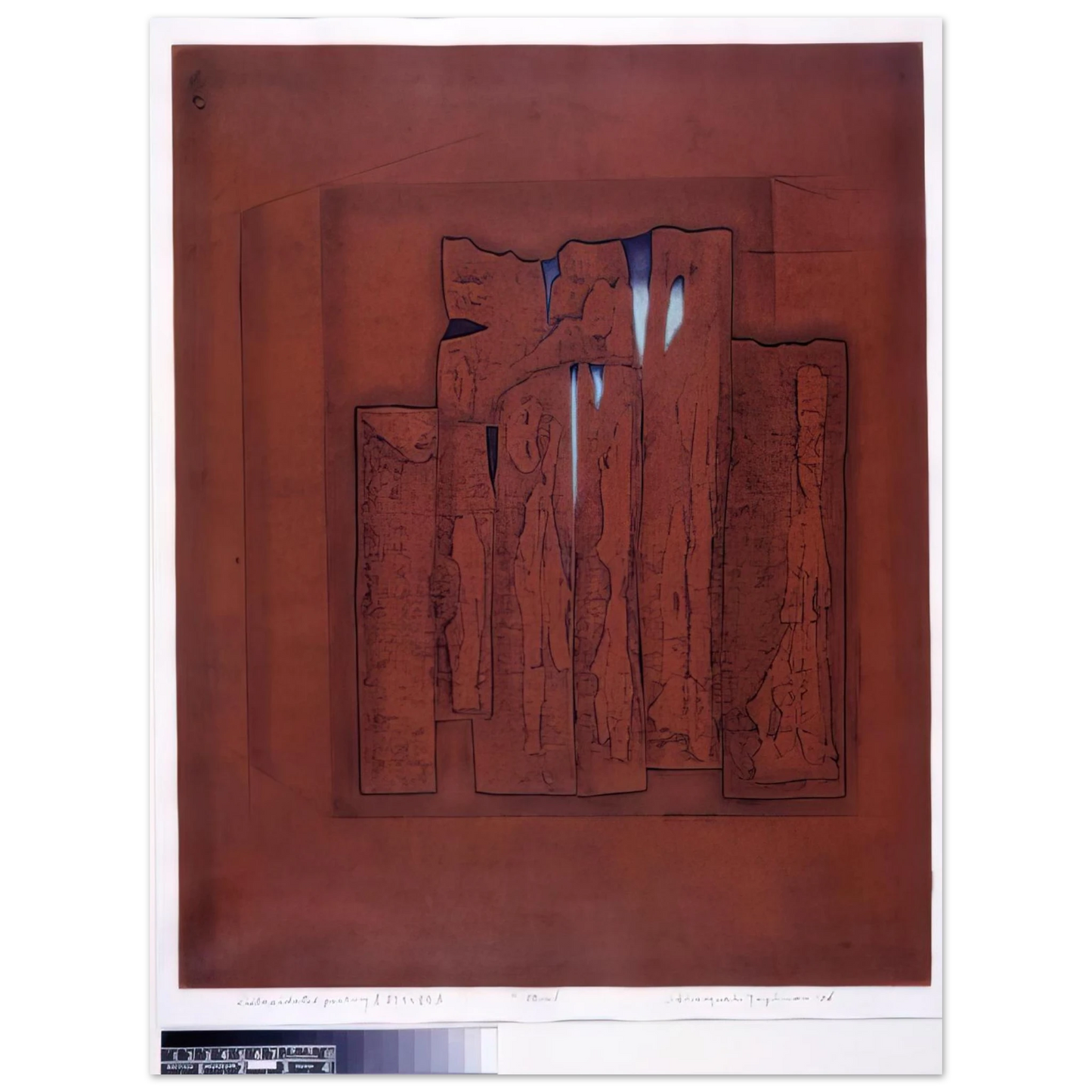
Hiroyuki Tajima - Dilapidated Poetry A - 1976 75x100 cm / 30x40inches Fine Art Poster
Hiroyuki Tajima - Dilapidated Poetry A - 1976 75x100 cm / 30x40inches Fine Art Poster
Couldn't load pickup availability
Hiroyuki Tajima - Dilapidated Poetry A (1976)
Immerse yourself in the profound visual language of Japanese master printmaker Hiroyuki Tajima with this museum-quality reproduction of "Dilapidated Poetry A" from 1976. This iconic work, measuring 75x100 cm (30x40 inches), exemplifies Tajima's pioneering role in the Sōsaku-hanga (Creative Print) movement, where artists embraced complete artistic control from design to final impression. The composition masterfully balances abstract geometric forms with subtle textural depth, evoking a contemplative mood that bridges modernist aesthetics with timeless philosophical inquiry.
RedKalion presents this archival fine art print on our exclusive Master's Edition paper, ensuring every nuance of Tajima's original technique is preserved. The matte, uncoated finish on natural white (off-white) paper provides a luxurious, tactile surface that enhances the work's sophisticated texture without glare. Crafted from FSC-certified, acid-free paper (pH above 7), this reproduction is designed to resist yellowing and maintain its integrity for generations. With a substantial 250 gsm (110 lb) weight and 0.29 mm (11.4 mils) thickness, it offers the premium feel of an original artwork.
Elevate your space with an archival masterpiece that endures, printed and shipped on demand with no minimum orders. RedKalion is your trusted curator for world-class reproductions that honor artistic legacy.
Discover Unlimited Art Possibilities
At RedKalion, you can find virtually any artwork from any artist, available in a wide range of sizes to perfectly match your space.
If you didn’t find what you’re looking for, contact us at support@redkalion.com . We will source any artwork and produce it in any size and format you need, including art prints, posters, canvas, framed pieces, framed canvas, and more.
For dedicated art enthusiasts, we also offer handcrafted replicas of any artwork, carefully painted by highly skilled artists using traditional techniques.
For custom requests, contact us at support@redkalion.com .
What are the dimensions and details of "Dilapidated Poetry A" by Hiroyuki Tajima?
This fine art print measures 75x100 cm (30x40 inches) and reproduces Hiroyuki Tajima's 1976 work from the Sōsaku-hanga movement, showcasing abstract geometric forms with archival quality.
What type of paper is used for this museum-quality reproduction?
It's printed on Master's Edition archival paper, featuring a matte, uncoated finish on natural white (off-white) FSC-certified paper for a luxurious texture and long-term durability.
How is this print shipped and are there minimum order requirements?
We offer on-demand printing and shipping with no minimum orders, ensuring efficient delivery of your archival fine art poster directly to your door.
What makes this paper archival and resistant to yellowing?
The acid-free paper has a pH above 7, preventing yellowing over time, and is 250 gsm (110 lb) with 0.29 mm thickness for premium museum-quality longevity.
Can you tell me more about Hiroyuki Tajima and this artwork's significance?
Hiroyuki Tajima was a key figure in Japan's Sōsaku-hanga movement, and "Dilapidated Poetry A" (1976) reflects his innovative use of abstract forms to explore philosophical themes in modernist printmaking.
What artistic techniques did Tajima use in "Dilapidated Poetry A"?
Tajima employed woodblock printing methods with precise geometric cuts and layered textures, characteristic of the Sōsaku-hanga style, to create depth and contemplative mood in this 1976 piece.
How does the matte finish enhance the viewing experience of this print?
The matte, uncoated finish reduces glare and provides a natural, tactile surface that highlights the artwork's textures, making it ideal for display in various lighting conditions.