
RedKalion
Hitler Castle Painting: Neuschwanstein Art Print by Adolf Hitler | RedKalion
Hitler Castle Painting: Neuschwanstein Art Print by Adolf Hitler | RedKalion
Couldn't load pickup availability
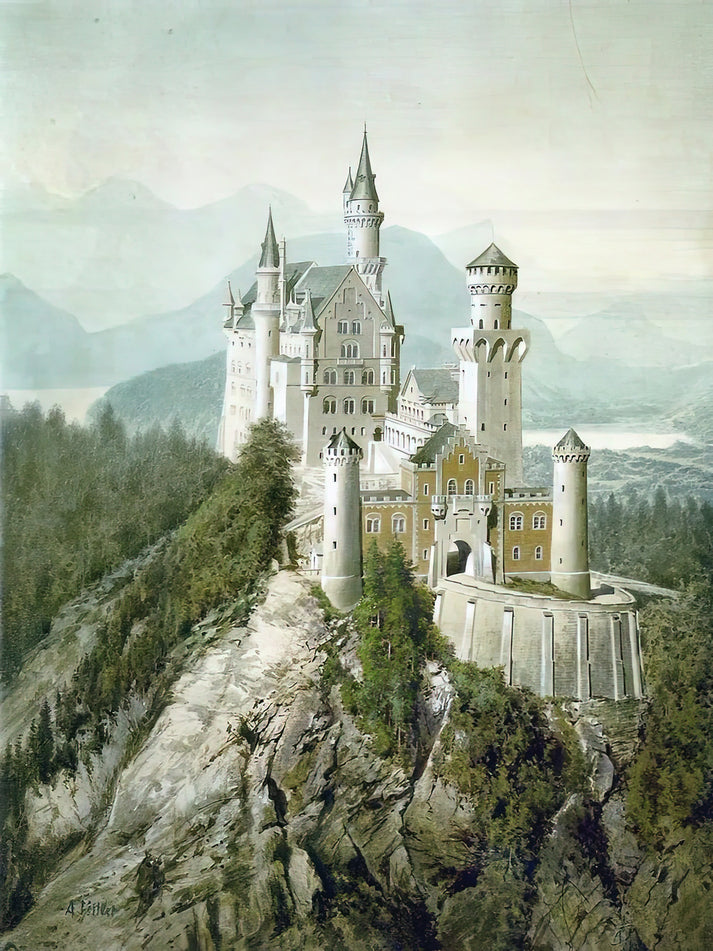
This fine art print reproduces a watercolor painting of Neuschwanstein Castle, created by Adolf Hitler around 1914. As a young aspiring artist in Vienna and Munich, Hitler produced numerous architectural studies and landscapes, with this work reflecting his early, pre-political artistic endeavors. The painting captures the iconic Bavarian castle in a detailed, romanticized style, showcasing Hitler's technical skill in rendering stonework and alpine scenery.
Historical Context of Hitler's Neuschwanstein Painting
Painted before World War I, this artwork belongs to Hitler's formative period as an artist, prior to his entry into politics. It exemplifies the 19th-century German Romantic tradition, influenced by artists like Albrecht Dürer and the Nazarene movement. The depiction of Neuschwanstein—a symbol of Germanic mythology and Ludwig II's legacy—highlights themes of national identity that later permeated Hitler's ideology, though this piece remains a standalone artistic artifact.
Artistic Analysis of the Castle Painting
Hitler's technique here demonstrates precise line work and a subdued color palette, emphasizing the castle's fairy-tale architecture against a misty Bavarian backdrop. The composition balances grandeur with intimacy, focusing on the fortress's towers and rugged surroundings. This print offers a rare glimpse into Hitler's artistic output, which was often rejected by formal academies but reveals a disciplined, illustrative approach to landscape and architecture.
Print Specifications & Materials
- Available Sizes: 75×100 cm / 30×40″, 40×50 cm / 16×20″, 21×29.7 cm / 8×12″
- Paper Finishing: Matte, uncoated, natural white (off-white)
- Acid-Free: pH above 7 to prevent yellowing over time
- Paper Weight: 250 gsm (110 lb) | Thickness: 0.29 mm (11.4 mils)
- Sustainable Paper: FSC-certified
RedKalion's museum-quality print ensures archival longevity, allowing collectors and historians to engage with this complex piece. The Hitler castle painting serves as a historical document, reflecting both artistic ambition and the cultural currents of early 20th-century Germany. Our reproduction maintains the original's nuances, offering a faithful representation for scholarly and decorative purposes.


Discover Unlimited Art Possibilities
At RedKalion, you can find virtually any artwork from any artist, available in a wide range of sizes to perfectly match your space.
If you didn’t find what you’re looking for, contact us at support@redkalion.com . We will source any artwork and produce it in any size and format you need, including art prints, posters, canvas, framed pieces, framed canvas, and more.
For dedicated art enthusiasts, we also offer handcrafted replicas of any artwork, carefully painted by highly skilled artists using traditional techniques.
For custom requests, contact us at support@redkalion.com .
What is the historical significance of this Hitler painting of Neuschwanstein Castle?
Painted around 1914, it represents Adolf Hitler's early artistic career before his political rise, showcasing his skill in architectural watercolor and engagement with German Romantic themes.
What are the details of the fine art print paper used?
Our prints use 250 gsm FSC-certified, acid-free paper with a matte finish to ensure color accuracy and prevent yellowing, matching museum conservation standards.
How is the Hitler castle painting shipped and packaged?
We ship globally in protective, rigid packaging to prevent damage, with tracking provided for secure delivery of your Neuschwanstein art print.
Will this art print last over time without fading?
Yes, the acid-free paper and archival inks ensure long-term durability, resisting fading and deterioration for decades under proper display conditions.
What sizes are available for this Neuschwanstein castle painting reproduction?
Available in 75×100 cm, 40×50 cm, and 21×29.7 cm formats to suit different display spaces, from large gallery walls to smaller study areas.
How does Hitler's style in this painting compare to his other works?
This work displays his characteristic precision and romanticized realism, similar to his other architectural studies, with a focus on detailed line work and subdued tones.
Why is Neuschwanstein Castle a frequent subject in Hitler's art?
As a symbol of Germanic mythology and King Ludwig II's legacy, it aligned with nationalist themes prevalent in early 20th-century German culture, appealing to Hitler's artistic interests.