

RedKalion
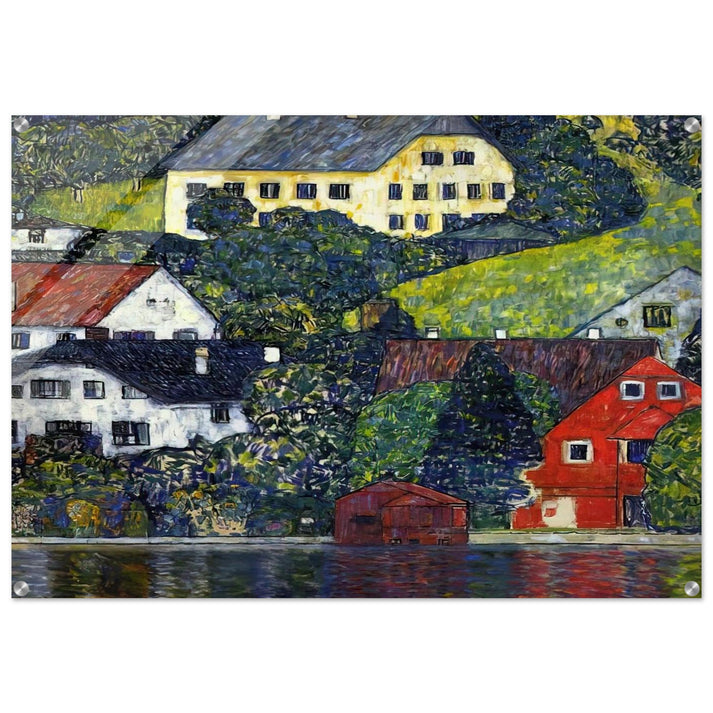
HOUSES AT UNTERACH ON THE ATTERSEE - Gustav Klimt Acrylic Print - 70x100 cm / 28x40″ inches
HOUSES AT UNTERACH ON THE ATTERSEE - Gustav Klimt Acrylic Print - 70x100 cm / 28x40″ inches
Couldn't load pickup availability
Houses at Unterach on the Attersee - Gustav Klimt Acrylic Print
Immerse yourself in the serene beauty of Gustav Klimt's "Houses at Unterach on the Attersee" with this museum-quality reproduction from RedKalion. This fine art print captures the Austrian master's unique vision of the Attersee landscape, blending impressionistic brushwork with his signature decorative flair. Painted during Klimt's summer retreats in the early 1900s, this work reflects his transition from Symbolism to a more naturalistic style, showcasing vibrant colors and intricate details that evoke tranquility and harmony with nature.
Our premium acrylic print elevates this masterpiece with a 4mm (0.15") acrylic surface, offering a sleek, vibrant, and durable finish that enhances Klimt's rich palette. The straight-cut corners provide a modern aesthetic, while transparent backgrounds are optimized to white for a crisp presentation. Measuring 70x100 cm / 28x40" inches, this archival-grade reproduction is designed to transform any space into a gallery-worthy environment.
Each piece includes a complete hanging kit with hardware, screws, and pre-drilled screw holes at each corner (positioned 14mm (0.55") from the edge, with an 8mm (0.31") diameter hole and 15mm (0.6") screw head) for effortless installation. Trust RedKalion to deliver a timeless addition to your collection, crafted with precision and expertise.
- Artist: Gustav Klimt
- Title: Houses at Unterach on the Attersee
- Size: 70x100 cm / 28x40" inches
- Material: 4mm acrylic with straight-cut corners
- Included: Hanging kit with pre-drilled holes
Elevate your home or office with an archival masterpiece that endures, celebrating Klimt's legacy through RedKalion's commitment to excellence in fine art reproductions.


Discover Unlimited Art Possibilities
At RedKalion, you can find virtually any artwork from any artist, available in a wide range of sizes to perfectly match your space.
If you didn’t find what you’re looking for, contact us at support@redkalion.com . We will source any artwork and produce it in any size and format you need, including art prints, posters, canvas, framed pieces, framed canvas, and more.
For dedicated art enthusiasts, we also offer handcrafted replicas of any artwork, carefully painted by highly skilled artists using traditional techniques.
For custom requests, contact us at support@redkalion.com .
What are the dimensions of this Gustav Klimt acrylic print?
This fine art print measures 70x100 cm or 28x40 inches, offering a substantial presence for displaying Klimt's Houses at Unterach on the Attersee in your space.
What material is used for this museum-quality reproduction?
It features a 4mm (0.15") acrylic surface, providing a sleek, vibrant, and durable finish that enhances the artwork's colors and details for long-lasting enjoyment.
How is the hanging hardware included with this acrylic print?
The print comes with a complete hanging kit, including pre-drilled screw holes at each corner (14mm from the edge, 8mm diameter) and all necessary screws for easy installation.
Is this a limited edition or archival-grade print?
This is an archival-grade reproduction from RedKalion, crafted to museum-quality standards to ensure longevity and preserve Klimt's artistic vision for years to come.
What is the design of the corners and background on this print?
It has straight-cut corners for a modern look, and any transparent backgrounds are defaulted to white to optimize presentation and clarity in your display.
What is the historical significance of Houses at Unterach on the Attersee?
Painted in the early 1900s, this work reflects Gustav Klimt's summer retreats to the Attersee, showcasing his shift toward naturalistic landscapes with vibrant, impressionistic techniques.
How does Klimt's technique in this painting differ from his earlier works?
Unlike his Symbolist period, this piece uses looser brushwork and brighter colors, highlighting Klimt's exploration of light and atmosphere in Austrian landscapes.