

RedKalion
IMPROVISATION 26 ROWING 1912 - Wassily Kandinsky Brushed Aluminum Print - 70x100 cm / 28x40 inches | Wassily Kandinsky Aluminum Print | Wassily Kandinsky Prints
IMPROVISATION 26 ROWING 1912 - Wassily Kandinsky Brushed Aluminum Print - 70x100 cm / 28x40 inches | Wassily Kandinsky Aluminum Print | Wassily Kandinsky Prints
Couldn't load pickup availability
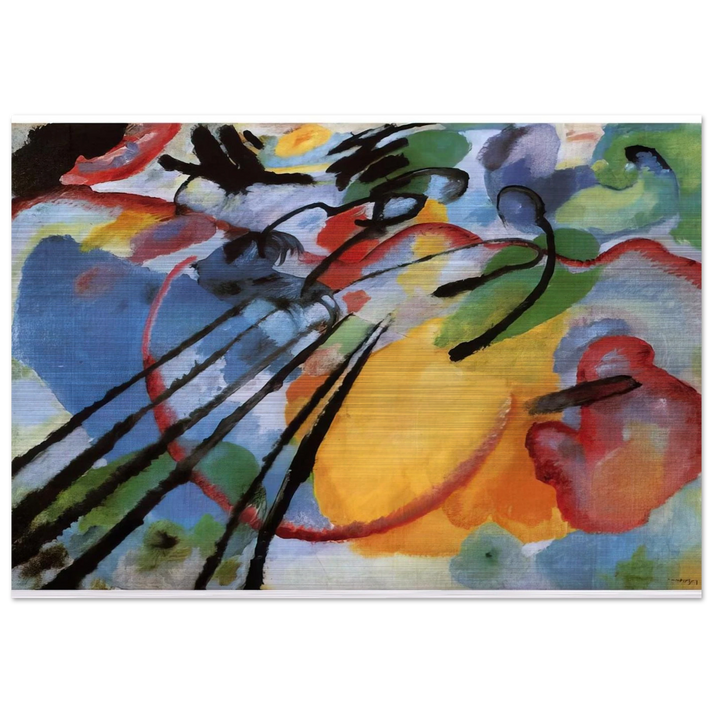
IMPROVISATION 26 (ROWING), 1912 by Wassily Kandinsky
Own a museum-quality reproduction of Wassily Kandinsky's groundbreaking abstract masterpiece, IMPROVISATION 26 (ROWING), created in 1912. This iconic work marks a pivotal moment in art history, as Kandinsky boldly transitioned from representational forms to pure abstraction, capturing the dynamic energy of motion and emotion through vibrant, non-objective shapes and colors. The title "Rowing" hints at rhythmic movement, which Kandinsky translates into a symphony of bold lines, geometric fragments, and explosive hues that seem to dance across the surface.
RedKalion presents this archival-grade fine art print on premium brushed silver Aluminum DIBOND®, meticulously crafted to honor Kandinsky's revolutionary vision. The 3mm thick, rigid base ensures durability, while the direct print technology delivers vivid, fade-resistant colors with a sophisticated matte finish. Unprinted areas reveal a striking metallic silver effect, enhancing the artwork's dynamic contrast and modern appeal.
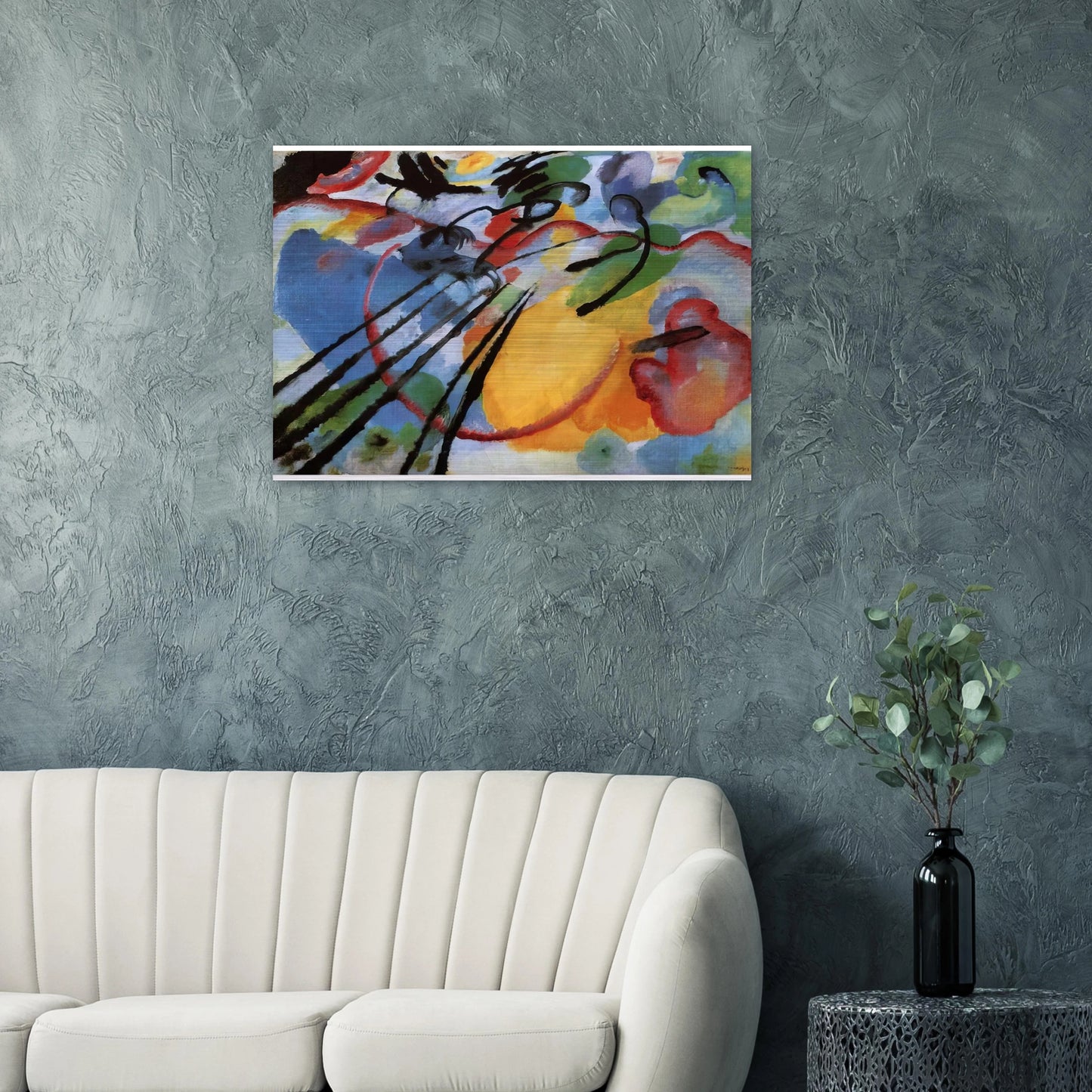
Measuring 70x100 cm (28x40 inches), this piece commands attention in any space, from a contemporary living room to a professional office. The glare-free surface makes it ideal for viewing in various lighting conditions, preserving the integrity of Kandinsky's expressive composition.
Elevate your environment with a timeless reproduction that blends art historical significance with cutting-edge display technology. Each print includes a complete hanging kit for effortless installation, tailored to your region's requirements.


Discover Unlimited Art Possibilities
At RedKalion, you can find virtually any artwork from any artist, available in a wide range of sizes to perfectly match your space.
If you didn’t find what you’re looking for, contact us at support@redkalion.com . We will source any artwork and produce it in any size and format you need, including art prints, posters, canvas, framed pieces, framed canvas, and more.
For dedicated art enthusiasts, we also offer handcrafted replicas of any artwork, carefully painted by highly skilled artists using traditional techniques.
For custom requests, contact us at support@redkalion.com .
What is the historical significance of Kandinsky's IMPROVISATION 26 (ROWING)?
Created in 1912, this work is a key example of Kandinsky's shift to pure abstraction, using vibrant colors and dynamic forms to evoke emotion and movement, marking a milestone in modern art history.
What materials are used for this Kandinsky aluminum print?
It's printed on brushed silver Aluminum DIBOND® with a 3mm thickness, featuring a direct print for vivid colors, a matte finish, and a metallic silver effect in unprinted areas.
How does the brushed aluminum enhance this fine art reproduction?
The brushed silver finish adds a dynamic, modern look with horizontal grain, complementing Kandinsky's abstract style and ensuring a glare-free, museum-quality display.
Is a hanging kit included with this archival print?
Yes, a complete hanging kit is included, with components varying by fulfillment country to ensure secure and easy installation.
What are the dimensions of this Wassily Kandinsky print?
It measures 70x100 cm (28x40 inches), making it a statement piece suitable for various interior spaces.
How does Kandinsky's technique in this work reflect his artistic philosophy?
Kandinsky used non-objective shapes and bold colors to express inner feelings and spiritual ideas, moving beyond representation to pioneer abstract art.
Why is the matte finish ideal for this artwork?
The matte, glare-free finish preserves the vivid colors and contrasts of Kandinsky's composition, ensuring optimal viewing without reflections.