RedKalion
INITIAL D - MC Escher Acrylic Print - 70x100 cm / 28x40″ inches | Maurits Cornelis Escher Prints
INITIAL D - MC Escher Acrylic Print - 70x100 cm / 28x40″ inches | Maurits Cornelis Escher Prints
Couldn't load pickup availability
INITIAL D - MC Escher Acrylic Print - 70x100 cm / 28x40″ inches | Maurits Cornelis Escher Prints
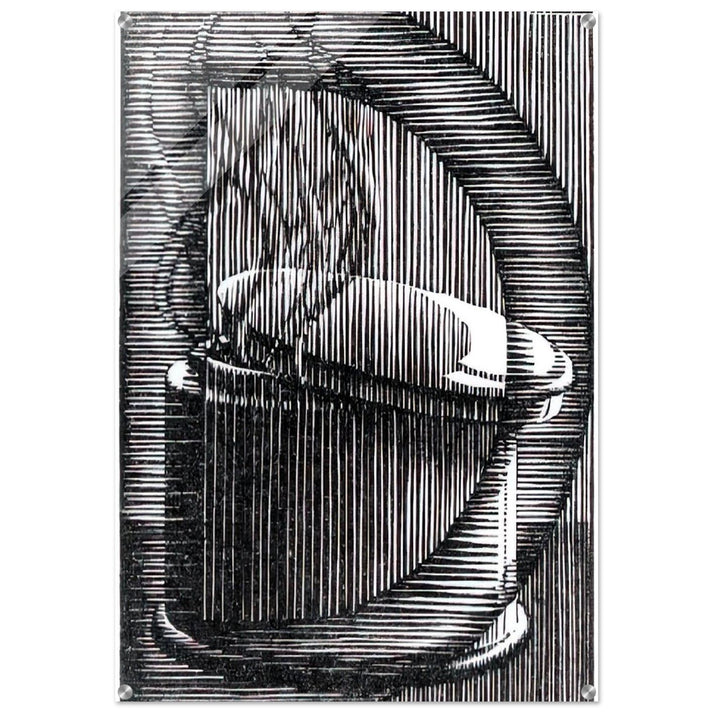
RedKalion presents a museum-quality reproduction of M.C. Escher's "Initial D", meticulously printed on premium 4mm acrylic to capture every intricate detail of this iconic optical illusion masterpiece. This archival-grade print, measuring 70x100 cm (28x40 inches), offers a sleek, vibrant, and durable finish that transforms any space into a gallery of mathematical art.
Maurits Cornelis Escher, the Dutch graphic artist renowned for his impossible constructions and tessellations, created "Initial D" as a testament to his fascination with infinity and perspective. This work exemplifies his masterful technique of woodcut and lithography, blending art with geometry to challenge perception. The piece evokes a sense of intellectual curiosity and visual intrigue, making it a conversation starter for modern interiors.
Our reproduction ensures historical accuracy and superior craftsmanship. Featuring straight-cut corners for a contemporary aesthetic, the print defaults transparent backgrounds to white for optimal presentation. Each piece includes a complete hanging kit with hardware, screws, and pre-drilled screw holes (14mm from the edge, 8mm diameter, 15mm screw head) for effortless installation. Elevate your environment with an archival masterpiece that endures, showcasing Escher's genius in a format designed for longevity and impact.
- Material: 4mm (0.15") acrylic for vibrant, durable display.
- Design: Straight-cut corners; white default backgrounds.
- Hanging Kit: Includes hardware, screws, and pre-drilled holes (14mm from edge, 8mm diameter, 15mm screw head).
- Dimensions: 70x100 cm / 28x40 inches.

Discover Unlimited Art Possibilities
At RedKalion, you can find virtually any artwork from any artist, available in a wide range of sizes to perfectly match your space.
If you didn’t find what you’re looking for, contact us at support@redkalion.com . We will source any artwork and produce it in any size and format you need, including art prints, posters, canvas, framed pieces, framed canvas, and more.
For dedicated art enthusiasts, we also offer handcrafted replicas of any artwork, carefully painted by highly skilled artists using traditional techniques.
For custom requests, contact us at support@redkalion.com .
What is the historical significance of M.C. Escher's "Initial D"?
"Initial D" by Maurits Cornelis Escher is a seminal work in optical art, showcasing his expertise in mathematical tessellations and impossible geometries that challenge visual perception, reflecting early 20th-century explorations in art and science.
What are the specifications of the acrylic print material?
This fine art print uses 4mm (0.15") acrylic for a sleek, vibrant, and durable finish, ensuring museum-quality reproduction with archival longevity and modern aesthetics.
How is the print designed for hanging and presentation?
It features straight-cut corners for a contemporary look, includes a hanging kit with hardware and screws, and has pre-drilled screw holes (14mm from edge, 8mm diameter) for easy installation.
What are the shipping and delivery options for this artwork?
RedKalion offers secure, tracked shipping worldwide, with careful packaging to protect your archival-grade print during transit, ensuring it arrives in pristine condition.
How does the archival quality ensure long-term durability?
The acrylic material and premium printing techniques resist fading and damage, providing a durable, vibrant display that maintains its quality for years as a lasting art investment.
What artistic techniques did Escher use in "Initial D"?
Escher employed woodcut and lithography methods in "Initial D," masterfully blending precise geometric patterns to create optical illusions that explore themes of infinity and perspective.
Why are transparent backgrounds defaulted to white in this print?
Transparent backgrounds are set to white for optimal presentation, enhancing contrast and clarity to showcase Escher's intricate designs in a modern, gallery-style display.