

RedKalion
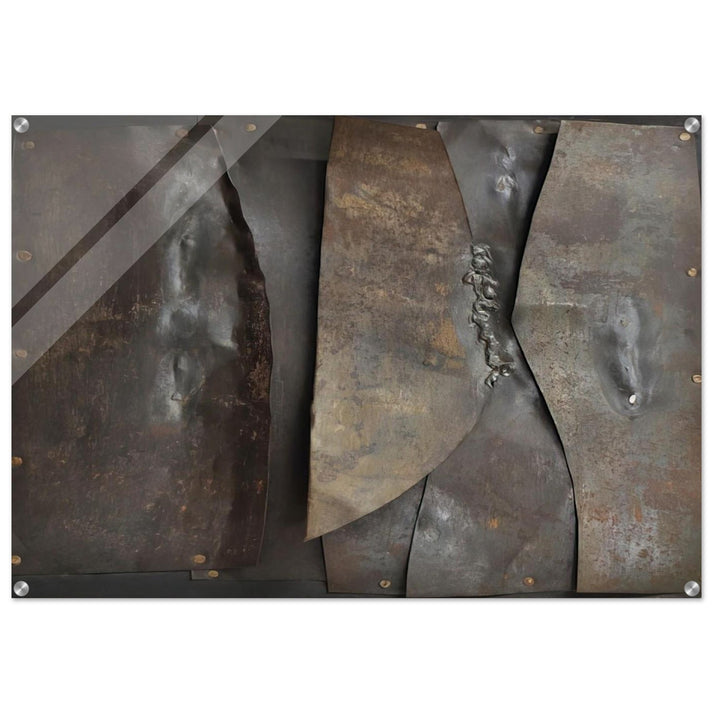
Iron - 1960 - Alberto Burri Acrylic Print - 70x100 cm / 28x40″ inches
Iron - 1960 - Alberto Burri Acrylic Print - 70x100 cm / 28x40″ inches
Couldn't load pickup availability
Iron (1960) by Alberto Burri - Museum-Quality Acrylic Print
Experience the raw power of postwar Italian art with this archival-grade reproduction of Alberto Burri's seminal 1960 masterpiece, Iron. This fine art print captures every nuance of Burri's revolutionary technique, where he transformed industrial materials into profound artistic statements. As a leading figure of the Arte Povera movement, Burri challenged traditional aesthetics by incorporating burlap, tar, and—as seen here—metal into his compositions, creating textured, emotionally charged works that reflect the trauma and resilience of postwar Europe.
Our museum-quality reproduction is meticulously crafted on 4mm (0.15") premium acrylic, ensuring vibrant colors and exceptional durability that rival the original's impact. The sleek, straight-cut corners and modern presentation (with transparent backgrounds rendered as white for optimal contrast) make this piece a striking addition to contemporary interiors. Each print includes a complete hanging kit with hardware, screws, and precisely placed screw holes (14mm/0.55" from the edge, 8mm/0.31" diameter, 15mm/0.6" screw head) for effortless installation.
Elevate your space with an archival masterpiece that endures, blending historical significance with cutting-edge reproduction technology. RedKalion is your trusted curator for world-class art that inspires and transforms.


Discover Unlimited Art Possibilities
At RedKalion, you can find virtually any artwork from any artist, available in a wide range of sizes to perfectly match your space.
If you didn’t find what you’re looking for, contact us at support@redkalion.com . We will source any artwork and produce it in any size and format you need, including art prints, posters, canvas, framed pieces, framed canvas, and more.
For dedicated art enthusiasts, we also offer handcrafted replicas of any artwork, carefully painted by highly skilled artists using traditional techniques.
For custom requests, contact us at support@redkalion.com .
What are the dimensions of this Alberto Burri Iron acrylic print?
This fine art print measures 70x100 cm (28x40 inches), perfectly capturing the scale and impact of Burri's original 1960 masterpiece for your home or office display.
What material is used for this museum-quality reproduction?
It features 4mm (0.15") premium acrylic for a sleek, vibrant, and durable finish that enhances the texture and colors of Burri's Iron artwork with archival longevity.
How is the Alberto Burri Iron print shipped and installed?
We ship it securely with a complete hanging kit, including hardware and screws, plus pre-drilled holes (14mm from edges) for easy, modern wall mounting.
Is this acrylic print archival and fade-resistant?
Yes, our museum-quality reproduction uses archival materials to ensure fade resistance and durability, preserving Burri's Iron artwork for generations to come.
What design features does this Alberto Burri print include?
It has straight-cut corners for a modern look, with transparent backgrounds defaulting to white for optimal presentation of Burri's Iron composition.
What artistic movement is Alberto Burri associated with?
Alberto Burri was a key figure in the Arte Povera movement, known for using industrial materials like iron to create textured, emotionally resonant postwar art.
Why is Iron (1960) significant in art history?
Iron exemplifies Burri's revolutionary technique of incorporating metal into art, reflecting postwar trauma and challenging traditional aesthetics with raw, material-based expression.