
RedKalion
Its All Over - The City - 1947 - Wols 70x100 cm / 28x40 inches Framed Art Print – Black Wooden Frame
Its All Over - The City - 1947 - Wols 70x100 cm / 28x40 inches Framed Art Print – Black Wooden Frame
Couldn't load pickup availability
Wols: Its All Over - The City (1947) - Museum-Quality Framed Art Print
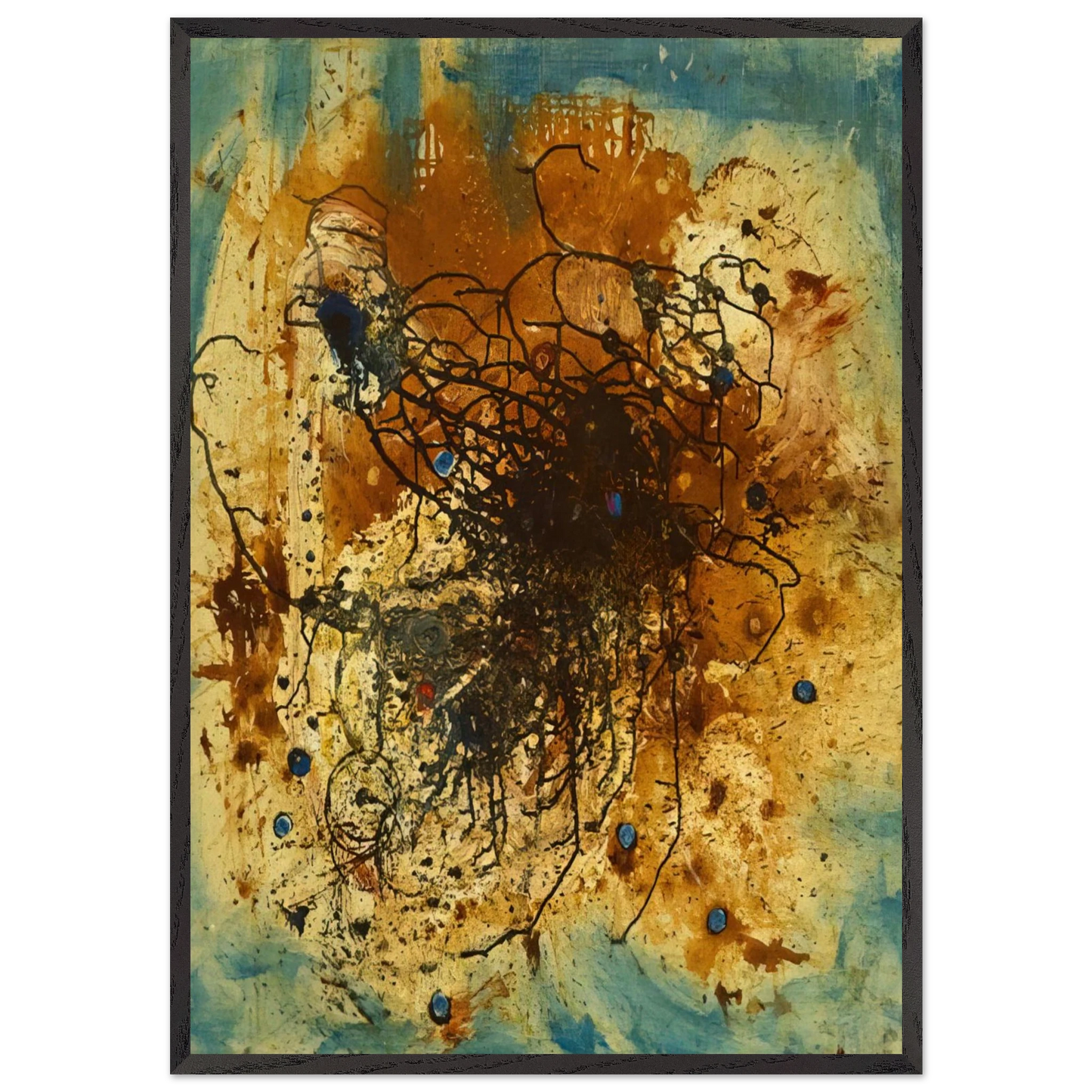
Experience the raw, existential energy of post-war Europe with Wols' seminal 1947 masterpiece, "Its All Over - The City." This framed art print captures the haunting abstraction and emotional turbulence that defined the Tachisme movement, offering a profound statement piece for discerning collectors.
Wols (Alfred Otto Wolfgang Schulze) channeled the chaos and despair of a world rebuilding after conflict into this evocative work. His spontaneous, gestural technique—using ink, watercolor, and oil—creates a dense, almost claustrophobic composition that mirrors the psychological landscape of the era. This fine art reproduction preserves every nuanced brushstroke and ink blot, allowing you to own a piece of art history that continues to resonate with contemporary audiences.
Premium Framed Presentation
This 70x100 cm / 28x40 inches framed art print arrives ready-to-hang, complete with a hanging kit for immediate display. Encased in a sophisticated black wooden frame crafted from responsibly sourced oak and ash wood, the piece features a substantial 20mm (0.79") thick and wide profile—wider than classic 14mm frames—for a bold, gallery-worthy presence.
- Archival-Grade Paper: Printed on 250 gsm (110 lb) matte, uncoated, natural white paper with a thickness of 0.29 mm (11.4 mils), ensuring exceptional durability and color fidelity.
- Premium Protection: Shatterproof plexiglass safeguards the print from dust, UV light, and accidental damage while maintaining crystal-clear visibility.
- Sustainable Commitment: Produced using FSC-certified or equivalent sustainable materials, reflecting RedKalion's dedication to environmental responsibility.
Elevate your space with an archival masterpiece that endures, blending historical significance with modern craftsmanship. RedKalion delivers museum-quality reproductions you can trust, curated for those who demand authenticity and excellence.
Discover Unlimited Art Possibilities
At RedKalion, you can find virtually any artwork from any artist, available in a wide range of sizes to perfectly match your space.
If you didn’t find what you’re looking for, contact us at support@redkalion.com . We will source any artwork and produce it in any size and format you need, including art prints, posters, canvas, framed pieces, framed canvas, and more.
For dedicated art enthusiasts, we also offer handcrafted replicas of any artwork, carefully painted by highly skilled artists using traditional techniques.
For custom requests, contact us at support@redkalion.com .
What are the dimensions of this framed Wols art print?
The framed print measures 70x100 cm (28x40 inches), with a 20mm (0.79") thick black wooden frame, making it a bold statement piece for any room.
What type of paper is used for this fine art reproduction?
It's printed on 250 gsm (110 lb) matte, uncoated, natural white archival museum-quality paper, 0.29 mm thick, ensuring vibrant colors and long-lasting durability for your art collection.
Is this framed print ready to hang when it arrives?
Yes, it includes a hanging kit and is ready-to-hang directly on your wall, so you can display this Wols masterpiece immediately without additional setup.
How does the frame protect the artwork?
The frame features shatterproof plexiglass that protects the print from dust, UV light, and damage, while the responsibly sourced oak and ash wood ensures a sturdy, elegant display.
Is this a sustainable art print option?
Yes, it uses FSC-certified or equivalent sustainable materials, including the paper and frame, aligning with eco-friendly practices for conscientious art buyers.
What artistic movement is "Its All Over - The City" associated with?
This 1947 work by Wols is a key example of Tachisme, an abstract style emphasizing spontaneous, gestural techniques that emerged in post-war Europe as an emotional response to chaos.
How did Wols create the textures in this artwork?
Wols used ink, watercolor, and oil in a layered, improvisational method, resulting in dense, claustrophobic compositions that reflect the psychological turmoil of his time.