RedKalion
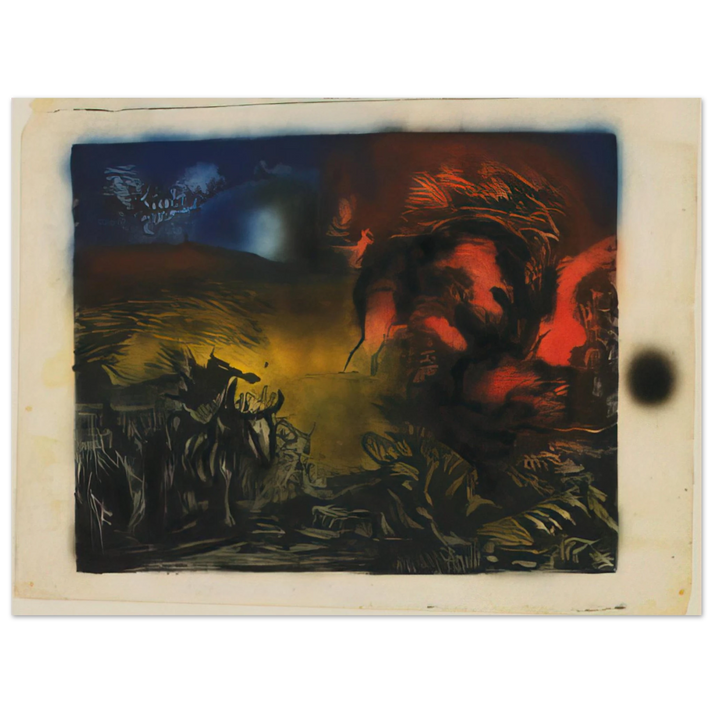
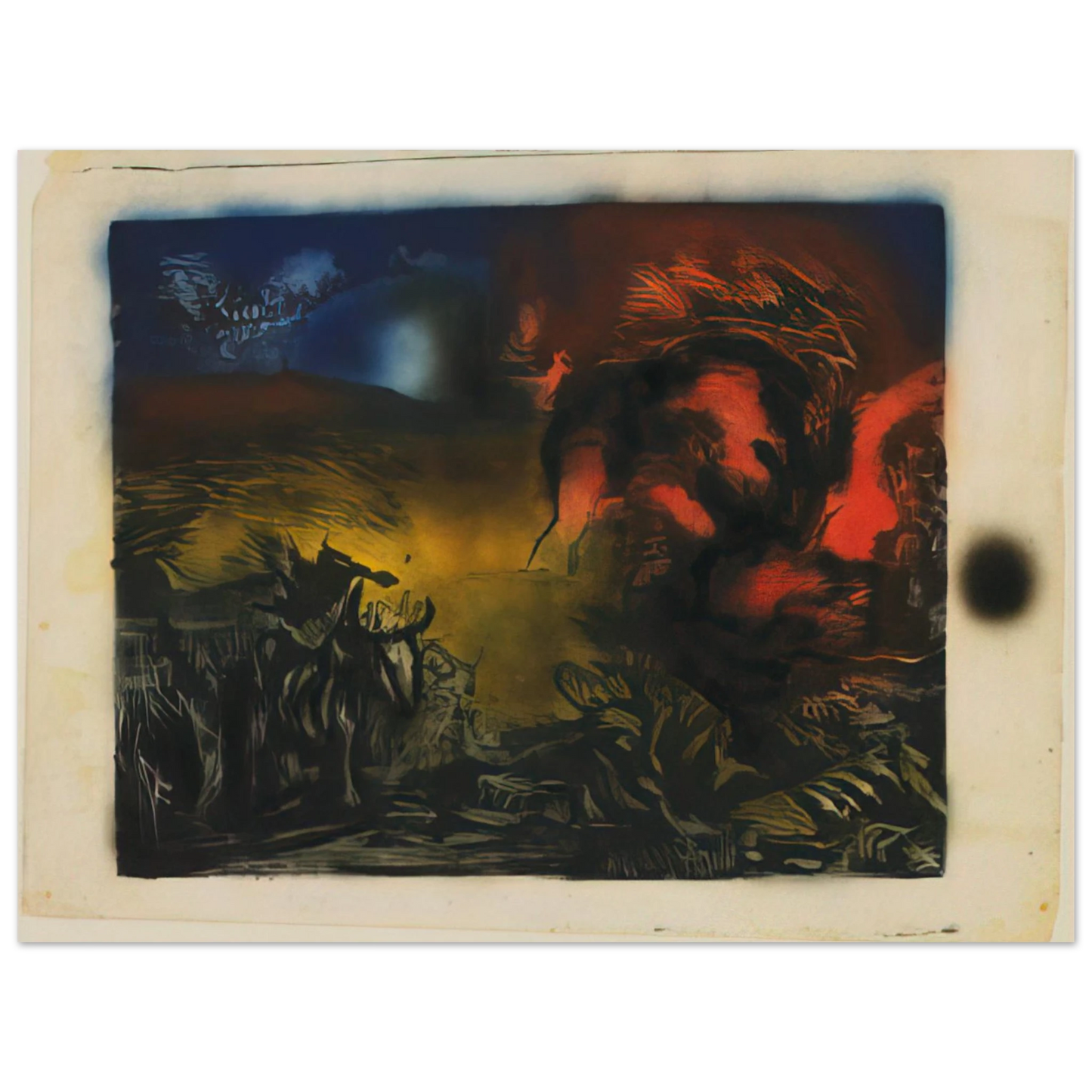
Jackson Pollock - LANDSCAPE WITH STEER 1937 75x100 cm / 30x40inches Fine Art Poster
Jackson Pollock - LANDSCAPE WITH STEER 1937 75x100 cm / 30x40inches Fine Art Poster
Couldn't load pickup availability
Jackson Pollock - LANDSCAPE WITH STEER 1937 Fine Art Print
Discover a pivotal early work by the legendary American abstract expressionist Jackson Pollock. LANDSCAPE WITH STEER 1937 captures Pollock's formative years, blending surrealist influences with his emerging gestural style. This 75x100 cm (30x40 inches) fine art poster offers a rare glimpse into the artist's pre-drip period, where mythic symbolism and raw energy converge in a dynamic composition.
At RedKalion, we present this masterpiece as a museum-quality reproduction on our exclusive Master's Edition archival paper. The matte, uncoated finish and natural white (off-white) hue provide a luxurious texture that honors the original's tactile depth. Crafted from acid-free, FSC-certified paper with a weight of 250 gsm (110 lb) and thickness of 0.29 mm (11.4 mils), this print is designed for archival longevity, ensuring it remains vibrant for generations.
Elevate your space with an archival masterpiece that endures—each print is meticulously produced on demand, reflecting our commitment to sustainability and artistic integrity.
Discover Unlimited Art Possibilities
At RedKalion, you can find virtually any artwork from any artist, available in a wide range of sizes to perfectly match your space.
If you didn’t find what you’re looking for, contact us at support@redkalion.com . We will source any artwork and produce it in any size and format you need, including art prints, posters, canvas, framed pieces, framed canvas, and more.
For dedicated art enthusiasts, we also offer handcrafted replicas of any artwork, carefully painted by highly skilled artists using traditional techniques.
For custom requests, contact us at support@redkalion.com .
What is the significance of Jackson Pollock's LANDSCAPE WITH STEER 1937?
This early work from 1937 showcases Pollock's transition from surrealism to abstract expressionism, featuring symbolic imagery like the steer that reflects his interest in myth and the American West, making it a key piece for fine art collectors.
What are the dimensions of this fine art print?
The print measures 75x100 cm or 30x40 inches, ideal for large wall displays as a museum-quality reproduction that captures every detail of Pollock's original composition.
What type of paper is used for this archival print?
We use Master's Edition archival paper, which is acid-free (pH above 7) to prevent yellowing, FSC-certified for sustainability, and offers a matte, uncoated finish with a natural white hue for a luxurious texture.
How durable is this print for long-term display?
With a weight of 250 gsm (110 lb) and thickness of 0.29 mm (11.4 mils), this acid-free print ensures archival longevity, resisting fading and deterioration to maintain its quality over time.
How is this print shipped and is there a minimum order?
We offer no minimum orders and print on demand, with each fine art poster carefully packaged and shipped directly to you for a seamless acquisition experience.
What artistic techniques did Pollock use in this 1937 work?
In LANDSCAPE WITH STEER, Pollock employed thick, gestural brushstrokes and symbolic imagery, blending surrealist elements with his early exploration of dynamic composition that later defined his drip paintings.
Why is the steer a recurring symbol in Pollock's early art?
The steer represents Pollock's fascination with American mythology and primal forces, often used in his 1930s works to convey themes of power and transformation, adding depth to this fine art print.