
RedKalion
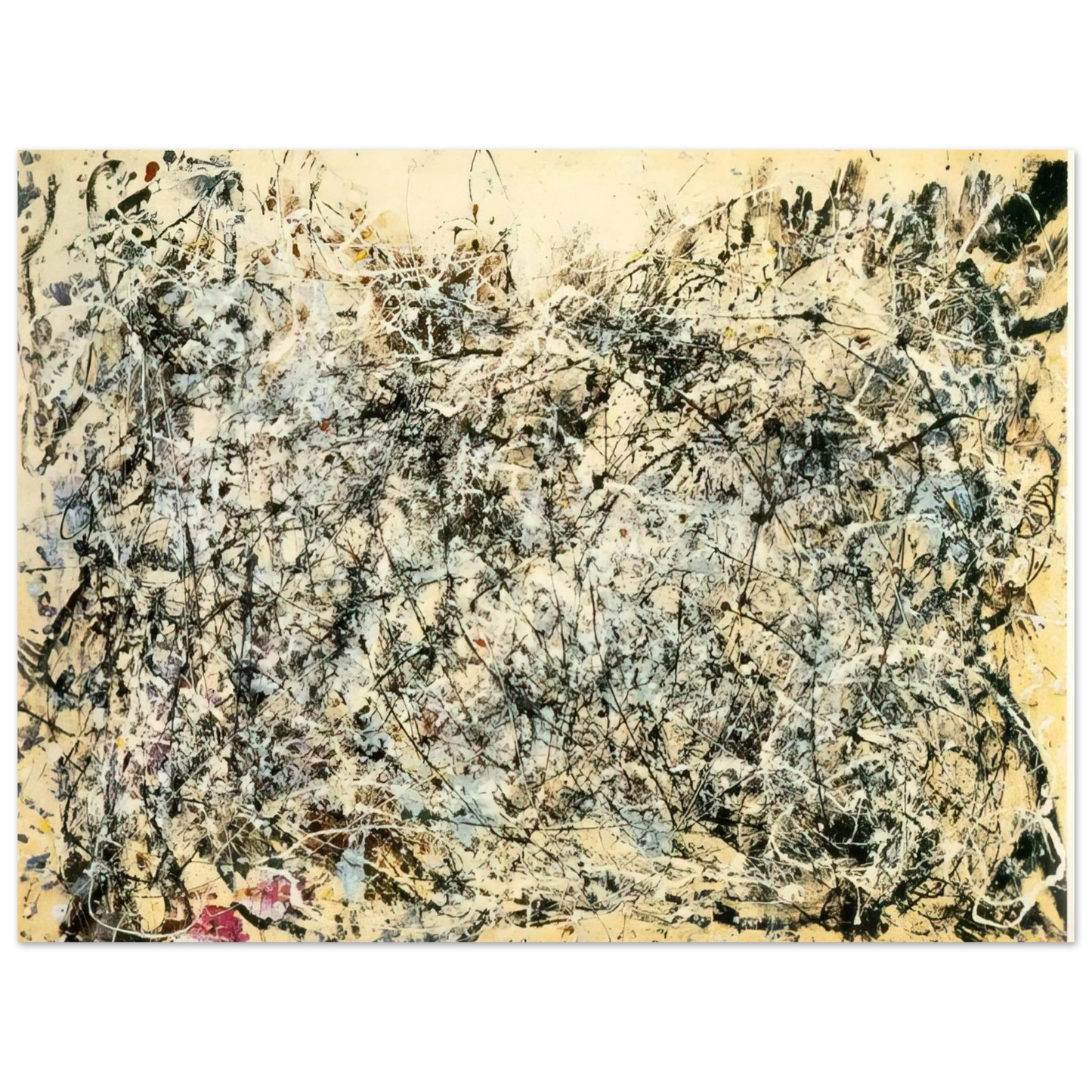
Jackson Pollock - NO 1 1948 75x100 cm / 30x40inches Fine Art Poster
Jackson Pollock - NO 1 1948 75x100 cm / 30x40inches Fine Art Poster
Couldn't load pickup availability
Jackson Pollock - No. 1, 1948: A Monumental Abstract Expressionist Masterpiece
Immerse yourself in the raw energy of mid-century modernism with this museum-quality fine art print of Jackson Pollock's groundbreaking No. 1, 1948. This iconic work, measuring 75x100 cm (30x40 inches), captures the revolutionary 'drip painting' technique that redefined 20th-century art. Pollock's dynamic skeins of enamel paint, flung and poured onto a horizontal canvas, create a mesmerizing web of motion and emotion—a visual symphony of chaos and control that embodies the very spirit of Abstract Expressionism.
RedKalion presents this archival reproduction on our exclusive Master's Edition paper, ensuring every intricate detail of Pollock's layered, gestural marks is preserved with stunning fidelity. The matte, uncoated finish and natural white hue provide a luxurious, gallery-worthy texture that honors the original's tactile presence. Crafted from acid-free, FSC-certified paper (250 gsm / 0.29 mm thick), this print is designed to resist yellowing and endure for generations, making it a sustainable heirloom for discerning collectors.
Elevate your space with a piece of art history—this on-demand print arrives ready to transform any room into a sophisticated sanctuary of modern creativity.
Discover Unlimited Art Possibilities
At RedKalion, you can find virtually any artwork from any artist, available in a wide range of sizes to perfectly match your space.
If you didn’t find what you’re looking for, contact us at support@redkalion.com . We will source any artwork and produce it in any size and format you need, including art prints, posters, canvas, framed pieces, framed canvas, and more.
For dedicated art enthusiasts, we also offer handcrafted replicas of any artwork, carefully painted by highly skilled artists using traditional techniques.
For custom requests, contact us at support@redkalion.com .
What are the dimensions of this Jackson Pollock No. 1, 1948 fine art print?
This museum-quality reproduction measures 75x100 cm (30x40 inches), perfectly capturing the monumental scale of Pollock's original Abstract Expressionist masterpiece for your home or office decor.
What type of paper is used for this archival art print?
We use Master's Edition archival paper, a premium 250 gsm matte paper that is acid-free and FSC-certified, ensuring a luxurious texture and long-lasting durability for your Pollock reproduction.
How is this Pollock print shipped and is there a minimum order?
This print is produced on-demand with no minimum orders, carefully packaged in protective materials, and shipped directly to you for a seamless fine art poster delivery experience.
Will this print yellow or fade over time?
No, our acid-free (pH above 7) paper prevents yellowing, and the archival-quality materials ensure your Jackson Pollock artwork maintains its vibrant colors for decades as a lasting investment.
What is the finish and thickness of this art print?
It features a matte, uncoated finish on natural white paper with a thickness of 0.29 mm (11.4 mils), offering a premium 250 gsm weight that enhances the tactile quality of this Abstract Expressionist piece.
What makes Jackson Pollock's No. 1, 1948 historically significant?
Created in 1948, this painting is a seminal example of Pollock's drip technique, marking a pivotal shift in Abstract Expressionism by emphasizing spontaneous, gestural action over traditional brushwork, influencing modern art globally.
Can you describe the artistic technique used in No. 1, 1948?
Pollock employed his iconic 'drip painting' method, flinging and pouring enamel paint onto a horizontal canvas to create layered, dynamic webs of color, blending chaos and control in a revolutionary approach to composition.