RedKalion
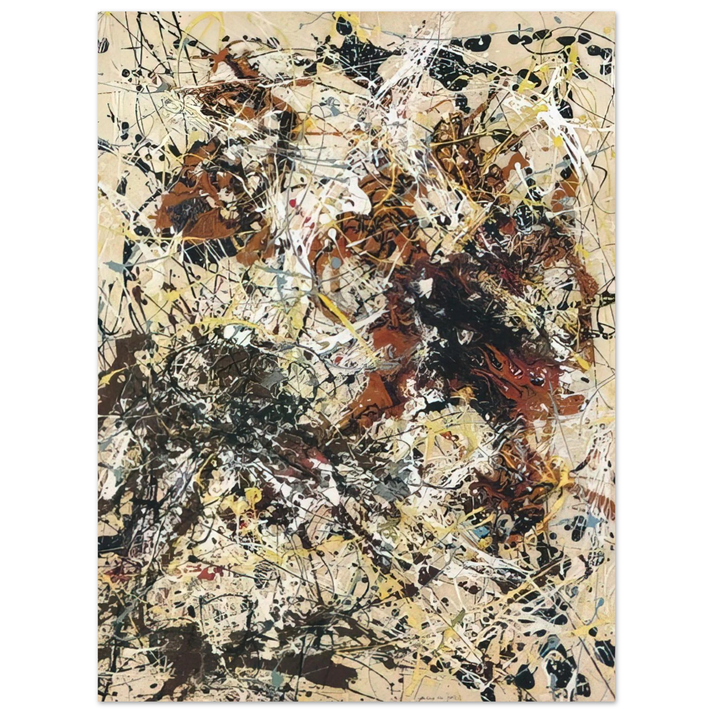
Jackson Pollock - NUMBER 12 1949 75x100 cm / 30x40inches Fine Art Poster
Jackson Pollock - NUMBER 12 1949 75x100 cm / 30x40inches Fine Art Poster
Couldn't load pickup availability
Jackson Pollock's Number 12, 1949 Fine Art Print
Immerse yourself in the revolutionary energy of Abstract Expressionism with this museum-quality reproduction of Jackson Pollock's Number 12, 1949. This iconic work, measuring 75x100 cm (30x40 inches), captures the raw, dynamic essence of Pollock's famed drip-painting technique, where rhythmic splatters and skeins of paint create a complex, all-over composition that redefined modern art.
Pollock's Number 12, 1949 exemplifies his "action painting" method, where he placed canvases on the floor and energetically flung, poured, and dripped industrial paints. This process transformed painting into a physical performance, resulting in a dense web of lines that invites endless interpretation—from cosmic chaos to controlled frenzy. This piece stands as a testament to post-war American innovation, offering a window into the artist's subconscious and the bold spirit of the era.
RedKalion presents this masterpiece as a fine art poster crafted for discerning collectors. Printed on our exclusive Master's Edition archival paper, this reproduction ensures exceptional fidelity to Pollock's original textures and hues. The matte, uncoated finish in a natural white shade provides a luxurious, tactile surface that enhances the artwork's depth without glare. With an acid-free composition (pH above 7) and FSC-certified sustainability, this print is designed to resist yellowing and endure for generations, backed by a robust 250 gsm (110 lb) weight and 0.29 mm (11.4 mils) thickness.
Elevate your space with an archival masterpiece that bridges historical significance and contemporary elegance. Each print is fulfilled on demand, ensuring a personalized, premium experience without minimum orders.

Discover Unlimited Art Possibilities
At RedKalion, you can find virtually any artwork from any artist, available in a wide range of sizes to perfectly match your space.
If you didn’t find what you’re looking for, contact us at support@redkalion.com . We will source any artwork and produce it in any size and format you need, including art prints, posters, canvas, framed pieces, framed canvas, and more.
For dedicated art enthusiasts, we also offer handcrafted replicas of any artwork, carefully painted by highly skilled artists using traditional techniques.
For custom requests, contact us at support@redkalion.com .
What are the dimensions of this Jackson Pollock fine art print?
This museum-quality reproduction measures 75x100 cm (30x40 inches), perfectly capturing the scale and impact of Pollock's original Number 12, 1949 artwork for your home or office display.
What type of paper is used for this archival print?
It's printed on Master's Edition archival paper, featuring a matte, uncoated finish in natural white for a luxurious texture that enhances the artwork's details and ensures long-term preservation.
How does the archival quality prevent damage over time?
The acid-free paper (pH above 7) resists yellowing, while the 250 gsm weight and 0.29 mm thickness provide durability, making this fine art poster a lasting investment for collectors.
What is the shipping and fulfillment process for this print?
We offer on-demand printing with no minimum orders, ensuring each Jackson Pollock reproduction is custom-made and shipped directly to you for a premium, efficient experience.
Is this print environmentally sustainable?
Yes, it uses FSC-certified paper, supporting responsible forestry practices and aligning with eco-conscious values for your fine art collection.
What makes Jackson Pollock's Number 12, 1949 historically significant?
Created in 1949, this piece showcases Pollock's revolutionary drip-painting technique, pivotal to Abstract Expressionism, reflecting post-war American innovation and the artist's exploration of subconscious expression through dynamic, all-over compositions.
Can you describe the visual details of Number 12, 1949?
It features intricate webs of splattered and poured paint in layered hues, creating a rhythmic, chaotic yet controlled pattern that embodies Pollock's "action painting" method and invites deep visual engagement.