RedKalion
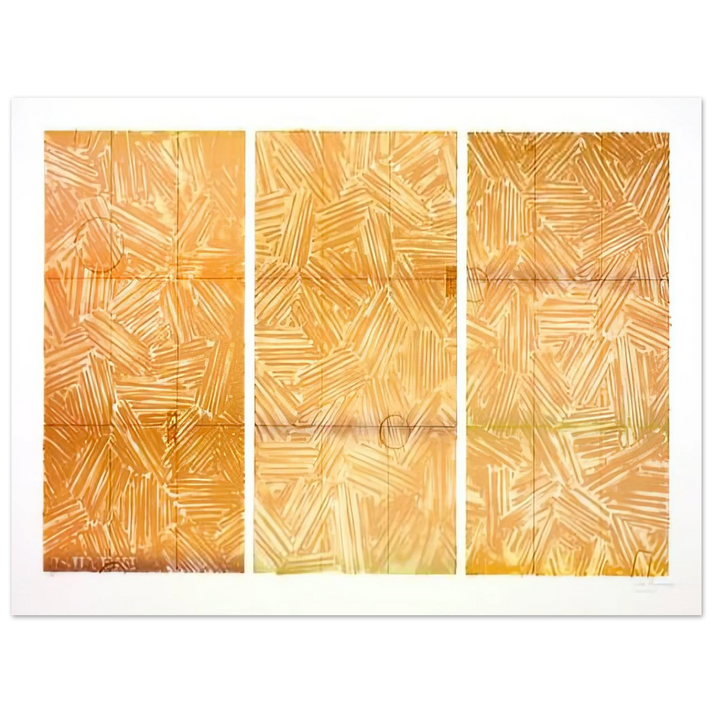
Jasper Johns - USUYUKI 1979 75x100 cm / 30x40inches Fine Art Poster
Jasper Johns - USUYUKI 1979 75x100 cm / 30x40inches Fine Art Poster
Couldn't load pickup availability
Jasper Johns - USUYUKI 1979 Fine Art Print
Experience the profound minimalism of Jasper Johns' USUYUKI 1979, a masterful print that captures the artist's exploration of abstraction and symbolism. This museum-quality reproduction, measuring 75x100 cm (30x40 inches), invites you to own a piece of contemporary art history, meticulously crafted on archival paper to preserve its integrity for generations.
Johns, a pivotal figure in the post-war American art scene, created USUYUKI during a period of intense experimentation with printmaking techniques. The title, derived from Japanese, hints at themes of transience and subtlety, reflecting his interest in cross-cultural influences and the nuanced interplay of form and meaning. This fine art poster embodies his signature approach—layering simplicity with deep conceptual resonance—making it a sophisticated addition to any discerning collection.
At RedKalion, we specialize in archival-grade reproductions that honor the original's essence. Our Master's Edition archival paper ensures a matte, uncoated finish in a natural white hue, offering a luxurious texture that enhances the artwork's visual depth. With a weight of 250 gsm (110 lb) and a thickness of 0.29 mm (11.4 mils), this print is both durable and elegant, printed on demand with no minimum orders for your convenience.
Elevate your space with a timeless piece that combines artistic legacy with modern craftsmanship. Trust RedKalion to deliver a premium fine art print that stands as a testament to quality and authenticity.
Discover Unlimited Art Possibilities
At RedKalion, you can find virtually any artwork from any artist, available in a wide range of sizes to perfectly match your space.
If you didn’t find what you’re looking for, contact us at support@redkalion.com . We will source any artwork and produce it in any size and format you need, including art prints, posters, canvas, framed pieces, framed canvas, and more.
For dedicated art enthusiasts, we also offer handcrafted replicas of any artwork, carefully painted by highly skilled artists using traditional techniques.
For custom requests, contact us at support@redkalion.com .
What are the dimensions of the Jasper Johns USUYUKI 1979 print?
This fine art poster measures 75x100 cm, equivalent to 30x40 inches, making it an ideal size for prominent display in homes or offices.
What type of paper is used for this museum-quality reproduction?
It's printed on Master's Edition archival paper, featuring a matte, uncoated finish in natural white for a luxurious texture and long-lasting durability.
How is this print shipped and are there minimum order requirements?
We offer on-demand printing and shipping with no minimum orders, ensuring fast fulfillment and eco-friendly practices with FSC-certified paper.
What makes this print archival and resistant to yellowing?
The acid-free paper has a pH above 7, preventing yellowing over time and ensuring this fine art poster remains vibrant for generations.
Can you describe the weight and thickness of the paper?
This premium paper weighs 250 gsm (110 lb) with a thickness of 0.29 mm (11.4 mils), offering a sturdy feel suitable for framing and display.
What is the significance of the title USUYUKI in Jasper Johns' work?
USUYUKI, meaning "light snow" in Japanese, reflects Johns' interest in subtlety and transience, adding a layer of cross-cultural symbolism to this abstract print.
How does this print fit into Jasper Johns' artistic legacy?
Created in 1979, USUYUKI showcases Johns' mastery of printmaking and his exploration of minimalism, cementing his role in post-war American art history.