RedKalion
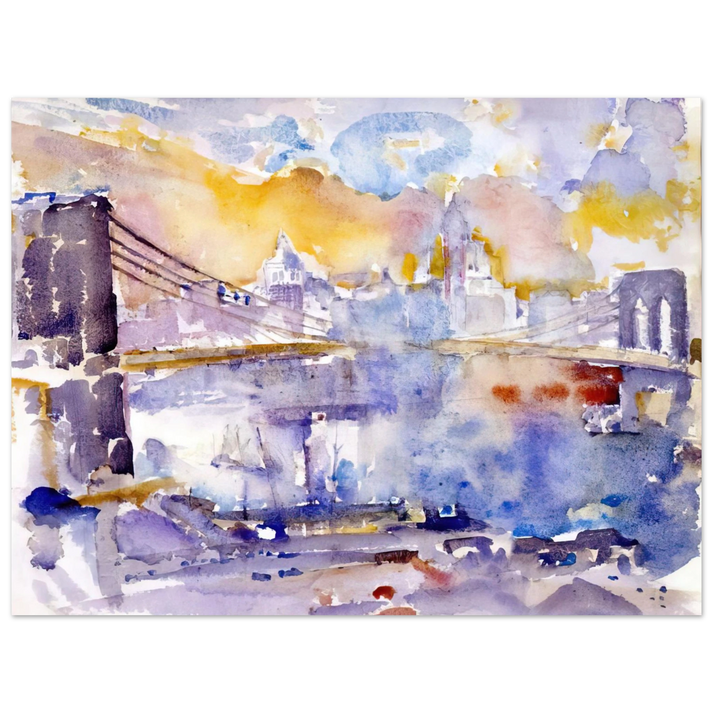
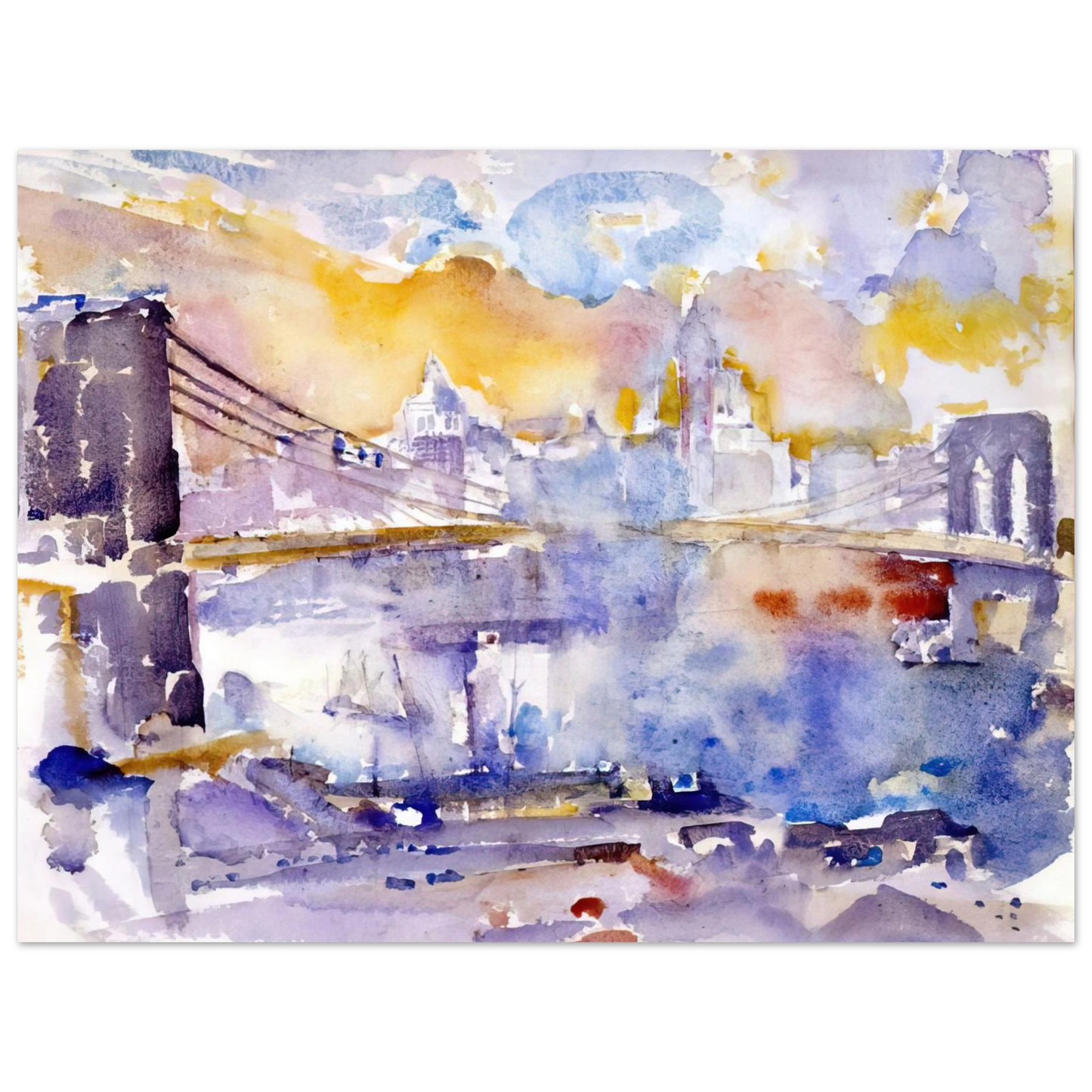
John Marin - Brooklyn Bridge - 1912 75x100 cm / 30x40inches Fine Art Poster
John Marin - Brooklyn Bridge - 1912 75x100 cm / 30x40inches Fine Art Poster
Couldn't load pickup availability
John Marin's "Brooklyn Bridge" (1912) - Museum-Quality Fine Art Print
Experience the dynamic energy of early 20th-century American modernism with John Marin's iconic 1912 masterpiece, "Brooklyn Bridge." This celebrated watercolor and charcoal work captures the bridge not as a static structure, but as a living, vibrating force of the modern city. Marin's revolutionary technique—using fractured planes, bold lines, and expressive washes—translates the bridge's steel cables and towering forms into a symphony of motion and light, embodying the very pulse of New York City.
RedKalion presents this historic artwork as a premium fine art poster, meticulously reproduced to honor Marin's visionary style. Our Master's Edition archival paper ensures every nuanced brushstroke and charcoal line is rendered with stunning clarity. The natural white, matte finish provides a luxurious, gallery-worthy texture that resists glare, making it perfect for sophisticated interiors from living rooms to professional offices.
Product Specifications & Archival Quality:
- Paper: Museum-quality, FSC-certified Master's Edition archival paper.
- Finish: Matte, uncoated surface with a natural white (off-white) hue for authentic texture.
- Longevity: Acid-free (pH above 7) composition prevents yellowing, ensuring lasting vibrancy.
- Weight & Thickness: Substantial 250 gsm (110 lb) weight with a 0.29 mm (11.4 mils) thickness for durability.
- Fulfillment: Printed and shipped on demand with no minimum orders.
Elevate your space with an archival masterpiece that endures. This 75x100 cm / 30x40 inches reproduction is more than a decoration; it's a piece of art history, ready to inspire.
Discover Unlimited Art Possibilities
At RedKalion, you can find virtually any artwork from any artist, available in a wide range of sizes to perfectly match your space.
If you didn’t find what you’re looking for, contact us at support@redkalion.com . We will source any artwork and produce it in any size and format you need, including art prints, posters, canvas, framed pieces, framed canvas, and more.
For dedicated art enthusiasts, we also offer handcrafted replicas of any artwork, carefully painted by highly skilled artists using traditional techniques.
For custom requests, contact us at support@redkalion.com .
What are the dimensions of this John Marin "Brooklyn Bridge" fine art print?
This museum-quality reproduction measures 75x100 cm (approximately 30x40 inches), perfectly sized for a statement piece in any room.
What type of paper is used for this archival art print?
It's printed on Master's Edition archival paper, an FSC-certified, acid-free paper with a matte finish for a luxurious, gallery-worthy texture.
How is this fine art poster shipped and are there minimum orders?
We print and ship on demand with no minimum orders, ensuring each piece is freshly produced and carefully packaged for delivery.
Will this art print resist yellowing over time?
Yes, the acid-free (pH above 7) paper prevents yellowing, making this a long-lasting, archival-quality reproduction for your collection.
What is the weight and thickness of the paper for durability?
The paper is 250 gsm (110 lb) with a thickness of 0.29 mm (11.4 mils), offering substantial durability and a premium feel.
Why is John Marin's "Brooklyn Bridge" from 1912 significant in art history?
It's a landmark of American modernism, showcasing Marin's innovative use of fractured planes and dynamic lines to capture the bridge's energy, influencing urban abstraction.
What artistic techniques did John Marin use in this Brooklyn Bridge artwork?
Marin combined watercolor and charcoal with bold, expressive strokes to create a sense of vibration and movement, redefining how modern structures were portrayed.