
RedKalion
Juan Gris - LANDSCAPE AT CERET 1913 75x100 cm / 30x40inches Fine Art Poster
Juan Gris - LANDSCAPE AT CERET 1913 75x100 cm / 30x40inches Fine Art Poster
Couldn't load pickup availability
Juan Gris - LANDSCAPE AT CERET 1913: A Cubist Masterpiece
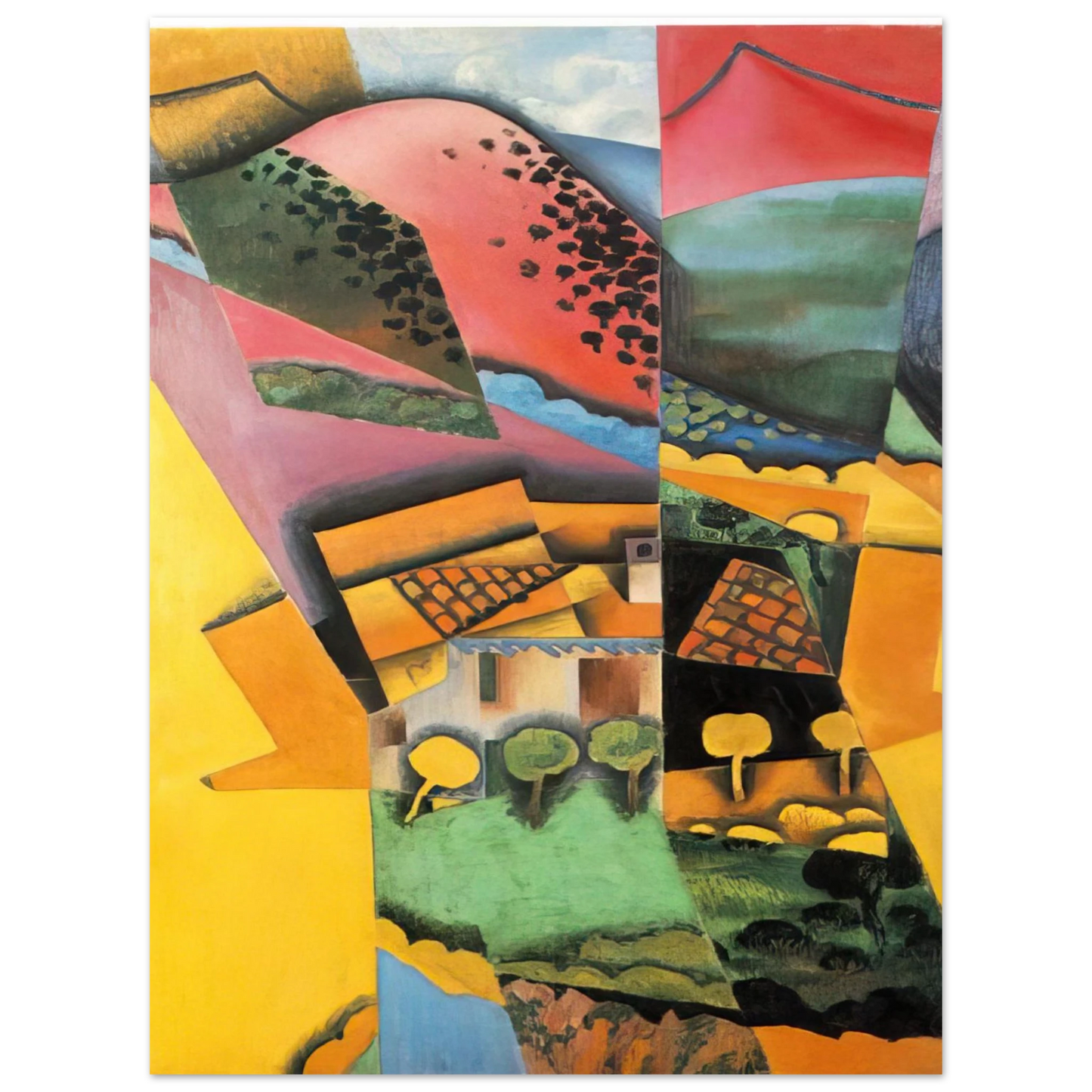
Immerse yourself in the revolutionary vision of Juan Gris with this museum-quality fine art print of LANDSCAPE AT CERET 1913. Measuring 75x100 cm (30x40 inches), this archival reproduction captures the essence of Gris's analytical Cubism, where the French countryside is deconstructed into geometric planes and subtle tonal harmonies. Created during his pivotal stay in Céret, this work exemplifies his mature style, blending abstraction with poetic realism to evoke a serene, intellectual mood perfect for modern interiors.
RedKalion presents this masterpiece on our exclusive Master's Edition archival paper, featuring a matte, uncoated finish in a natural white hue that enhances the artwork's texture and depth. With a substantial weight of 250 gsm (110 lb) and thickness of 0.29 mm (11.4 mils), this acid-free (pH above 7) print ensures longevity without yellowing, while the FSC-certified paper reflects our commitment to sustainability. Printed and shipped on demand with no minimum orders, this piece offers an effortless way to elevate your space with a trusted, archival-grade reproduction.
Art Historical Insight: Juan Gris, a key figure in the Cubist movement alongside Picasso and Braque, developed a more structured approach to fragmentation in works like LANDSCAPE AT CERET. Using a restrained palette of grays, browns, and greens, he applied papier collé techniques to create layered compositions that invite contemplation, making this 1913 piece a testament to his innovative mastery during Cubism's peak.
Discover Unlimited Art Possibilities
At RedKalion, you can find virtually any artwork from any artist, available in a wide range of sizes to perfectly match your space.
If you didn’t find what you’re looking for, contact us at support@redkalion.com . We will source any artwork and produce it in any size and format you need, including art prints, posters, canvas, framed pieces, framed canvas, and more.
For dedicated art enthusiasts, we also offer handcrafted replicas of any artwork, carefully painted by highly skilled artists using traditional techniques.
For custom requests, contact us at support@redkalion.com .
What are the dimensions and details of this Juan Gris fine art print?
This museum-quality reproduction measures 75x100 cm (30x40 inches), capturing Juan Gris's LANDSCAPE AT CERET 1913 in full detail, perfect for adding a Cubist masterpiece to your collection.
What type of paper is used for this archival art print?
It's printed on Master's Edition archival paper, a matte, uncoated, natural white sheet that ensures a luxurious texture and museum-quality reproduction for long-lasting display.
How is this print shipped and are there minimum orders?
We offer on-demand printing and shipping with no minimum orders, providing a convenient way to acquire this fine art poster directly to your door.
What makes this print archival and long-lasting?
Made from acid-free paper with a pH above 7, this print resists yellowing over time, ensuring your Cubist landscape reproduction endures for years.
Is the paper sustainable and what is its weight?
Yes, it uses FSC-certified paper, weighing 250 gsm (110 lb) with a thickness of 0.29 mm (11.4 mils) for a durable, premium feel.
What is the historical significance of LANDSCAPE AT CERET 1913?
Created during Juan Gris's stay in Céret, this work showcases his analytical Cubism, using geometric fragmentation to reinterpret the French countryside, marking a key moment in early 20th-century art.
How does Juan Gris's technique differ in this Cubist landscape?
Gris employed a restrained color palette and papier collé-inspired layering, blending abstraction with realism to evoke serenity, distinguishing his approach from other Cubists like Picasso.