
RedKalion
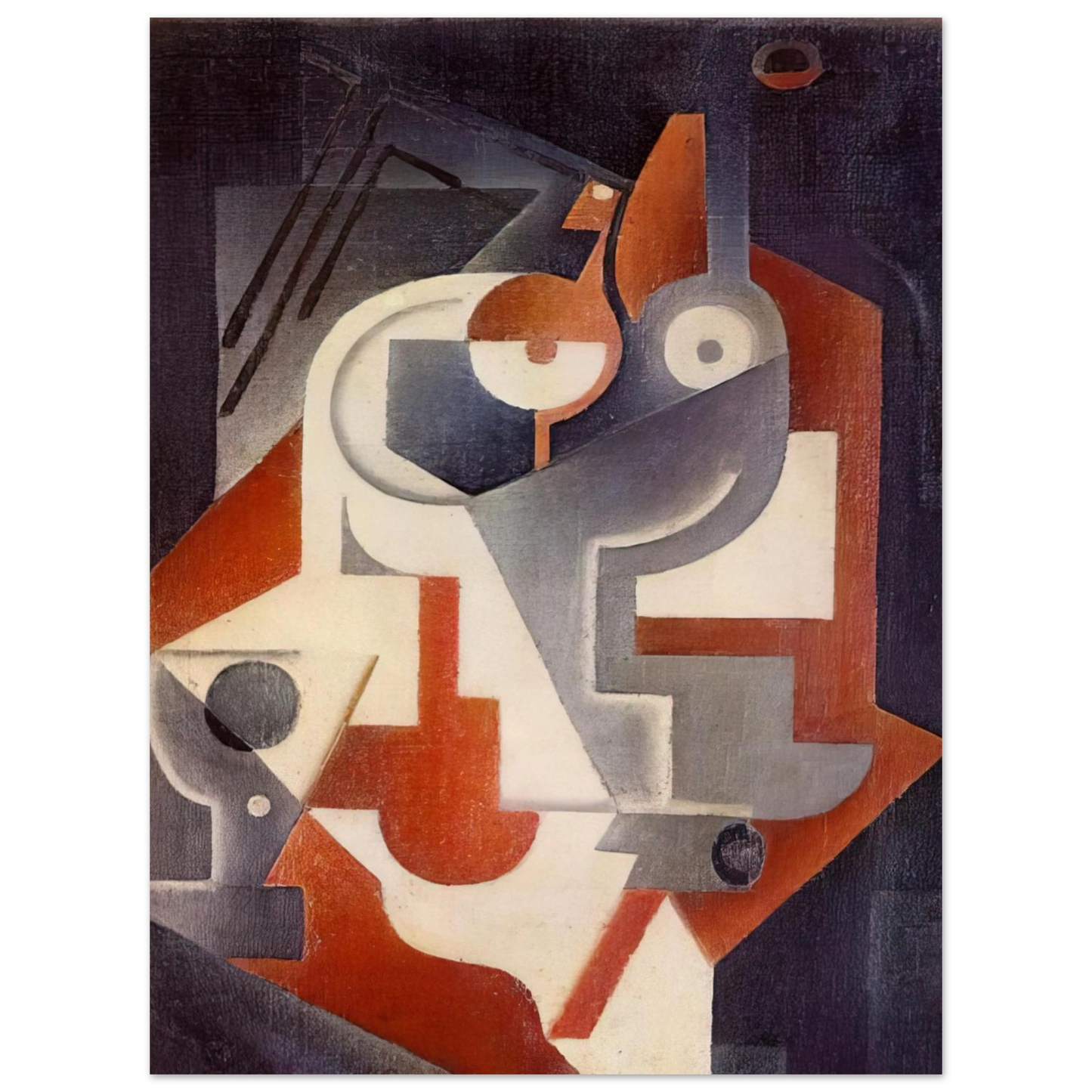
Juan Gris - NEWSPAPER GLASS AND PEAR 1917 75x100 cm / 30x40inches Fine Art Poster
Juan Gris - NEWSPAPER GLASS AND PEAR 1917 75x100 cm / 30x40inches Fine Art Poster
Couldn't load pickup availability
Juan Gris - Newspaper Glass and Pear (1917) - Museum-Quality Fine Art Print
Immerse yourself in the revolutionary world of Cubism with this exquisite reproduction of Juan Gris's "Newspaper Glass and Pear" (1917). Measuring 75x100 cm (30x40 inches), this iconic work exemplifies the artist's mastery of synthetic Cubism, where fragmented objects—a newspaper, glass, and pear—are meticulously reconstructed into a harmonious, abstract composition. Gris, a pivotal figure alongside Picasso and Braque, pioneered this style by layering collage-like elements with precise geometric forms, creating a dynamic interplay of texture and perspective that challenges conventional perception.
RedKalion presents this masterpiece on our Master's Edition archival paper, a museum-quality substrate designed for longevity and visual fidelity. The matte, uncoated finish in a natural white hue enhances the artwork's subtle tonal variations, while the 250 gsm (110 lb) weight and 0.29 mm (11.4 mils) thickness ensure a luxurious, durable feel. Crafted from acid-free (pH above 7), FSC-certified paper, this print resists yellowing over time, offering an archival-grade reproduction that honors Gris's legacy. Printed and shipped on demand with no minimum orders, it arrives ready to elevate any space with timeless sophistication.
This fine art print captures the intellectual rigor and aesthetic innovation of early 20th-century modernism, making it an ideal centerpiece for collectors, designers, and art enthusiasts seeking to infuse their environment with historical depth and artistic authority.
Discover Unlimited Art Possibilities
At RedKalion, you can find virtually any artwork from any artist, available in a wide range of sizes to perfectly match your space.
If you didn’t find what you’re looking for, contact us at support@redkalion.com . We will source any artwork and produce it in any size and format you need, including art prints, posters, canvas, framed pieces, framed canvas, and more.
For dedicated art enthusiasts, we also offer handcrafted replicas of any artwork, carefully painted by highly skilled artists using traditional techniques.
For custom requests, contact us at support@redkalion.com .
What are the dimensions of this Juan Gris fine art print?
This museum-quality reproduction measures 75x100 cm (30x40 inches), perfectly sized for display in homes, offices, or galleries to showcase Cubist artistry.
What type of paper is used for this archival print?
It's printed on Master's Edition archival paper, featuring a matte, uncoated finish in natural white for a luxurious texture that enhances Juan Gris's Cubist details.
How durable and long-lasting is this artwork reproduction?
Made from acid-free (pH above 7), FSC-certified paper, it prevents yellowing over time, ensuring an archival-quality fine art print that endures for generations.
What is the weight and thickness of the paper?
The paper is 250 gsm (110 lb) with a thickness of 0.29 mm (11.4 mils), offering a premium, sturdy feel ideal for framing and preservation.
How is this print shipped and are there minimum orders?
It's printed and shipped on demand with no minimum orders, providing a convenient, high-quality Cubist art reproduction delivered directly to you.
What is the historical significance of "Newspaper Glass and Pear" in Cubism?
Created in 1917, this work exemplifies Juan Gris's synthetic Cubism, where he deconstructed everyday objects into geometric forms, influencing modern art's evolution.
How did Juan Gris's technique differ from other Cubist artists?
Gris focused on precise, collage-like compositions with layered textures, as seen here, blending abstraction and realism to redefine visual perception in early 20th-century art.