
RedKalion
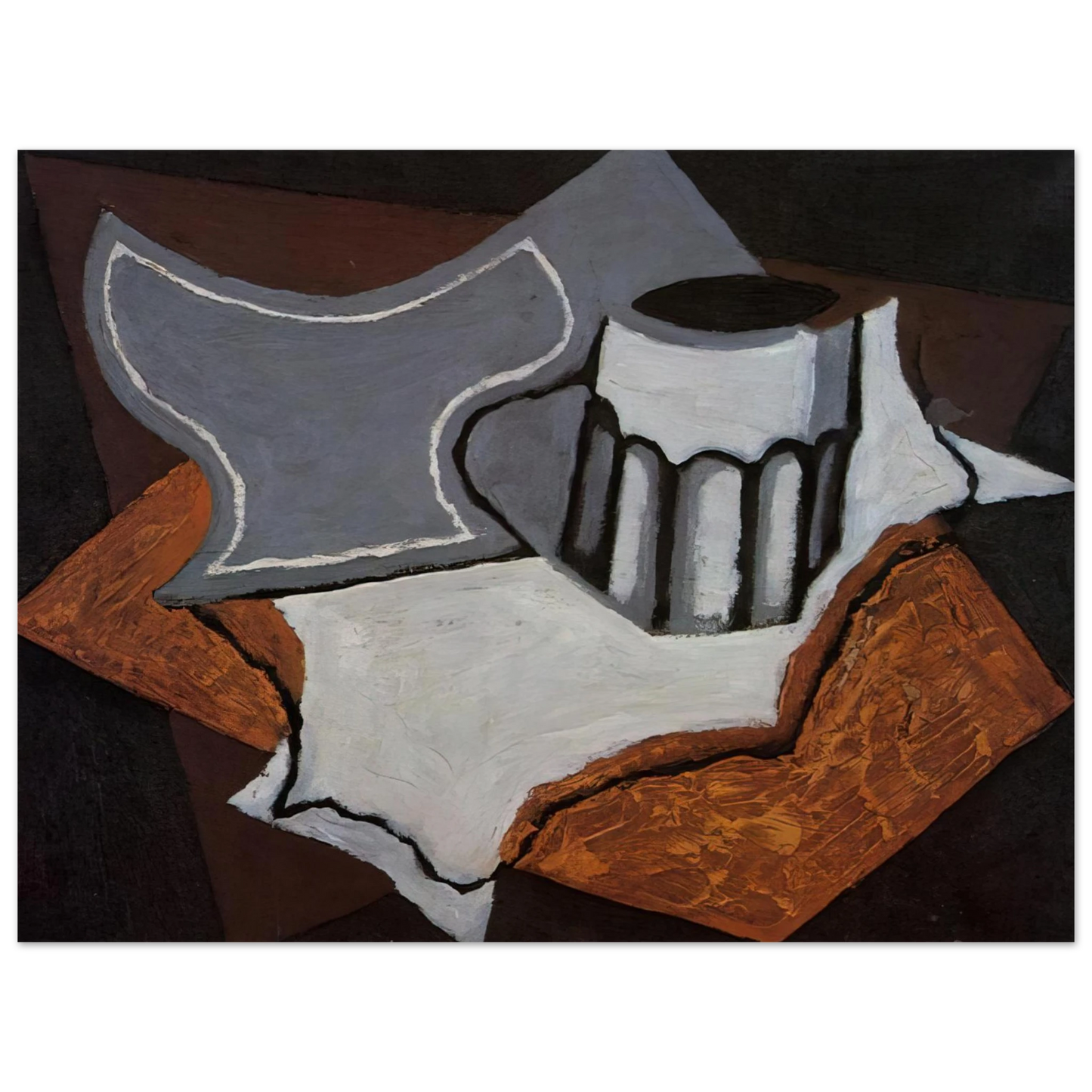
Juan Gris - THE GOBLET 1927 75x100 cm / 30x40inches Fine Art Poster
Juan Gris - THE GOBLET 1927 75x100 cm / 30x40inches Fine Art Poster
Couldn't load pickup availability
Juan Gris - THE GOBLET 1927: A Cubist Masterpiece Reborn
Own a museum-quality reproduction of Juan Gris's "The Goblet" (1927), a definitive work from the Synthetic Cubism movement. This fine art print captures Gris's revolutionary approach to form and color, where fragmented planes and geometric precision converge to depict a simple goblet with profound depth. Measuring 75x100 cm (30x40 inches), this archival reproduction brings the intellectual rigor and aesthetic harmony of Gris's vision into your space.
Expert Insight: Gris, a key figure in Cubism alongside Picasso and Braque, developed "Synthetic Cubism" in the 1910s-1920s, characterized by flattened, overlapping shapes and a restrained palette. "The Goblet" exemplifies his mature style, using collage-like construction to explore the essence of everyday objects. This print preserves the subtle tonal variations and crisp lines that define his technique, offering a window into early 20th-century avant-garde art.
RedKalion's Master's Edition archival paper ensures this reproduction meets the highest standards of durability and fidelity. The matte, uncoated finish in a natural white hue provides a luxurious texture that mimics original artworks, free from glare for optimal viewing. Printed on acid-free paper (pH above 7), it resists yellowing over time, while the 250 gsm (110 lb) weight and 0.29 mm (11.4 mils) thickness offer a substantial, gallery-ready feel. Crafted from FSC-certified paper, this piece combines sustainability with enduring quality.
Elevate your home or office with an archival masterpiece that endures. RedKalion, your trusted curator of premium reproductions, delivers this print on demand with no minimum orders, ensuring a seamless acquisition of world-class art.
Discover Unlimited Art Possibilities
At RedKalion, you can find virtually any artwork from any artist, available in a wide range of sizes to perfectly match your space.
If you didn’t find what you’re looking for, contact us at support@redkalion.com . We will source any artwork and produce it in any size and format you need, including art prints, posters, canvas, framed pieces, framed canvas, and more.
For dedicated art enthusiasts, we also offer handcrafted replicas of any artwork, carefully painted by highly skilled artists using traditional techniques.
For custom requests, contact us at support@redkalion.com .
What are the dimensions of this Juan Gris fine art print?
This museum-quality reproduction measures 75x100 cm (30x40 inches), perfect for creating a focal point in any room with its substantial Cubist presence.
What type of paper is used for this archival print?
It's printed on Master's Edition archival paper, featuring a matte, uncoated finish in natural white for a luxurious texture that enhances the Synthetic Cubism details.
Yes, it uses acid-free paper with a pH above 7, ensuring long-term preservation and resistance to discoloration for your Juan Gris artwork.
How is this fine art poster shipped and handled?
We print and ship on demand with no minimum orders, using careful packaging to protect the 250 gsm weight and FSC-certified paper during transit.
What makes this reproduction museum-quality?
It combines archival-grade materials, precise color matching, and a 0.29 mm thickness to replicate Gris's 1927 original with exceptional fidelity and durability.
What is Synthetic Cubism, and how does "The Goblet" exemplify it?
Synthetic Cubism, pioneered by Juan Gris in the 1910s-1920s, uses flattened, geometric shapes and a muted palette. "The Goblet" showcases this through its fragmented planes and intellectual composition, redefining everyday objects.
Why did Juan Gris focus on simple objects like goblets in his art?
Gris aimed to explore the essence of form and structure, using common items to demonstrate Cubist principles of abstraction and spatial innovation, as seen in this 1927 masterpiece.