RedKalion
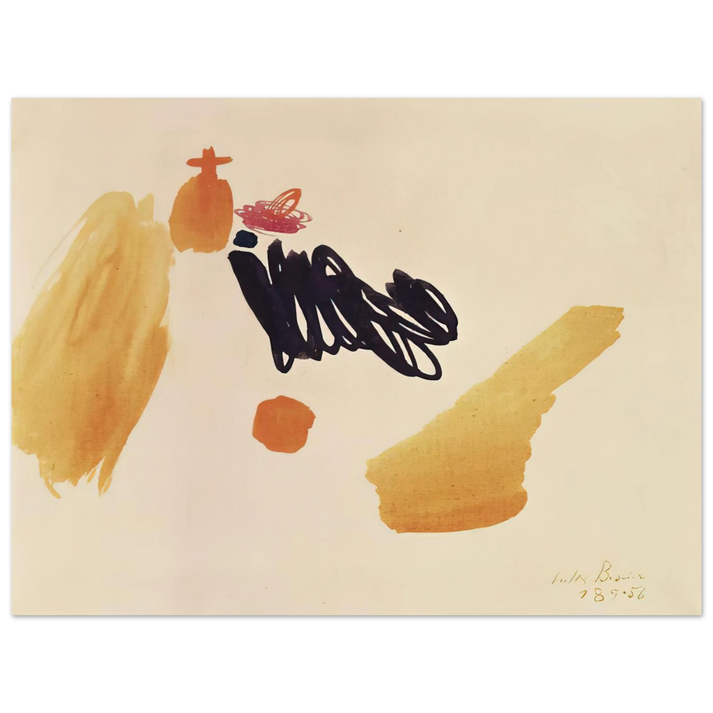
Julius Bissier - 18.9.56 - 1956 75x100 cm / 30x40inches Fine Art Poster
Julius Bissier - 18.9.56 - 1956 75x100 cm / 30x40inches Fine Art Poster
Couldn't load pickup availability
Julius Bissier - 18.9.56 (1956): A Masterpiece of Abstract Lyricism
Experience the serene beauty of Julius Bissier's "18.9.56" (1956), now available as a museum-quality fine art print from RedKalion. This exquisite reproduction captures the delicate balance and meditative quality that defines Bissier's late abstract works, offering a timeless addition to any sophisticated interior.
Created in 1956, this piece exemplifies Bissier's unique approach to abstract art, blending Eastern calligraphic influences with European modernist sensibilities. The title, referencing the date of creation, reflects his practice of numbering works to emphasize their pure, non-representational essence. Bissier's use of subtle color gradations and organic forms evokes a sense of tranquility and introspection, making this print an ideal centerpiece for spaces dedicated to contemplation and elegance.
RedKalion's archival reproduction ensures that every nuance of Bissier's original composition is preserved. Printed on our Master's Edition archival paper, this fine art poster features a matte, uncoated finish in a natural white hue, enhancing the artwork's texture and depth. With dimensions of 75x100 cm (30x40 inches), it commands attention while maintaining a harmonious presence.
Elevate your space with an archival masterpiece that endures. This print is crafted from FSC-certified paper, weighing 250 gsm (110 lb) with a thickness of 0.29 mm (11.4 mils), ensuring durability and a luxurious feel. Its acid-free composition (pH above 7) guarantees resistance to yellowing, allowing you to enjoy Bissier's vision for generations.
As a premier online gallery, RedKalion specializes in curating world-class reproductions that honor artistic legacy. Our on-demand printing means no minimum orders, delivering this museum-quality reproduction directly to you with care and precision.
Discover Unlimited Art Possibilities
At RedKalion, you can find virtually any artwork from any artist, available in a wide range of sizes to perfectly match your space.
If you didn’t find what you’re looking for, contact us at support@redkalion.com . We will source any artwork and produce it in any size and format you need, including art prints, posters, canvas, framed pieces, framed canvas, and more.
For dedicated art enthusiasts, we also offer handcrafted replicas of any artwork, carefully painted by highly skilled artists using traditional techniques.
For custom requests, contact us at support@redkalion.com .
What is the significance of Julius Bissier's "18.9.56" (1956)?
This abstract artwork reflects Bissier's fusion of Eastern calligraphy and European modernism, created in 1956 as part of his late lyrical period, emphasizing meditative forms and subtle color transitions for a timeless fine art print.
What are the dimensions of this fine art print?
The print measures 75x100 cm (30x40 inches), making it an ideal size for display as a museum-quality reproduction in homes or offices.
What type of paper is used for this archival print?
It is printed on Master's Edition archival paper, featuring a matte, uncoated finish in natural white for a luxurious texture and long-lasting quality.
How durable and sustainable is this art poster?
Crafted from acid-free, FSC-certified paper weighing 250 gsm (110 lb) with 0.29 mm thickness, it resists yellowing and supports eco-friendly practices for a premium fine art poster.
How is shipping handled for this on-demand print?
RedKalion prints and ships on demand with no minimum orders, ensuring your museum-quality reproduction arrives carefully packaged and ready to display.
What artistic techniques did Bissier use in this piece?
Bissier employed delicate brushwork and organic shapes inspired by calligraphy, creating abstract forms that evoke tranquility and introspection in this archival masterpiece.
Why is the title "18.9.56" significant for this artwork?
The title denotes the creation date (September 18, 1956), aligning with Bissier's practice of numbering works to highlight their non-representational, pure abstract nature in fine art prints.