
RedKalion
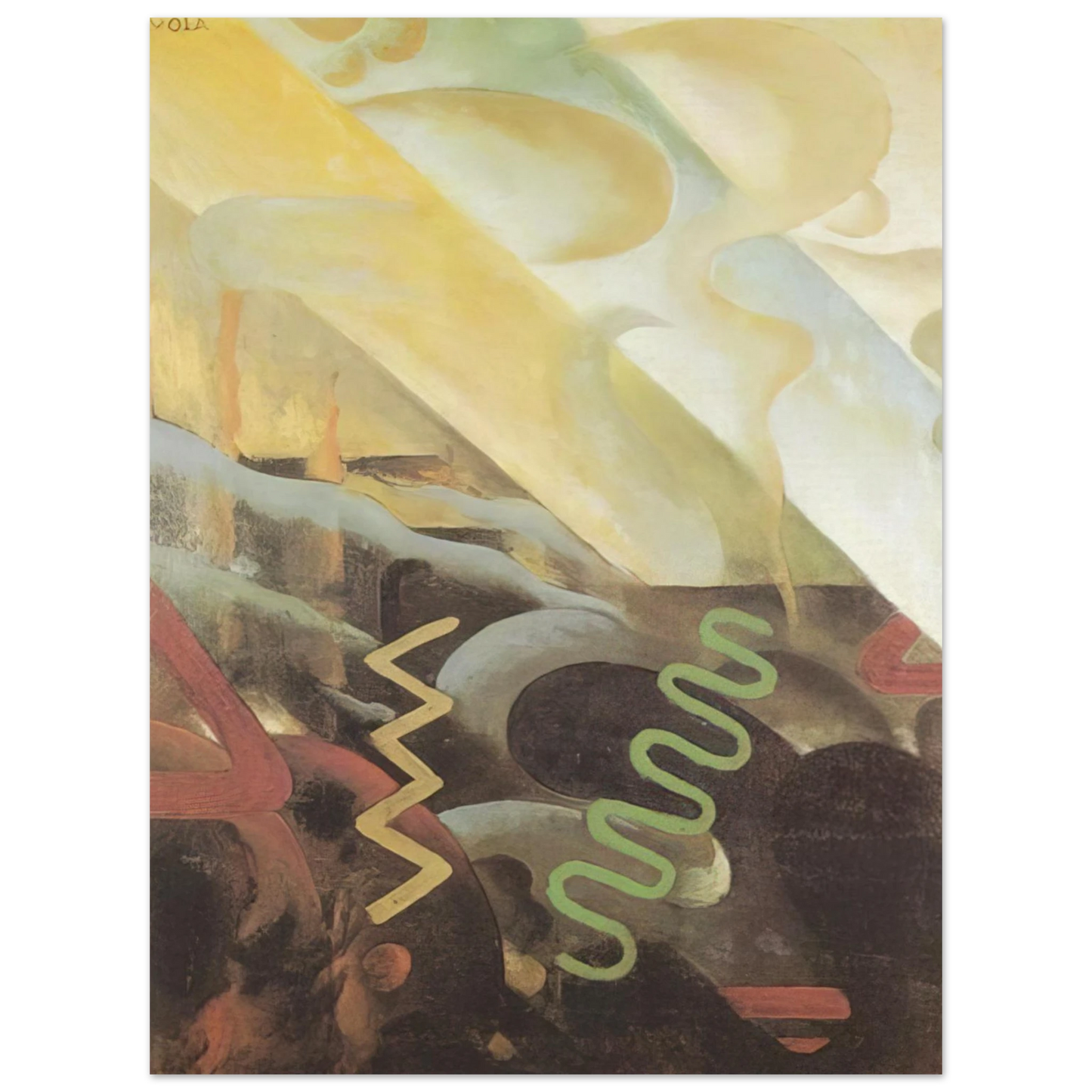
Julius Evola - Astrazione - 1921 Fine Art Poster
Julius Evola - Astrazione - 1921 Fine Art Poster
Couldn't load pickup availability
Julius Evola - Astrazione (1921) - Museum-Quality Fine Art Print
Immerse yourself in the radical vision of early 20th-century Italian modernism with this archival reproduction of Julius Evola's "Astrazione" (1921). This seminal work captures Evola's pioneering exploration of abstraction, blending metaphysical philosophy with avant-garde aesthetics to create a composition that transcends conventional representation. As a key figure in the Dada and Futurist movements, Evola infused this piece with a dynamic tension between geometric forms and ethereal spaces, evoking a mood of intellectual contemplation and spiritual inquiry. It stands as a testament to a transformative era in art history, where artists sought to break free from tradition and express the unseen forces of the modern world.
RedKalion presents this masterpiece as a fine art print crafted to museum standards. Our Master's Edition archival paper ensures exceptional durability, with an acid-free composition (pH above 7) that prevents yellowing over time. The matte, uncoated finish on natural white (off-white) paper provides a luxurious texture that enhances the artwork's subtle tonal variations, while the substantial 250 gsm (110 lb) weight and 0.29 mm (11.4 mils) thickness offer a premium feel. Printed on FSC-certified paper, this reproduction aligns with sustainable practices, and it is produced on demand with no minimum orders, ensuring each piece is meticulously handled for your collection.
Elevate your space with an archival masterpiece that endures, bringing the provocative energy of Evola's abstraction into your home or office. This print is not merely a decoration but a curated artifact of artistic innovation, ideal for connoisseurs of modern art and design.
Discover Unlimited Art Possibilities
At RedKalion, you can find virtually any artwork from any artist, available in a wide range of sizes to perfectly match your space.
If you didn’t find what you’re looking for, contact us at support@redkalion.com . We will source any artwork and produce it in any size and format you need, including art prints, posters, canvas, framed pieces, framed canvas, and more.
For dedicated art enthusiasts, we also offer handcrafted replicas of any artwork, carefully painted by highly skilled artists using traditional techniques.
For custom requests, contact us at support@redkalion.com .
What is the historical significance of Julius Evola's "Astrazione" (1921)?
"Astrazione" (1921) is a pivotal work by Julius Evola, reflecting his role in Italian Dada and Futurist movements, where he merged abstraction with metaphysical themes to challenge traditional art forms during early modernism.
Can you describe the artistic details and mood of this fine art print?
This museum-quality reproduction features geometric abstraction with ethereal spaces, evoking a contemplative and intellectual mood, perfect for adding avant-garde elegance to any interior.
What type of paper is used for this archival fine art print?
We use Master's Edition archival paper, a museum-quality, acid-free material with a matte, uncoated finish on natural white (off-white) for superior texture and longevity in art reproductions.
How durable and long-lasting is this fine art poster?
This print is acid-free (pH above 7) to prevent yellowing, with 250 gsm weight and 0.29 mm thickness, ensuring it remains a durable, archival-grade piece for years.
What are the shipping and fulfillment options for this on-demand print?
We offer no minimum orders, with printed and shipped on-demand services for efficient delivery of this FSC-certified, sustainable fine art poster.
How does Evola's technique in "Astrazione" reflect his philosophical ideas?
Evola employed abstraction to visualize metaphysical concepts, using geometric forms to express spiritual and intellectual themes, aligning with his broader philosophical works on tradition and modernity.
What makes this reproduction suitable for museum-quality displays?
With archival paper, acid-free composition, and a luxurious matte finish, this print meets museum standards for preservation and aesthetic presentation in fine art collections.