
RedKalion
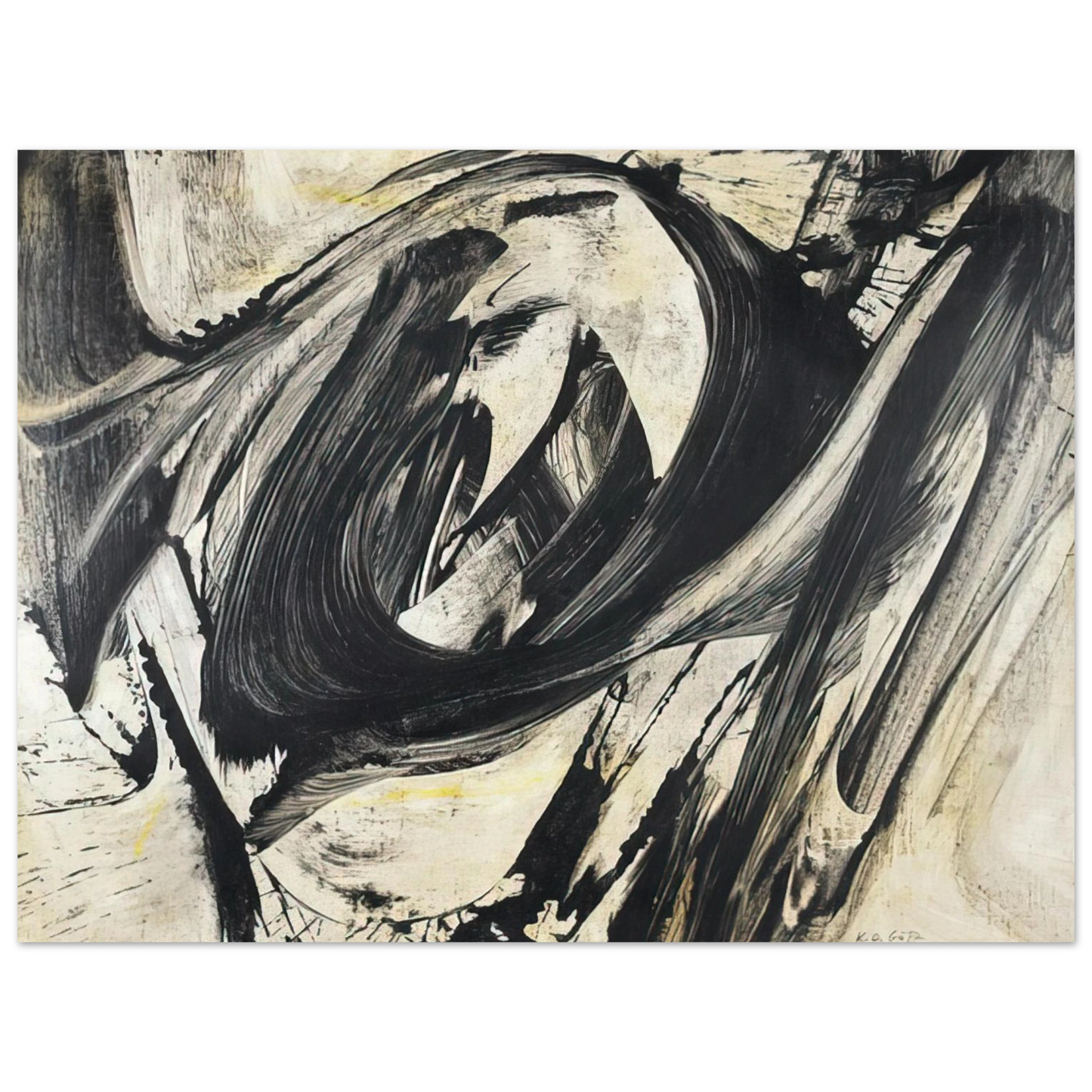
Karl Otto Gotz - Karant 5.7.1957 75x100 cm / 30x40inches Fine Art Poster
Karl Otto Gotz - Karant 5.7.1957 75x100 cm / 30x40inches Fine Art Poster
Couldn't load pickup availability
Karl Otto Götz - Karant 5.7.1957: A Monument of Post-War Abstraction
Immerse yourself in the dynamic energy of Karl Otto Götz's Karant 5.7.1957, a pivotal work from the artist's influential Tachisme period. This fine art print captures the raw, spontaneous gesture that defined Götz's response to the trauma and rebirth of post-war Europe. With bold, sweeping brushstrokes and a masterful interplay of black and white, the artwork evokes a powerful sense of movement and emotional intensity, transforming any space into a gallery of modern history.
RedKalion presents this museum-quality reproduction on our exclusive Master's Edition archival paper. The matte, uncoated finish in a natural white hue preserves the texture and depth of Götz's original technique, offering a tactile, luxurious experience. Crafted from FSC-certified, acid-free paper (pH above 7), this print is designed to resist yellowing, ensuring its vibrancy endures for generations. At 250 gsm (110 lb) and 0.29 mm (11.4 mils) thick, it delivers substantial presence without the need for framing.
Art Historical Insight: Götz, a key figure in German Informel art, developed a unique 'blotting' technique using rollers and brooms to achieve these explosive compositions. Karant 5.7.1957 exemplifies his break from traditional form, embracing chaos as a means of artistic and societal renewal in the 1950s.
Elevate your interior with an archival masterpiece that bridges historical significance and contemporary elegance. RedKalion's on-demand printing ensures each 75x100 cm (30x40 inches) poster is produced with meticulous care, ready to inspire as a standalone statement piece.
Discover Unlimited Art Possibilities
At RedKalion, you can find virtually any artwork from any artist, available in a wide range of sizes to perfectly match your space.
If you didn’t find what you’re looking for, contact us at support@redkalion.com . We will source any artwork and produce it in any size and format you need, including art prints, posters, canvas, framed pieces, framed canvas, and more.
For dedicated art enthusiasts, we also offer handcrafted replicas of any artwork, carefully painted by highly skilled artists using traditional techniques.
For custom requests, contact us at support@redkalion.com .
What are the dimensions of this Karl Otto Götz fine art print?
This museum-quality reproduction measures 75x100 cm, which is equivalent to 30x40 inches, making it an ideal statement piece for modern interiors.
What type of paper is used for this archival poster?
It is printed on Master's Edition archival paper, featuring a matte, uncoated finish in natural white for a luxurious texture and FSC-certified sustainability.
How does the acid-free paper ensure longevity for my art print?
The acid-free paper has a pH above 7, which prevents yellowing over time, ensuring your Karl Otto Götz reproduction maintains its vibrancy for decades.
What is the weight and thickness of this premium art poster?
This fine art print uses heavy 250 gsm (110 lb) paper with a thickness of 0.29 mm (11.4 mils), offering durability and a substantial feel without framing.
How is the print shipped and are there minimum order requirements?
We print and ship on demand with no minimum orders, ensuring each Karl Otto Götz Karant 5.7.1957 poster is crafted individually for you.
What artistic movement does Karant 5.7.1957 represent?
This artwork is a key example of Tachisme, a European abstract style of the 1950s that emphasized spontaneous, gestural brushwork as part of the Informel movement.
Can you describe the technique Karl Otto Götz used in this piece?
Götz employed a unique 'blotting' method with tools like rollers and brooms to create the dynamic, explosive forms seen in Karant 5.7.1957, reflecting post-war artistic innovation.