

RedKalion
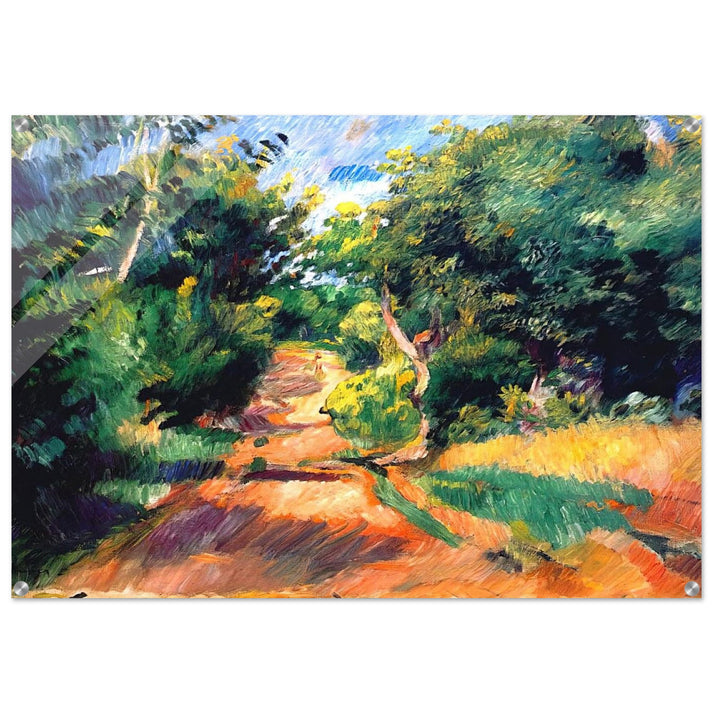
Landscape Near Varengeville - Pierre-Auguste Renoir Acrylic Print - 70x100 cm / 28x40″ inches
Landscape Near Varengeville - Pierre-Auguste Renoir Acrylic Print - 70x100 cm / 28x40″ inches
Couldn't load pickup availability
Landscape Near Varengeville - Pierre-Auguste Renoir Acrylic Print
Immerse yourself in the luminous beauty of Pierre-Auguste Renoir's "Landscape Near Varengeville," now available as a museum-quality reproduction from RedKalion. This fine art print captures the Impressionist master's signature brushwork and vibrant palette, transforming any space into a gallery of timeless elegance.
Renoir painted this scene in 1879 during a visit to Normandy, where he explored the interplay of light and nature. The composition features rolling hills, lush foliage, and a serene sky, embodying the Impressionist movement's focus on capturing fleeting moments. This acrylic print enhances Renoir's colors with a sleek, 4mm (0.15") acrylic surface, ensuring a vibrant and durable display that resists fading.
Our archival-grade reproduction is crafted to exacting standards, with straight-cut corners for a modern aesthetic. Transparent backgrounds default to white for optimal presentation, making this piece a versatile addition to any interior. Each print includes a complete hanging kit—hardware, screws, and pre-drilled screw holes at each corner (14mm/0.55" from the edge, with an 8mm/0.31" diameter hole and 15mm/0.6" screw head)—for effortless installation.
Elevate your home or office with this 70x100 cm / 28x40" inches masterpiece. RedKalion is your trusted curator of world-class reproductions, offering pieces that blend historical significance with contemporary durability. Discover the joy of owning a Renoir landscape print that endures as a testament to artistic excellence.


Discover Unlimited Art Possibilities
At RedKalion, you can find virtually any artwork from any artist, available in a wide range of sizes to perfectly match your space.
If you didn’t find what you’re looking for, contact us at support@redkalion.com . We will source any artwork and produce it in any size and format you need, including art prints, posters, canvas, framed pieces, framed canvas, and more.
For dedicated art enthusiasts, we also offer handcrafted replicas of any artwork, carefully painted by highly skilled artists using traditional techniques.
For custom requests, contact us at support@redkalion.com .
What are the dimensions and material of this Renoir acrylic print?
This fine art print measures 70x100 cm (28x40 inches) and features a 4mm (0.15") acrylic surface for a vibrant, durable, and museum-quality display.
How is the acrylic print designed for hanging?
It includes a hanging kit with hardware, screws, and pre-drilled screw holes at each corner (14mm/0.55" from edge, 8mm/0.31" hole, 15mm/0.6" screw head) for easy installation.
What is the historical significance of "Landscape Near Varengeville" by Renoir?
Painted in 1879 in Normandy, it showcases Renoir's Impressionist style, capturing light and nature's beauty, and reflects his exploration of outdoor scenes during this period.
How does the acrylic enhance the artwork's colors and longevity?
The 4mm acrylic provides a sleek finish that intensifies Renoir's vibrant palette and offers UV resistance, ensuring archival quality and fade protection for years.
What makes RedKalion's reproductions museum-quality?
We use archival-grade materials and precise color matching to create durable fine art prints that meet professional curation standards for home or gallery display.
Can I customize the background color of this acrylic print?
Transparent backgrounds default to white for optimal presentation, but contact us for potential custom options to match your decor needs.
How does Renoir's technique in this landscape differ from his other works?
In this piece, Renoir employed loose, fluid brushstrokes typical of Impressionism to depict natural light, contrasting with his more structured portrait styles.