
RedKalion
Le Chemin de Sèvres Art Print | Museum-Quality Fine Art Print | RedKalion
Le Chemin de Sèvres Art Print | Museum-Quality Fine Art Print | RedKalion
Couldn't load pickup availability
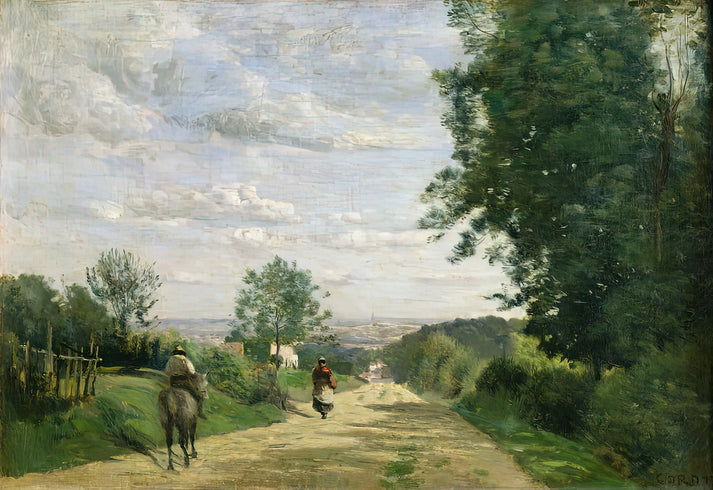
This fine art print captures Pierre-Auguste Renoir's 'Le Chemin de Sèvres' (The Road to Sèvres), a quintessential Impressionist landscape painted around 1875. Renoir depicts a sun-dappled path near Sèvres, France, using loose, vibrant brushstrokes to render light filtering through foliage. The scene exemplifies his focus on leisure and the sensory experience of nature, moving away from academic precision.
Artistic Analysis of Le Chemin de Sèvres
Renoir's technique here showcases rapid, broken brushwork that blends colors optically. The composition guides the eye along the winding path, creating depth without rigid perspective. This work reflects the Impressionist shift to plein air painting, capturing transient effects of light and atmosphere with a palette dominated by greens, blues, and earthy tones.
Historical Context of This Impressionist Print
Created during the height of the Impressionist movement, 'Le Chemin de Sèvres' represents Renoir's exploration of suburban landscapes. It contrasts with his later figural works, emphasizing his early commitment to capturing modern life's fleeting moments. The painting is held in prestigious collections, underscoring its importance in 19th-century art history.
Print Specifications & Materials
- Available Sizes: 75×100 cm / 30×40″, 40×50 cm / 16×20″, 21×29.7 cm / 8×12″
- Paper Finishing: Matte, uncoated, natural white (off-white)
- Acid-Free: pH above 7 to prevent yellowing over time
- Paper Weight: 250 gsm (110 lb) | Thickness: 0.29 mm (11.4 mils)
- Sustainable Paper: FSC-certified
RedKalion's archival print of 'Le Chemin de Sèvres' ensures museum-grade fidelity, allowing you to appreciate Renoir's Impressionist mastery in your space. Our expert reproduction respects the original's color harmony and textural nuances.

Discover Unlimited Art Possibilities
At RedKalion, you can find virtually any artwork from any artist, available in a wide range of sizes to perfectly match your space.
If you didn’t find what you’re looking for, contact us at support@redkalion.com . We will source any artwork and produce it in any size and format you need, including art prints, posters, canvas, framed pieces, framed canvas, and more.
For dedicated art enthusiasts, we also offer handcrafted replicas of any artwork, carefully painted by highly skilled artists using traditional techniques.
For custom requests, contact us at support@redkalion.com .
What is the historical significance of 'Le Chemin de Sèvres' by Renoir?
Painted around 1875, it exemplifies Renoir's early Impressionist focus on light and leisure in suburban landscapes, marking a departure from traditional academic art during the movement's peak.
What artistic techniques did Renoir use in this painting?
Renoir employed loose, rapid brushstrokes and a vibrant palette to capture optical effects of sunlight, creating depth through color blending rather than strict perspective in this plein air work.
What paper is used for this fine art print?
We use FSC-certified, acid-free paper with a matte finish, weighing 250 gsm to ensure archival longevity and prevent yellowing for your Renoir art print.
How is this print shipped to ensure it arrives safely?
Prints are shipped flat in protective packaging to avoid damage, with tracking provided for secure delivery of your museum-quality art piece.
How long will this archival print last without fading?
With acid-free materials and UV-resistant inks, this print maintains color fidelity for decades under normal indoor lighting conditions, ensuring lasting quality.
What sizes are available for this Renoir landscape print?
Available in 75×100 cm, 40×50 cm, and 21×29.7 cm to suit different display spaces, all produced with high-resolution fidelity.
Where is the original 'Le Chemin de Sèvres' painting located?
The original is held in a major museum collection, reflecting its status as a key work in Renoir's oeuvre and Impressionist art history.