
RedKalion
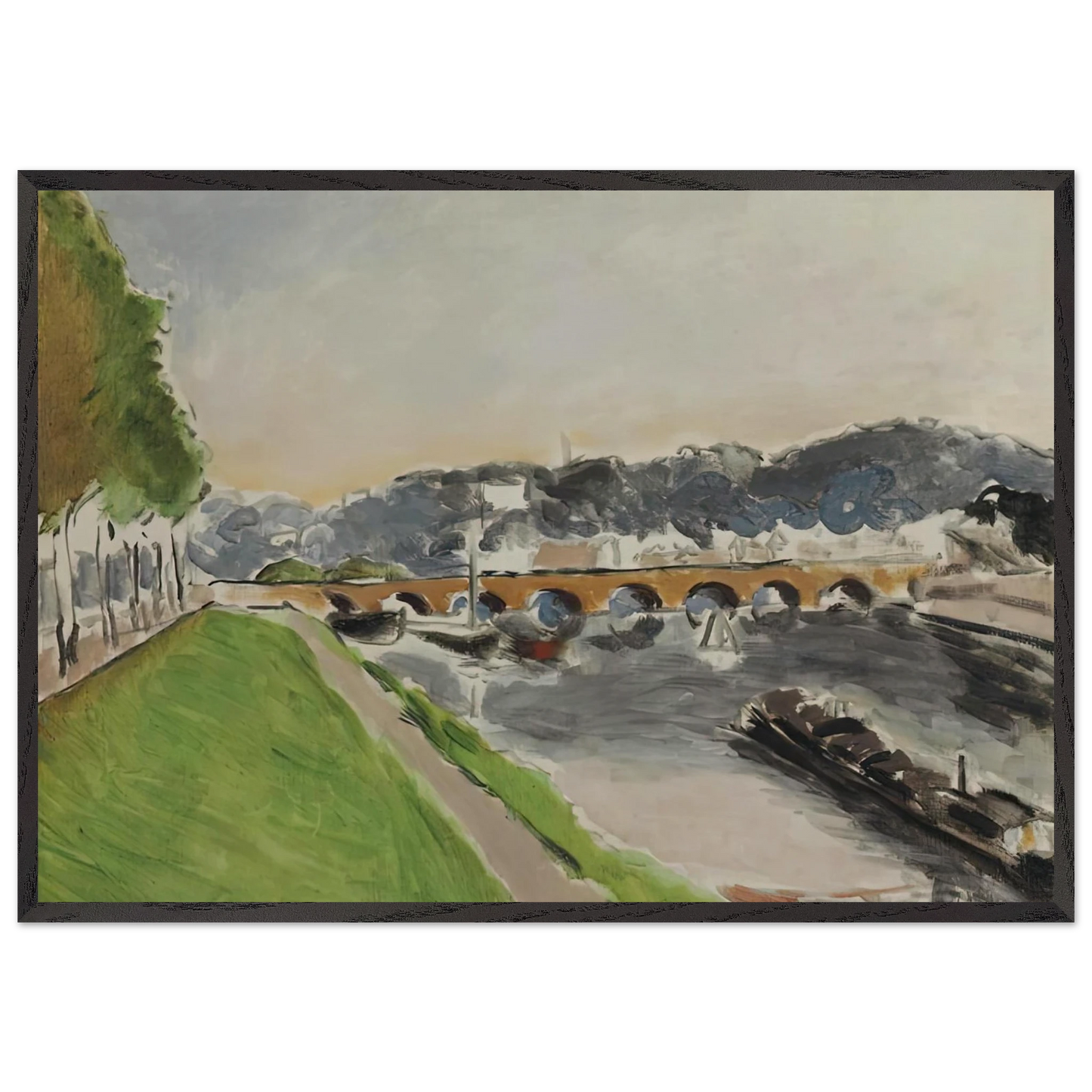
LE PONT DE SEVRES AU CHALAND 1917 - Henri Matisse 70x100 cm / 28x40 inches Framed Art Print – Black Wooden Frame
LE PONT DE SEVRES AU CHALAND 1917 - Henri Matisse 70x100 cm / 28x40 inches Framed Art Print – Black Wooden Frame
Couldn't load pickup availability
Le Pont de Sèvres au Chaland (1917) - Henri Matisse: Museum-Quality Framed Art Print
Immerse yourself in the vibrant energy of early 20th-century Paris with this exquisite framed art print of Henri Matisse's "Le Pont de Sèvres au Chaland" (1917). This masterpiece captures a serene moment along the Seine River, showcasing Matisse's bold use of color and simplified forms that defined his Fauvist period. The composition, with its dynamic interplay of blues, greens, and earthy tones, evokes a sense of peaceful modernity and artistic innovation.
RedKalion presents this archival-grade reproduction on premium 250 gsm (110 lb) matte, uncoated paper, ensuring rich color fidelity and a tactile, museum-like finish. The print is elegantly framed in a responsibly sourced black wooden frame made from oak and ash, measuring 20mm thick and wide for a substantial, gallery-worthy presence. Protected by shatterproof plexiglass, this piece arrives ready-to-hang with a complete hanging kit, allowing you to elevate your space instantly with a timeless work of fine art.
- Artwork: "Le Pont de Sèvres au Chaland" (1917) by Henri Matisse
- Print Size: 70x100 cm / 28x40 inches
- Frame: Black wooden frame (oak and ash), 20mm thick and wide
- Paper: 250 gsm, matte, uncoated, archival museum-quality, FSC-certified
- Protection: Shatterproof plexiglass
- Ready-to-Hang: Includes hanging kit
As a leader in fine art reproductions, RedKalion combines historical accuracy with superior craftsmanship. This piece reflects Matisse's experimental approach during World War I, where he sought solace in landscapes, using simplified shapes to convey emotional depth. Elevate your home or office with an archival masterpiece that endures, backed by our commitment to sustainable materials and expert curation.
Discover Unlimited Art Possibilities
At RedKalion, you can find virtually any artwork from any artist, available in a wide range of sizes to perfectly match your space.
If you didn’t find what you’re looking for, contact us at support@redkalion.com . We will source any artwork and produce it in any size and format you need, including art prints, posters, canvas, framed pieces, framed canvas, and more.
For dedicated art enthusiasts, we also offer handcrafted replicas of any artwork, carefully painted by highly skilled artists using traditional techniques.
For custom requests, contact us at support@redkalion.com .
What are the dimensions of this framed Henri Matisse print?
The framed art print measures 70x100 cm (28x40 inches), with a black wooden frame that is 20mm thick and wide, providing a substantial gallery-quality presentation for this fine art reproduction.
What type of paper is used for this museum-quality print?
We use 250 gsm (110 lb) matte, uncoated archival museum-quality paper that is FSC-certified, ensuring vibrant color reproduction and long-lasting durability for your fine art print.
Is this framed print ready to hang on the wall?
Yes, this framed art print includes a complete hanging kit and is ready-to-hang directly on your wall, making installation quick and effortless for your home or office decor.
How does the frame protect the Henri Matisse artwork?
The frame features shatterproof plexiglass that safeguards the print from dust, UV light, and damage, while the responsibly sourced oak and ash wood adds elegant protection.
Is this print archival and sustainable?
Yes, this reproduction uses FSC-certified archival museum-quality paper and sustainable materials, ensuring it resists fading and degradation for generations as a premium art investment.
What historical context surrounds "Le Pont de Sèvres au Chaland" from 1917?
Painted during World War I, this work reflects Matisse's retreat to quieter landscapes near Paris, showcasing his Fauvist style with simplified forms and bold colors to evoke peace amid turmoil.
How does Matisse's technique in this piece differ from his earlier works?
In this 1917 piece, Matisse employs a more restrained palette and geometric simplification compared to his earlier vibrant Fauvist works, focusing on structural harmony and emotional serenity along the Seine.