RedKalion
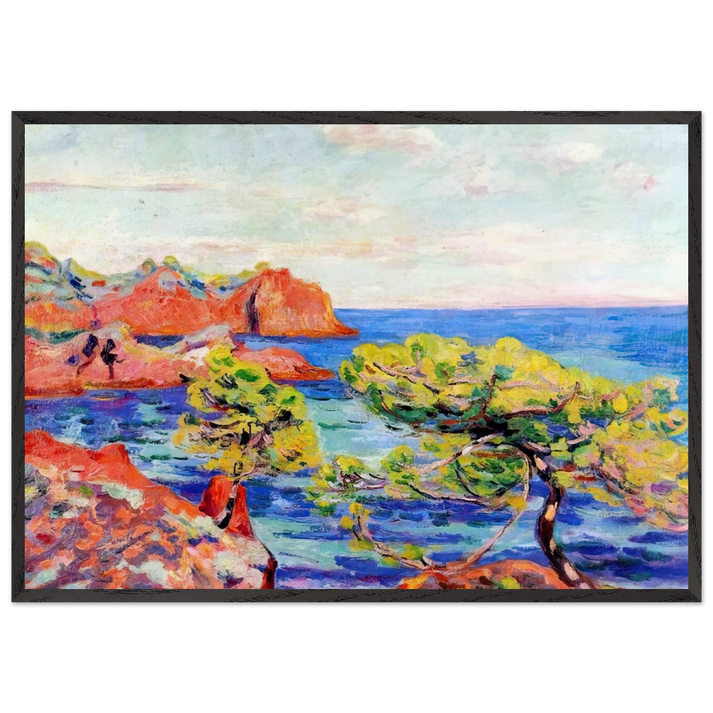
Le Trayas - 1907 - Armand Guillaumin 70x100 cm / 28x40 inches Framed Art Print – Black Wooden Frame
Le Trayas - 1907 - Armand Guillaumin 70x100 cm / 28x40 inches Framed Art Print – Black Wooden Frame
Couldn't load pickup availability
Le Trayas - 1907 by Armand Guillaumin: A Vibrant Fauvist Masterpiece
Immerse yourself in the radiant energy of Armand Guillaumin's Le Trayas (1907), a stunning example of Fauvist painting that captures the luminous Mediterranean coastline with bold, expressive color. This fine art print reproduces Guillaumin's mastery of light and texture, where vibrant hues of orange, blue, and green evoke the sun-drenched cliffs and sea of southern France. As a key figure in the Impressionist and Fauvist movements, Guillaumin's work bridges natural observation with emotional intensity, making this piece a timeless addition to any art collection.
RedKalion presents this museum-quality reproduction as a framed art print, meticulously crafted to honor the original's brilliance. The print measures 70x100 cm (28x40 inches), housed in a sophisticated black wooden frame made from responsibly sourced oak and ash wood. With a substantial 20mm (0.79") thickness—wider than the classic 14mm (0.55") frame—it offers a modern, gallery-worthy presence. The archival museum-quality paper is 250 gsm (110 lb) and 0.29 mm (11.4 mils) thick, featuring a matte, uncoated, natural white finish that ensures longevity and true color fidelity. Protected by shatterproof plexiglass and printed on sustainable, FSC-certified materials, this piece arrives ready-to-hang with a hanging kit included, allowing you to elevate your space with an archival masterpiece that endures.
- Artwork Details: Le Trayas (1907) by Armand Guillaumin, 70x100 cm / 28x40 inches.
- Frame: Black wooden frame from responsibly sourced oak and ash wood, 20mm thick and wide.
- Paper: 250 gsm (110 lb), 0.29 mm thick, matte, uncoated, natural white, archival museum-quality.
- Protection: Shatterproof plexiglass for durability and clarity.
- Sustainability: FSC-certified materials or equivalent for eco-conscious art.
- Convenience: Ready-to-hang with included hanging kit.

Discover Unlimited Art Possibilities
At RedKalion, you can find virtually any artwork from any artist, available in a wide range of sizes to perfectly match your space.
If you didn’t find what you’re looking for, contact us at support@redkalion.com . We will source any artwork and produce it in any size and format you need, including art prints, posters, canvas, framed pieces, framed canvas, and more.
For dedicated art enthusiasts, we also offer handcrafted replicas of any artwork, carefully painted by highly skilled artists using traditional techniques.
For custom requests, contact us at support@redkalion.com .
What are the dimensions of this framed art print?
This framed art print measures 70x100 cm (28x40 inches), including the black wooden frame, making it an ideal size for wall decor in living rooms, offices, or galleries.
What type of paper is used for this fine art print?
We use 250 gsm (110 lb) archival museum-quality paper with a matte, uncoated, natural white finish, ensuring vibrant color reproduction and long-lasting durability for your art collection.
Is this print ready to hang upon delivery?
Yes, this framed art print comes ready-to-hang with a hanging kit included, so you can display it directly on your wall without additional setup.
How durable is the framing and protection for this artwork?
The frame is made from responsibly sourced oak and ash wood, 20mm thick, and features shatterproof plexiglass to protect the print from damage and UV exposure.
Is the paper sustainable for this museum-quality reproduction?
Yes, we use FSC-certified materials or equivalent for the paper, supporting sustainable practices in fine art printing and eco-conscious home decor.
What artistic movement does Le Trayas represent?
Le Trayas (1907) by Armand Guillaumin is a prime example of Fauvism, characterized by bold, non-naturalistic colors and expressive brushwork that emphasize emotional impact over realistic depiction.
Where is Le Trayas located, and why did Guillaumin paint it?
Le Trayas is a coastal village in southern France. Guillaumin, inspired by the Mediterranean light and landscape, painted it to capture the vibrant hues and dramatic scenery, reflecting his role in the Fauvist movement.